




Skip to content
  • Facebook
  • X
  • Linkedin
  • WhatsApp
  • YouTube
  • Associate Journalism
  • About Us
  • Privacy Policy
  • 033-46046046
  • editor@artifex.news
Artifex.News

Artifex.News

Stay Connected. Stay Informed.

  • Breaking News
  • World
  • Nation
  • Sports
  • Business
  • Science
  • Entertainment
  • Lifestyle
  • Toggle search form
  • IPL RCB vs LSG | RCB top-order needs to make an explosive start
    IPL RCB vs LSG | RCB top-order needs to make an explosive start Sports
  • French police shoot dead an attacker with a screwdriver in Paris suburbs
    French police shoot dead an attacker with a screwdriver in Paris suburbs World
  • Access Denied
    Access Denied Nation
  • Access Denied
    Access Denied Nation
  • Access Denied
    Access Denied Nation
  • Harry Kane Scores As Bayern Munich Go Six Points Clear In Bundesliga Table
    Harry Kane Scores As Bayern Munich Go Six Points Clear In Bundesliga Table Sports
  • IPL 2026 | Struggling CSK takes on DC, looks to snap losing streak
    IPL 2026 | Struggling CSK takes on DC, looks to snap losing streak Sports
  • Access Denied Business
Strait of Hormuz reopening to ease oil supply risks for India

Strait of Hormuz reopening to ease oil supply risks for India

Posted on June 15, 2026 By admin


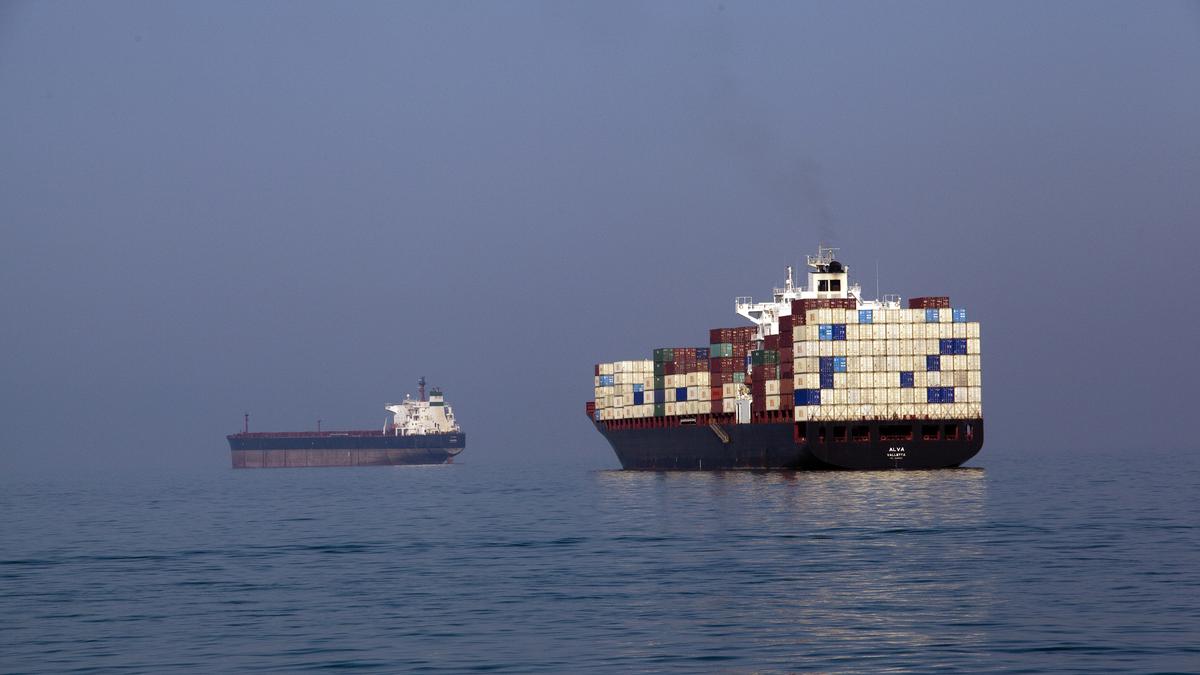
A reopening or normalization of shipping through the Strait of Hormuz would provide significant relief for India, one of the world’s largest crude importers, by easing concerns over oil supplies, lowering freight costs and reducing pressure on inflation.

The narrow waterway between Iran and Oman handles roughly a fifth of global oil consumption and serves as the primary export route for major Gulf producers, including Saudi Arabia, Iraq, Kuwait, the United Arab Emirates and Qatar — all key energy suppliers to India.

West Asia LIVE updates

Supply of crude oil — the raw material for making fuels like petrol and diesel — and natural gas — the feedstock used to generate electricity, produce fertiliser, turned into CNG to run automobiles and piped to household kitchens for cooking — through the strait was disrupted since the start of Iran in the end of February. This triggered sharp increases in crude oil prices, shipping insurance premiums and freight rates.

Industry sources and analysts said the reopening and reduction in tensions would likely help stabilize global energy markets and improve the outlook for energy-importing nations such as India.

Oil prices fell on Sunday (June 14, 2026) after U.S. President Trump said the United States had reached a ceasefire agreement with Iran that would allow the “toll free” passage of ships through the Strait of Hormuz.

“I hereby fully authorize the toll free opening of the Strait of Hormuz, and, simultaneously herewith, authorize the immediate removal of the United States Naval blockade,” U.S. President Donald Trump posted online. “Ships of the World, start your engines. Let the oil flow!”

Oil prices dropped on news of the ceasefire. Price of Brent crude, the global benchmark for oil, fell 4 per cent, to around $84 a barrel.

Global oil prices had risen to as high as $119 per barrel at the peak of war-related disruption, from $70-72 a barrel in February. This increased the cost of producing petrol and diesel, but the government held on to the retail rate revision till mid-May. The government on March 27 slashed excise duty on petrol and diesel by ₹10 per litre each in a bid to avoid a retail price increase just when five critical states, including West Bengal, went to polls.

Post Assembly elections, petrol and diesel prices were raised by about ₹7.50 per litre each, while CNG rates were up ₹6 per kg. LPG prices too were increased by ₹89 per 14.2-kg cylinder in two instalments.

Notwithstanding the price increase, state-owned oil companies continue to lose about ₹650 crore per day as retail rates lag cost.

With oil prices easing and the reopening of the Strait, these will gradually come down, industry sources and analysts said.

“State-owned fuel retailers booked losses in one quarter that were equal to the profit they earned in the entire year,” an industry official said. “If the agreement holds, energy supplies will ease and so will the prices”

India’s response to disruptions

Pre-war, India imported more than 88% of its crude oil requirements, with half of it being sourced from Gulf producers whose exports transit through Hormuz. It was 60% import dependent to meet LPG needs, 90% of which came through the strait. The country depended on imports to meet half of its natural gas needs, of which 65 per cent came from countries like Qatar and the UAE.

The war disrupted LPG supplies as well as natural gas flows from Qatar, India’s largest liquefied natural gas (LNG) supplier.

Natural gas allocation was rationalised with cuts being imposed on certain users. LPG disruption led to initially stopping supplies to commercial users like hotels and restaurants, and gradually restoring up to 70% of their needs. For household users, refill booking time was increased.

The government and refiners also stepped up efforts to diversify crude sourcing beyond traditional suppliers in the Gulf. Indian refiners increased engagement with suppliers across multiple geographies, including Russia, Africa, the United States and Latin America, to ensure alternative cargoes would be available if supplies from the Middle East were disrupted.

Natural gas buyers similarly explored additional procurement options and closely monitored spot LNG markets to secure supplies.

Authorities also reviewed inventory positions across the fuel supply chain and worked with oil marketing companies to ensure adequate stocks of petrol, diesel, LPG and aviation fuel were maintained at depots and retail outlets.

Last week, the government notified provisions allowing temporary restrictions on bulk purchases of petrol and diesel through retail fuel stations, citing risks of diversion and localised shortages.

Industry executives said oil companies also reviewed contingency plans covering shipping routes, vessel availability and cargo scheduling to ensure continuity of supplies under various disruption scenarios.

Reopening of Strait

Industry sources said an uninterrupted shipping route would reduce the risk of supply delays and help refiners maintain predictable procurement schedules.

Lower crude prices would be among the most immediate benefits. Every sustained decline in oil prices helps reduce India’s import bill, supports the rupee, narrows the current account deficit and eases inflationary pressures. Indian refiners would also benefit from lower shipping and insurance costs.

Lower fuel costs can reduce transportation expenses, ease pressure on manufacturers and help moderate prices of goods ranging from food products to construction materials, they said.

A normalization of traffic through Hormuz would also provide relief to policymakers. Reduced geopolitical risk in the Gulf would give the government greater flexibility in managing energy and economic policy, containing inflation, and maintaining fiscal discipline.

The benefits could be particularly significant for sectors such as aviation, petrochemicals, fertilizers, shipping and logistics, all of which are highly sensitive to energy costs.

Published – June 15, 2026 08:46 am IST


Source link

Business Tags:reopening of strait of hormuz, strait of hormuz reopening eases India, us iran peace deal, US-Iran permanent ceasefire

Post navigation

Previous Post: West Asia LIVE: U.S.-Iran peace deal to be signed on June 19 with ‘permanent’ end to military action
Next Post: Mark Zuckerberg says Meta made ‘mistakes’ in AI workforce shift

Related Posts

  • Access Denied Business
  • Access Denied Business
  • Access Denied Business
  • Access Denied Business
  • Access Denied Business
  • Reliance hands over documents in bribery probe, executive gets bail
    Reliance hands over documents in bribery probe, executive gets bail Business

More Related Articles

Access Denied Business
Interim Budget 2024: Spending on IITs and IIMs declines as a share of total Budget | Data  Interim Budget 2024: Spending on IITs and IIMs declines as a share of total Budget | Data  Business
Stock markets succumb to late sell-off; Sensex falls 114 points Stock markets succumb to late sell-off; Sensex falls 114 points Business
Access Denied Business
Rupee rises 12 paise to close at 90.26 against U.S. dollar Rupee rises 12 paise to close at 90.26 against U.S. dollar Business
SiteLock

Archives

  • June 2026
  • May 2026
  • April 2026
  • March 2026
  • February 2026
  • January 2026
  • December 2025
  • November 2025
  • October 2025
  • September 2025
  • August 2025
  • July 2025
  • June 2025
  • May 2025
  • April 2025
  • March 2025
  • February 2025
  • January 2025
  • December 2024
  • November 2024
  • October 2024
  • September 2024
  • August 2024
  • July 2024
  • June 2024
  • May 2024
  • April 2024
  • March 2024
  • February 2024
  • January 2024
  • December 2023
  • November 2023
  • October 2023
  • September 2023
  • August 2023
  • July 2023
  • June 2023
  • May 2023
  • April 2023
  • March 2023
  • February 2023
  • January 2023
  • December 2022
  • November 2022
  • October 2022
  • September 2022
  • August 2022
  • July 2022
  • June 2022
  • May 2022

Categories

  • Business
  • Nation
  • Science
  • Sports
  • World

Recent Posts

  • FIFA World Cup: Sweden smash five past Tunisia, Ayari scores two stunners
  • G7 leaders meet in France after U.S. and Iran declare agreement to end war
  • Noida International Airport begins passenger flights; first IndiGo flight from Lucknow
  • The Iranian leaders killed in Israeli-U.S. war
  • West Asia LIVE: U.S.-Iran peace deal to be signed on June 19 with ‘permanent’ end to military action

Recent Comments

  1. Vernonrok on UP Teacher Who Asked Students To Slap Muslim Classmate
  2. DavidImmen on UP Teacher Who Asked Students To Slap Muslim Classmate
  3. Davidhek on UP Teacher Who Asked Students To Slap Muslim Classmate
  4. Patricknaila on UP Teacher Who Asked Students To Slap Muslim Classmate
  5. JeffreyLab on UP Teacher Who Asked Students To Slap Muslim Classmate
  • Access Denied Sports
  • Access Denied
    Access Denied Nation
  • Months after bowing out of the presidential race, Nikki Haley says she would vote for Donald Trump
    Months after bowing out of the presidential race, Nikki Haley says she would vote for Donald Trump World
  • 2 Arrested For Tying Woman To Tree, Beaten Her With Sticks In Rajasthan: Cops
    2 Arrested For Tying Woman To Tree, Beaten Her With Sticks In Rajasthan: Cops Nation
  • Access Denied
    Access Denied Nation
  • Sunetra Pawar reaches Mumbai, all set to become Maharashtra first woman deputy CM
    Sunetra Pawar reaches Mumbai, all set to become Maharashtra first woman deputy CM Nation
  • Vadodara Animal Rescuers Tripling On Scooter — With A Crocodile
    Vadodara Animal Rescuers Tripling On Scooter — With A Crocodile Nation
  • India win toss, elect to field against South Africa in 2nd women’s T20I
    India win toss, elect to field against South Africa in 2nd women’s T20I Sports

Editor-in-Chief:
Mohammad Ariff,
MSW, MAJMC, BSW, DTL, CTS, CNM, CCR, CAL, RSL, ASOC.
editor@artifex.news

Associate Editors:
1. Zenellis R. Tuba,
zenelis@artifex.news
2. Haris Daniyel
daniyel@artifex.news

Photograher:
Rohan Das
rohan@artifex.news

Artifex.News offers Online Paid Internships to college students from India and Abroad. Interns will get a PRESS CARD and other online offers.
Send your CV (Subjectline: Paid Internship) to internship@artifex.news

Links:
Associate Journalism
About Us
Privacy Policy

News Links:
Breaking News
World
Nation
Sports
Business
Entertainment
Lifestyle

Registered Office:
72/A, Elliot Road, Kolkata - 700016
Tel: 033-22277777, 033-22172217
Email: office@artifex.news

Editorial Office / News Desk:
No. 13, Mezzanine Floor, Esplanade Metro Rail Station,
12 J. L. Nehru Road, Kolkata - 700069.
(Entry from Gate No. 5)
Tel: 033-46011099, 033-46046046
Email: editor@artifex.news

Copyright © 2023 Artifex.News Newsportal designed by Artifex Infotech.