
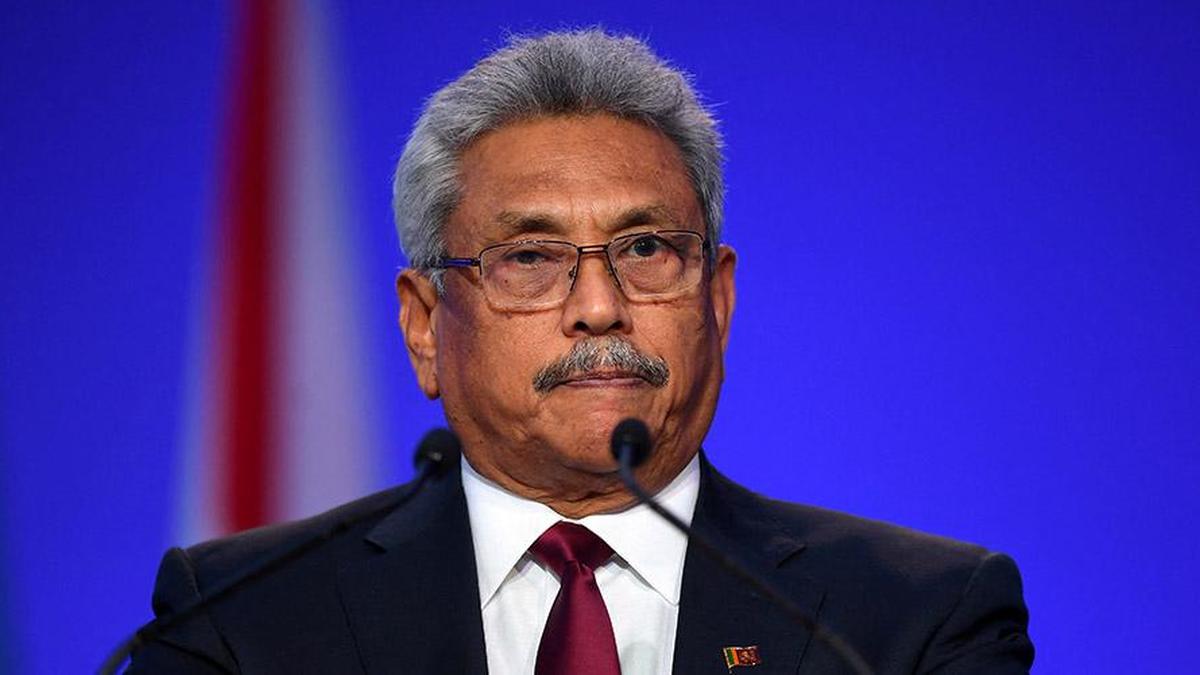
Sri Lanka’s former president Gotabaya Rajapaksa. File
| Photo Credit: Reuters
A Sri Lankan court on Wednesday (June 3, 2026) imposed an overseas travel ban on former President Nandasena Gotabaya Rajapaksaand two former military officers in connection with ongoing investigations into the 2019 Easter attack.
The Colombo Fort Magistrate’s Court issued the order after considering a motion filed by the Criminal Investigation Department (CID), which is probing the coordinated suicide bombings that targeted churches and luxury hotels across the island nation on April 21, 2019, that killed 270 people, including 11 Indians.

The travel restrictions also apply to Army Colonel Mohamed Ansar and former intelligence officer Premananda Udalagama, also known as Silva.
Magistrate Pasan Amarasekara issued the order when the case involving former State Intelligence Service director Suresh Sallay was taken up before the court.
Mr. Sallay, who has been named as a suspect in the proceedings, is being held under detention orders after his arrest on Thursday (February 25, 2026) as part of efforts to identify the alleged mastermind behind the attacks.
Mr. Sallay was serving in a diplomatic position overseas when the attack took place. He headed the state intelligence service under the then- President Percy Mahinda Rajapaksa government prior to 2015.
Police told the court that ongoing investigations could be hampered if Mr. Gotabaya Rajapaksa and the two military officers were to flee the country.
2019 allegations
Mr. Gotabaya Rajapaksa, the younger brother of former President Mr. Mahinda Rajapaksa, announced his candidacy for the presidency shortly after the bombings and went on to win the November 2019 election.
Investigators have alleged that the Easter attacks may have been exploited to create a climate of insecurity that benefited Mr. Gotabaya Rajapaksa’s presidential campaign, though no such allegations have been proven in court.
Mr. Gotabaya Rajapaksa was forced to resign in July 2022 amid mass protests over Sri Lanka’s worst economic crisis in decades, with critics accusing his administration of economic mismanagement and corruption.
He has repeatedly denied any involvement in a conspiracy linked to the bombings.
Sri Lanka’s security lapses
The Easter attack, carried out by the local Islamist extremist group National Thowheeth Jama’ath (NTJ), linked to ISIS (the Islamic State of Iraq and Syria), targeted three churches and 3 luxury hotels in Colombo and other parts of the country.
It exposed serious lapses in Sri Lanka’s security apparatus, as the then government led by President Maithripala Yapa Sirisena was accused of inaction to prevent the attacks despite prior intelligence warnings shared by India about an imminent terrorist strike.
The current National People’s Power (NPP) government, led by President Anura Kumara Dissanayake, reopened the Easter terror attack investigations in late 2024, stating that political influence had earlier led to a cover-up.
The catholic church in the Buddhist-majority country had also expressed its concerns over the investigations, which they branded as a political cover-up to protect the powerful who could have masterminded the attack.
Published – June 03, 2026 04:38 pm IST