



The health of a lake is directly proportional to the acts of positive reciprocation it receives from the people it serves. Its health is also predicated on the pride it instils in those people. The Nanmangalam lake is presented with a mixed bag. It is subjected to abuse by those in a position of stewardship towards it, but it also has two groups of people that make sure it stays in the news, its charms being extolled and its blights highlighted. And these groups vary in their composition, but have found a point of intersection where goals unite into something composite: preserving and cherishing the Nanmangalam lake.
Kumaresan Chandrabose is part of the local residents group, largely drawn from Sembakkam, Nanmangalam and Hastinapuram that has been documenting the biodiversity of the lake as well as the Nanmangalam Reserve forest that overlooks it, actually the rim of the forest. Through photography and videography, he has documented a wide range of resident and migratory species around the lake, as have most other members of this hyperlocal naturalist group. People outside this group also join nature walks.
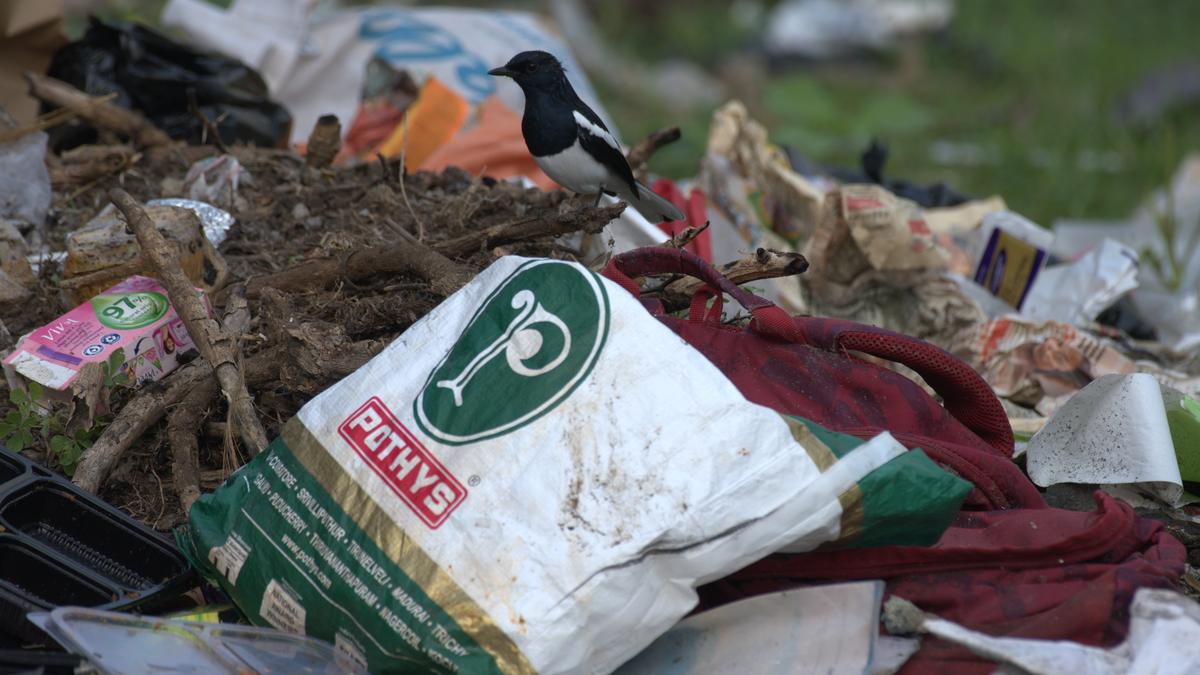
A painted snipe with a plastic discard at Nanmangalam lake.
| Photo Credit:
Kumaresan Chandrabose
According to Kumaresan, birdwatching has changed the way people view the lake.
The list of birds recorded at Nanmangalam is extensive. Among them are the Chestnut-winged Cuckoo, Asian Paradis eFlycatcher, Yellow Bittern, Painted Snipe, Black Bittern, Watercock, Long-toed Stint and and Oriental Magpie Robin. Darters are also regularly spotted across the lake.
One species that particularly stands out is the Chestnut-winged Cuckoo, a migratory bird that that has inked in Nanmangalam as its winter destination.
Kumaresan also described the Watercock as one of the more unusual birds found within Chennai Metropolitan area. Yellow Bittern nesting sites and Darter breeding activity have also been observed around the wetland. Interestingly, some migratory birds move into nearby residential areas as well. The Blue-throated Blue Flycatcher, for instance, has been repeatedly spotted near a temple inside a nearby apartment complex.
Beyond birds, he tracks butterflies and odonates around the lake, several of which have become harder to find.
A butterfly called the Joker, which depends on a native host plant called Tragia, locally known as Sendatti, is becoming scarce around the lake. Though the plant is often removed because it causes skin irritation, Kumaresan says it plays an important ecological role.
“In the name of beautification, many of these native bushes are being removed,” he says.
Waste dumping is another negative factor.
No time to ‘waste’
Over time, worsening environmental damage pushed a group of residents and volunteers to come together under the “Saving Nanmangalam Lake” initiative, a citizen-led movement launched in June 2024 to protect the lake and create awareness about its ecological importance.
Among those leading these efforts are Jayapriya Ramanathan and R. Sathya, both residents of Sembakkam who have been actively involved in cleanup drives and awareness campaigns around the lake. According to organisers, untreated sewage inflow, encroachments, garbage dumping, and poor waste management remain some of the biggest threats facing the ecosystem today.
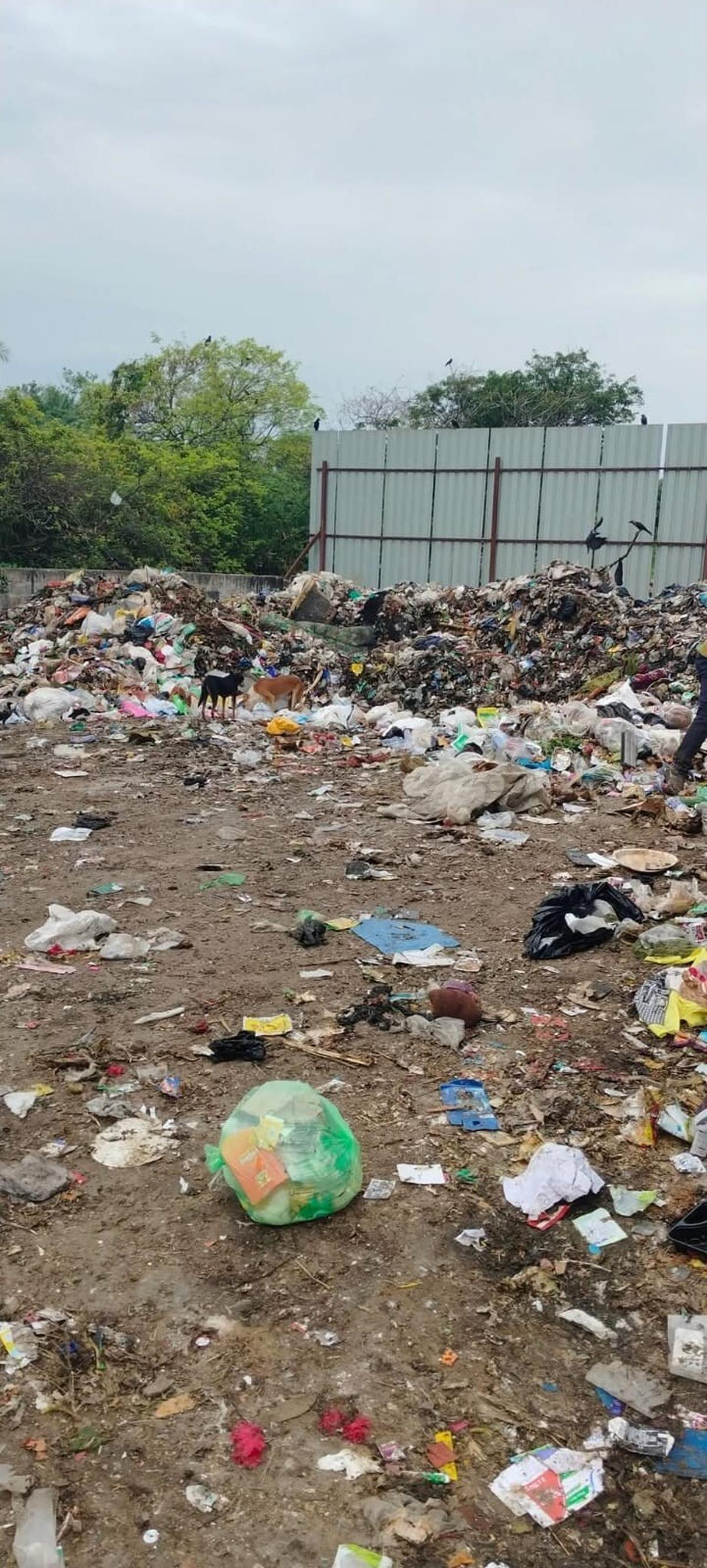
A dump site near the Nanmangalam lake.
| Photo Credit:
Special Arrangement
Another challenge, according to the organisers, is the lake’s fragmented administration. Portions of the lake fall within the limits of different local civic bodies (including the Tambaram Corporation), making coordinated restoration efforts challenging. “All the departments need to work together collectively,” says Jayapriya, stressing that both the lake and adjoining reserve forest require integrated protection measures.
A major concern is the garbage transit point established between the reserve forest and the lake by a panchayat. The site functions as a dumping and transportation area for municipal waste.
“We have seen cattle consuming plastic waste,” says Sathya, adding that birds and other animals are also likely being affected by the pollution. This scenario makes biomagnification real.
Sathya also points out untreated sewage continues entering the waterbody.
In response, the initiative has focused heavily on community participation. Volunteers organise cleanup drives, awareness campaigns, walkathons, meetings with officials, and waste segregation programmes. Residents are encouraged to reduce plastic usage, segregate waste properly and switch to cloth or jute bags.
A large awareness walkathon conducted earlier this year reportedly saw participation from nearly 600 volunteers.
Organisers say these efforts have started making a visible difference. In some stretches, garbage dumping has reduced, warning boards have been installed, and partial fencing work has been completed along the South Bund Road.
“Initially, many people believed nothing would change,” Jayapriya says. “Gradually, public participation and awareness began to increase.”
Though residents joined the initiative at different stages, the core volunteer group now consists of around 15 active members working consistently on the ground. Elderly residents who are unable to participate physically contribute through paperwork and coordination with government departments.
The movement has also expanded beyond the lake. Organisers recently formed the Vanam and Neer Foundation to support conservation efforts involving both the wetland and the Nanmangalam Reserve Forest.
Still, challenges remain. Waste often reappears after cleanup drives, and urban pressure around the lake continues to intensify. Conservation efforts, they say, cannot depend on volunteers alone.
Published – May 24, 2026 07:28 am IST