




Sri Lanka is ready to receive and support all those forced to flee the country during the civil war and now living as refugees in Tamil Nadu, Cabinet Minister and Leader of the House Bimal Rathnayake told The Hindu, urging the Governments of India and Tamil Nadu to refrain from using refugees as “a tool for political propaganda”.
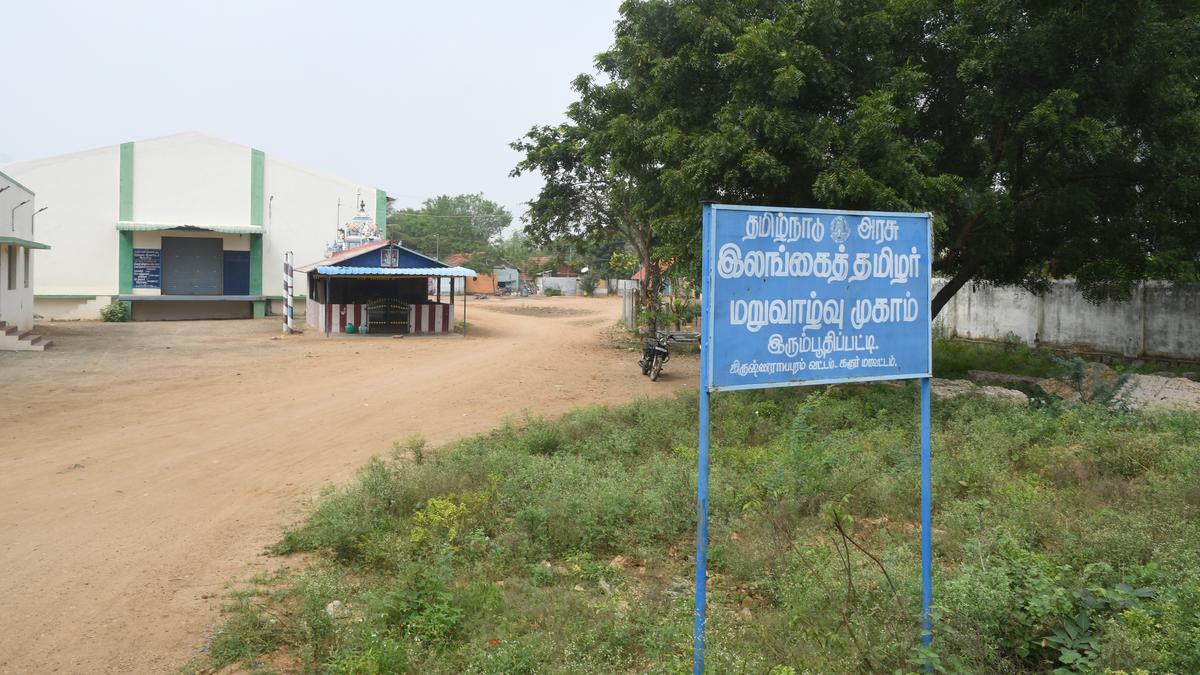
The Minister made the remarks when queried about the government’s current position on refugee-returnees from Tamil Nadu, in the wake of Chief Minister M.K. Stalin’s letter — dated February 15, 2026 — to Prime Minister Modi seeking the Union government’s intervention on issues concerning Sri Lankan Tamils living in India for over four decades. Apart from requesting New Delhi to rescind administrative instructions barring consideration of citizenship applications from Sri Lankan Tamils, Mr. Stalin sought an executive clarification waiving passport and visa requirements, where appropriate, for citizenship or long-term visa applications based on verified identity documentation issued by the Tamil Nadu government. According to Mr. Stalin’s letter, around 89,000 individuals reside in and outside camps across Tamil Nadu. Nearly 40% of them were born there.
Pointing out that 18,542 persons returned from Tamil Nadu to Sri Lanka in the 16-year period from January 2009 — the civil war ended in May that year — to June 2025, Minister Rathnayake said: “We are certainly ready to welcome those who wish to return. However, if some of them, born in India, or who have lived, studied, and worked there for decades, or married an Indian, decide to seek Indian citizenship, we cannot argue with that position. It is their reality and their right to seek citizenship there.” Further, in a message to political actors in India, he said: “My humble request to the Government of India and Government of Tamil Nadu is that please don’t use the refugees as a tool for political propaganda around elections. They have endured enormous suffering already; we must treat their request with care and sensitivity.”
A prominent voice in the ruling Anura Kumara Dissanayake administration, Mr. Rathnayake, who is a polit bureau member of the leftist Janatha Vimukthi Peramuna (JVP) or People’s Liberation Front, had visited refugee camps in Tamil Nadu in 2007, and pushed the Sri Lankan government to pass a law granting citizenship to 28,500 persons living in the camps. In May 2025, when former Jaffna MP and senior lawyer M.A. Sumanthiran highlighted the arrest of a 75-year-old Sri Lankan Tamil refugee returning from India, on charges of leaving the island without a valid passport, Mr. Rathnayake said the government would address the matter. “The government immediately instructed the Immigration Department and police not to detain those returning, citing their departure from a so-called illegal port decades ago,” he said.
Mr. Stalin’s letter to PM Modi drew wide attention in Sri Lankan media and among politicians. Mano Ganesan, Opposition MP and leader of the Tamil Progressive Alliance — representing the Malaiyaha Tamils — called for a “permanent, humane solution”. “Sri Lankan refugees living inside and outside settlements in India need clarity, not decades of uncertainty. Give them a dignified choice… a generation born, educated and integrated in India deserves justice. Others deserve freedom of choice,” he said in a social media post.
Also read: Sri Lankan refugees | The long wait for Indian citizenship
Last week, speaking in New Delhi at a screening of Frontline journalist R.K. Radhakrishnan’s documentary on refugees, Mr. Sumanthiran, general secretary of the Ilankai Tamil Arasu Katchi (ITAK), said that while the diminishing number of Tamils in Sri Lanka may not favour the Tamil polity trying to strengthen its constituency, “this is an exceptional situation.” Those who wish to remain in India must have the option, he said, adding that “in international law, nobody should be a stateless person.” He also urged the Sri Lankan government to ensure the smooth return of those who wish to come back, where there is no fear of arrest.
Authorities said a total of 246 persons from 46 families returned from India to Sri Lanka between July 2025 and February 2026, with no arrests reported during the time. S. Sooriyakumari, president of OfERR (Organisation for Eelam Refugees’ Rehabilitation) Ceylon, a non-profit organisation working with Sri Lankan refugee communities, said the Sri Lankan government must clear administrative hurdles, facilitate easy paperwork, and ensure smooth reintegration of those returning. “It is very important that the governments of India and Sri Lanka discuss this matter and develop a structured programme to look into the future of the refugees; it must not remain ambiguous,” she said. The UN Refugee agency, which stepped back following arrests of some returnees last year, has now agreed to facilitate their return, sources familiar with the process said.
Meanwhile, some like Antan Roshanthiny — born in a refugee camp in Tamil Nadu — are happy to be back. “My parents fled during the war and were refugees in Tamil Nadu. I was born there. After the war, my family returned in phases. I came back in 2014,” she said. Ms. Roshanthiny’s early years in the northern Kilinochchi district were not easy. Her family had to rebuild a home, sort out land contestations, navigate delays in paperwork, and cope with unkind local reactions to a different Tamil accent. “Over time, things got better and I started feeling more at home. Seeing administrative faults and widespread corruption around me, I decided to work on people’s issues,” said the 29-year-old, now a full-time political activist with the ruling National People’s Power coalition.
Published – March 18, 2026 09:40 pm IST