



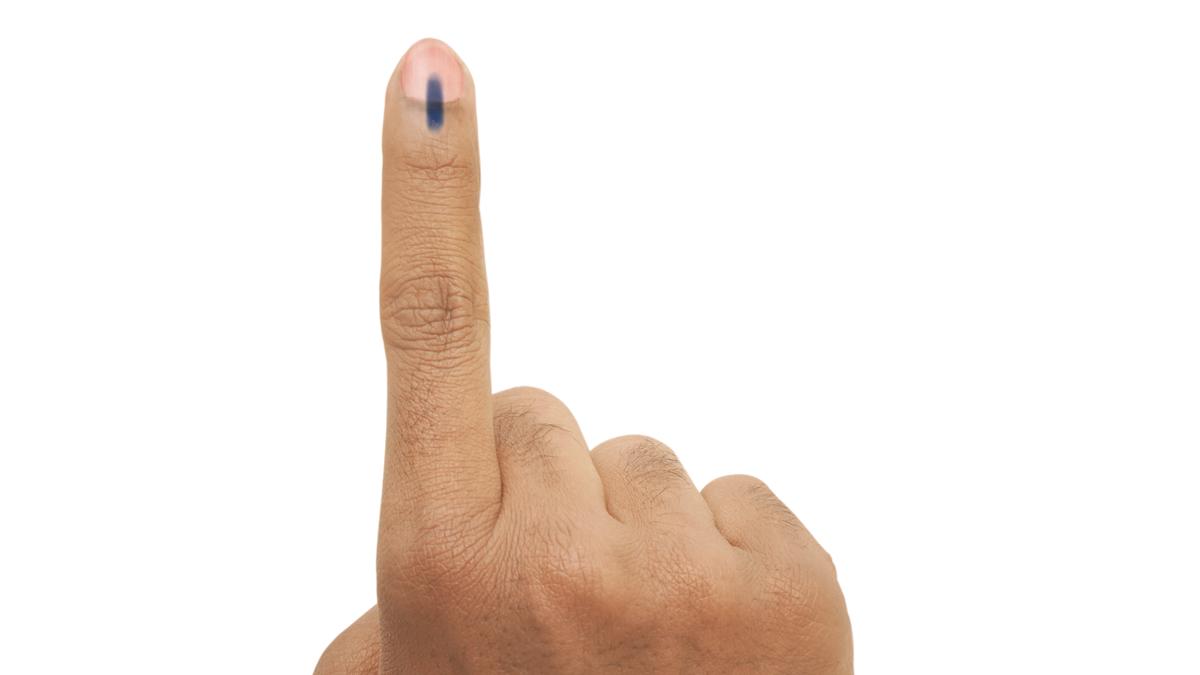
In 2019, Indonesia held a historic one-day election for the President, national and regional legislatures, and local councils. Aimed at cutting costs and simplifying administration, it came at a tragic human cost: nearly 900 poll workers died and over 5,000 fell seriously ill. In 2024, there was again a heavy toll — more than 100 deaths and nearly 15,000 illnesses. In June 2025, the Constitutional Court ruled that national and local elections must be held separately from 2029, two to two-and-a-half years apart, citing voter and administrator overload and the impact on democratic participation.
Supporters of India’s ‘One Nation, One Election’ (ONOE) proposal argue that synchronising the Lok Sabha (general election) and State Assembly elections would reduce expenditure, limit prolonged security deployments, minimise disruptions caused by the Model Code of Conduct (MCC), and prevent political parties from remaining in constant campaign mode. Indonesia’s experience, however, offers a cautionary lesson.
Comparative constitutional practice offers little support for enforced electoral synchronisation. In Canada, federal and provincial elections occur independently. In Australia, synchronisation is impossible: State legislatures serve fixed four-year terms, while the federal House of Representatives has a maximum tenure of three years.
Germany is often miscited. Its stability arises not from synchronised elections — Länder polls are deliberately staggered — but from the Constructive Vote of No Confidence, which requires the Bundestag to elect a successor before removing a Chancellor.
South Africa and Indonesia use proportional representation, which diffuses political power and protects minority voices. India’s first-past-the-post system lacks such safeguards, allowing a national wave to sweep State elections. The United States offers an even weaker analogy: fixed electoral cycles function there because the executive’s tenure is insulated from legislative confidence in a presidential system.
The Constitutional Amendment proposal
The most comprehensive blueprint emerged from the High-Level Committee ((2023-24) chaired by former President Ram Nath Kovind, now taking legislative form in the Constitution (One Hundred and Twenty-ninth Amendment) Bill, 2024. The proposed Article 82A empowers the President to notify an “appointed date” from which all State Assembly tenures would align with the Lok Sabha’s cycle. Assemblies constituted after this date would have their tenure curtailed, even if their five-year term had not expired. The Bill also introduces “unexpired-term elections”: if a legislature is dissolved prematurely, the new legislature would serve only the remainder of the original term rather than receiving a fresh mandate. Additionally, it grants the Election Commission of India the authority to recommend deferring State elections if simultaneous conduct proves impracticable. Amendments are proposed to Articles 83, 172, and 327. These changes raise serious constitutional concerns.
India deliberately adopted a parliamentary system where governments survive only as long as they retain legislative confidence. In the Constituent Assembly, Dr. B.R. Ambedkar explained that democracy cannot simultaneously maximise stability and responsibility. India chose responsibility — continuous executive accountability rather than guaranteed tenure.
Articles 75 and 164 establish the collective responsibility of the executive to the legislature. Articles 83 and 172 prescribe only a maximum tenure of five years for legislatures, not a guaranteed term. Early dissolution is, therefore, not a defect but a democratic safeguard, allowing voters to renew the mandate when confidence collapses. ONOE reverses this logic, treating dissolution as an administrative inconvenience and subtly shifting India toward a quasi-presidential model that weakens legislative accountability.
In S.R. Bommai vs Union of India (1994), the Supreme Court of India affirmed that federalism is part of the Constitution’s basic structure. States are not mere administrative units but possess an independent constitutional identity. Their democratic rhythms may legitimately differ.
ONOE unsettles this principle. It allows State mandates to be truncated not because legislative confidence has collapsed, but to align with the national electoral calendar. If introduced in 2029, a State electing its legislature in 2033 would see its mandate expire in just one year.
By contrast, staggered elections to Parliament, State Legislatures, and local bodies create a continuous feedback mechanism, keeping governments attentive to public sentiment. In a system without a right of recall, they serve as the next best instrument of accountability. As James Madison wrote in ‘Federalist No. 52’, frequent elections ensure governments maintain “immediate dependence on, and sympathy with, the people.”
The problem of ‘unexpired-term’ elections
The most troubling feature is mid-term elections for unexpired legislative term. The Constitution recognises no concept of a residual mandate. Although the proposed Articles 83(6) and 172(5) claim that a newly elected House would not be a continuation of the previous one, they effectively preserve earlier electoral cycles to maintain synchronisation. This produces several distortions.
First, it devalues the franchise. Mid-cycle elections would produce governments with truncated mandates, reducing elections to provisional exercises and risking deeper voter apathy.
Second, it undermines governance and accountability, as residual-term governments lack incentives for structural reform, encouraging populism and policy drift. Unlike the temporary constraints imposed by the MCC, truncated mandates could weaken governance for years rather than weeks.
Third, it risks creating a “governance dead zone”. The Amendment Bill does not specify the minimum duration of an “unexpired term” triggering a mid-term election.
At the State level, deferring elections could prolong President’s Rule, conflicting with Article 356(5), which limits it to one year, extendable to three years only during a national emergency with Election Commission of India (ECI) certification.
At the Union level, a caretaker government could remain in office awaiting synchronised elections, potentially breaching Article 85’s requirement that Parliament meet every six months. Such a government cannot present a full Budget under Articles 112-117 and would be limited to a Vote on Account (Article 116), hampering fiscal governance.
Thus the “unexpired-term” mechanism is legally unworkable at the Union level beyond six months and would require sweeping constitutional changes that risk distorting the Constitution’s identity and violating the Basic Structure doctrine.
The proposed Article 82A(5) empowers the ECI to recommend deferral of State elections without clear criteria, time limits, or parliamentary oversight, if unable to be conducted simultaneously with the Lok Sabha. Even Article 356 contains safeguards — parliamentary approval and temporal limits. By contrast, Article 82A(5) creates a zone of unguided discretion.
If a State government falls mid-term, the Union government could impose President’s Rule and defer elections, effectively governing the State through the Governor. The incoming government, after elections, may inherit only a truncated tenure.
The issue is not whether such abuse is likely, but that the Amendment makes it constitutionally possible. As Alexander Hamilton warned in Federalist No. 59 (1788), the constitutional possibility of misuse is itself “an unanswerable objection.”
In the NJAC case (2015), the Court held that constitutional validity depends on institutional design, not assurances of benign exercise. An amendment that structurally endangers a basic feature is unconstitutional regardless of how power may be used in practice. ONOE risks violating federalism by enabling prolonged unelected State governance in the name of synchronisation.
The cost argument
The fiscal burden of elections is macro-economically negligible and the figures do not justify a constitutional overhaul of such magnitude.
The Parliamentary Standing Committee estimates show combined Lok Sabha and State Assembly election spending at around ₹4,500 crore (2015-16), about 0.25% of the Union Budget and 0.03% of GDP. PRS data shows Lok Sabha election costs historically ranged from 0.02%-0.05% of GDP (1957-2014). Elections are held in phases (82 days in 2024), allowing the ECI to rotate EVMs, VVPATs, and security forces. Simultaneous polls would remove this flexibility and demand costly new resources, weakening claimed administrative gains.
Is it wise to amend the Constitution and weaken federalism to save fractions of 1% of GDP? Elections are not an overhead to be minimised but the recurring price of self-government, ensuring that power remains answerable to the people.
The Justice Kurian Joseph Committee on Union-State Relations, constituted by the Government of Tamil Nadu, has recommended in Part I of its Report (February 2026) that the Bill should be withdrawn — a stance endorsed by the Tamil Nadu government The promised benefits of the ONOE proposal are overstated, while its structural harms are profound. It distorts the Constitution’s identity and violates the basic structure. India must avoid repeating Indonesia’s mistake.
M.K. Stalin is the Chief Minister of Tamil Nadu