Skip to content
  • Facebook
  • X
  • Linkedin
  • WhatsApp
  • Associate Journalism
  • About Us
  • Privacy Policy
  • 033-46046046
  • editor@artifex.news
Artifex.News

Artifex.News

Stay Connected. Stay Informed.

  • Breaking News
  • World
  • Nation
  • Sports
  • Business
  • Science
  • Entertainment
  • Lifestyle
  • Toggle search form
  • Access Denied
    Access Denied Nation
  • Dushyant Chautala Rides Bike At Rally Without Helmet. Fined Rs 2,000
    Dushyant Chautala Rides Bike At Rally Without Helmet. Fined Rs 2,000 Nation
  • Goa Chief Minister Pramod Sawant’s “Work From Beach” Pitch To Attract Tourists
    Goa Chief Minister Pramod Sawant’s “Work From Beach” Pitch To Attract Tourists Nation
  • Access Denied Sports
  • Access Denied
    Access Denied Sports
  • Significant Improvement For Indians In Green Card Queue For January 2025
    Significant Improvement For Indians In Green Card Queue For January 2025 Nation
  • Post Virat Kohli’s 67-Ball Ton, RCB Coach Breaks Silence On ‘Strike-Rate’ Chatter
    Post Virat Kohli’s 67-Ball Ton, RCB Coach Breaks Silence On ‘Strike-Rate’ Chatter Sports
  • Access Denied World
Why did the U.S. Supreme Court reject Trump’s tariffs? | Explained

Why did the U.S. Supreme Court reject Trump’s tariffs? | Explained

Posted on March 8, 2026 By admin


The story so far:

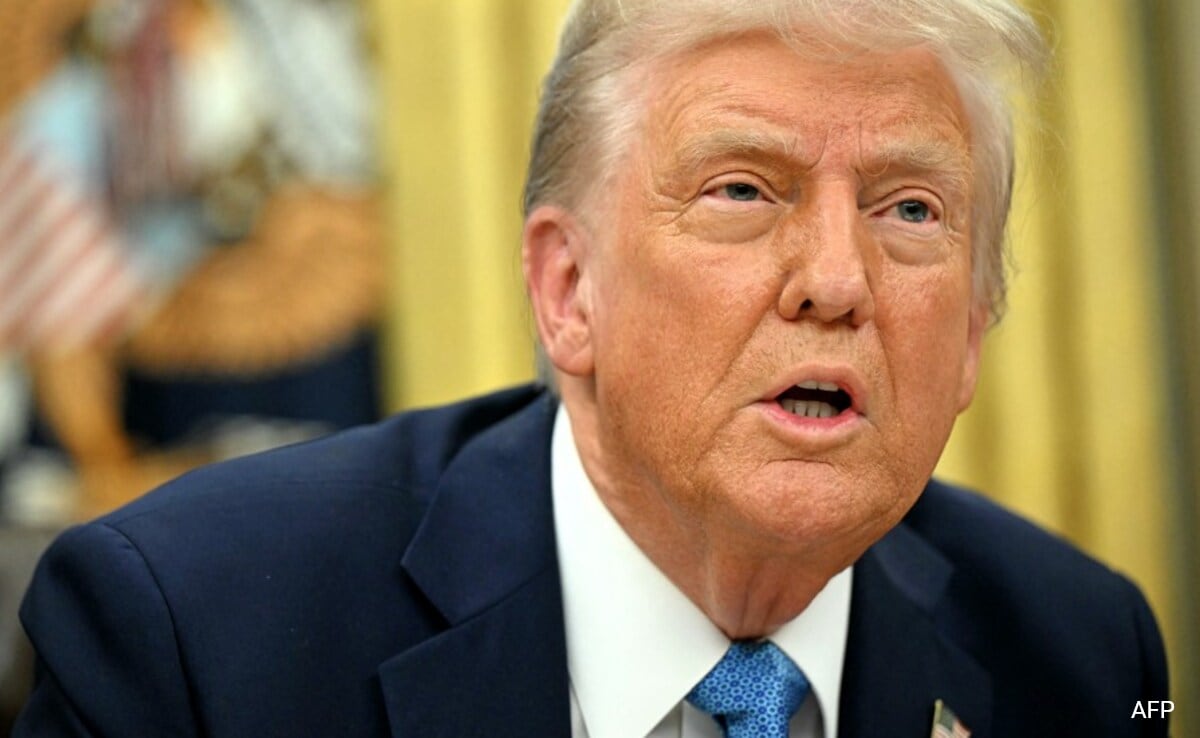
On February 20, the U.S. Supreme Court delivered a decision that could reshape the legal boundaries of presidential trade power. The court held that the International Emergency Economic Powers Act (IEEPA), which U.S. President Donald Trump relied on, does not authorise a President to impose tariffs. It struck down the sweeping reciprocal and drug-trafficking-related tariffs imposed by Mr. Trump in 2025, calling them unconstitutional.

What authority did Trump rely on?

So far, Mr. Trump has used the IEEPA, a 1977 law that allows the President to regulate certain economic transactions after declaring a national emergency to address an “unusual and extraordinary threat” originating outside the country.

IEEPA emerged out of the Trading with the Enemy Act, which was passed in 1917 when the U.S. entered the First World War, to regulate trade with enemy nations. It has been used to freeze foreign assets held in American banks, block financial transfers, and impose sanctions on hostile governments and terrorist groups. However, before 2025, it was never used to impose tariffs.

After returning to office for his second term, Mr. Trump declared national emergencies tied to drug trafficking from Latin American countries and trade imbalances. His administration imposed 25% tariffs on most goods from its neighbours, Canada and Mexico, 10% tariffs on most goods from China, and a separate reciprocal tariff programme imposing at least a 10% duty on imports from virtually all trading partners. Some countries, including India, were hit with even higher rates.

Why did the Supreme Court strike the tariffs down?

The U.S. Constitution gives Congress the power “to lay and collect taxes, duties, imposts and excises.” Congress also has the power to regulate trade with foreign countries, and tariffs fall squarely within that authority.

The court concluded in a 6-3 ruling that the IEEPA does not authorise the President to impose tariffs. Chief Justice John Roberts, in his opinion, cited a hodgepodge of tariffs announced by Mr. Trump.

“The President asserts the extraordinary power to unilaterally impose tariffs of unlimited amount, duration, and scope,” Justice Roberts wrote in his opinion. “In light of the breadth, history, and constitutional context of that asserted authority, he must identify clear congressional authorisation to exercise it.”

Does this mean Trump can no longer impose tariffs?

No. The decision only forbids the use of IEEPA, but Mr. Trump was quick to announce a workaround. Shortly after the Supreme Court ruling, his administration announced a new temporary import duty, which went into effect on February 24 for a period of 150 days.

“We will get back to the same tariff level for the countries. It will just be in a less direct and slightly more convoluted manner,” U.S. Treasury Secretary Scott Bessent said after the Supreme Court ruling.

Mr. Trump alluded to using Sections 122, 301, and 232 to levy tariffs.

Section 122 is part of the Trade Act of 1974. It permits the U.S. President to impose tariffs of up to 15% on a country to address “a large and serious United States balance-of-payments deficit.” The tariff can be applied for a maximum of 150 days unless extended by Congress.

Section 301 of the U.S. Trade Act of 1974 allows tariffs to be imposed if the government finds that a trading partner has engaged in what it deems unfair trade practices.

Section 232 is part of the U.S. Trade Expansion Act of 1962. These tariffs are levied on specific sectors if the Secretary of Commerce deems them necessary on national security grounds.

What role does Congress now play?

Congress sits at the centre of tariff authority for two reasons.

The Constitution assigns it the taxing power, and in its ruling, the court leaned heavily on this allocation while interpreting the IEEPA.

Congress determines the scope of executive trade authority through statute. It has the power to narrow existing delegations, require its approval for tariffs, or even expand presidential powers if it chooses to.

Politically, redesigning tariff authority would require bipartisan agreement, especially since the court has made clear that sweeping tariffs must rest on a clear legislative footing.

Will businesses that lost money to tariffs get refunds?

For months, American businesses and customers bore the brunt of the heightened tariffs. The court ruling, while rendering the tariffs illegal, has not created a mechanism for a refund.

According to a Goldman Sachs report, $180 billion was collected through the now-invalidated tariffs.

More than 1,000 companies, including big names like FedEx, have sued the U.S. government in the U.S. Court of International Trade seeking refunds for the tariffs.

The suit is seeking compensation for potentially millions of shippers who paid import duties and related fees on products that should have entered the U.S. duty-free, Reuters reported.

Does the court decision limit future Presidents?

The ruling draws a clearer statutory boundary.

Future Presidents will retain the authority to regulate trade, as Mr. Trump does, but courts rely heavily on precedents. As a result, it may scrutinise attempts to use emergency powers beyond their intended scope.

Published – March 08, 2026 10:37 pm IST


Source link

World

Post navigation

Previous Post: Access Denied
Next Post: Access Denied

Related Posts

  • Israel “Deeply Concerned” After Strike Injures 2 UN Peacekeepers In Lebanon
    Israel “Deeply Concerned” After Strike Injures 2 UN Peacekeepers In Lebanon World
  • What’s In A Leap Year? Eternal Youth, Wedding Bells And Tech Bugs
    What’s In A Leap Year? Eternal Youth, Wedding Bells And Tech Bugs World
  • Access Denied World
  • Teenager dead in shooting at Philadelphia bus stop
    Teenager dead in shooting at Philadelphia bus stop World
  • Sacred claims – The Hindu
    Sacred claims – The Hindu World
  • Access Denied World

More Related Articles

Access Denied World
Netanyahu approves  billion natural gas export deal to Egypt, biggest in Israeli history Netanyahu approves $35 billion natural gas export deal to Egypt, biggest in Israeli history World
2-Year-Old Boy Buried For 14 Hours After Strikes In Lebanon, Survives 2-Year-Old Boy Buried For 14 Hours After Strikes In Lebanon, Survives World
LeT rebuilding its Muridke headquarters in Pakistan using ‘flood relief’ as a front, say security agencies LeT rebuilding its Muridke headquarters in Pakistan using ‘flood relief’ as a front, say security agencies World
Israelis Not Welcome At Paris Olympic Games, Says French MP, Sparks Row Israelis Not Welcome At Paris Olympic Games, Says French MP, Sparks Row World
Palestinian athletes to be invited to Paris Olympics Palestinian athletes to be invited to Paris Olympics World
SiteLock

Archives

  • March 2026
  • February 2026
  • January 2026
  • December 2025
  • November 2025
  • October 2025
  • September 2025
  • August 2025
  • July 2025
  • June 2025
  • May 2025
  • April 2025
  • March 2025
  • February 2025
  • January 2025
  • December 2024
  • November 2024
  • October 2024
  • September 2024
  • August 2024
  • July 2024
  • June 2024
  • May 2024
  • April 2024
  • March 2024
  • February 2024
  • January 2024
  • December 2023
  • November 2023
  • October 2023
  • September 2023
  • August 2023
  • July 2023
  • June 2023
  • May 2023
  • April 2023
  • March 2023
  • February 2023
  • January 2023
  • December 2022
  • November 2022
  • October 2022
  • September 2022
  • August 2022
  • July 2022
  • June 2022
  • May 2022

Categories

  • Business
  • Nation
  • Science
  • Sports
  • World

Recent Posts

  • Access Denied
  • UV camera snaps treetops glowing as thunderstorm passed overhead
  • Sri Lanka to grant one month visas to distressed Iranian sailors: Minister
  • Access Denied
  • Access Denied

Recent Comments

  1. Michaelplard on UP Teacher Who Asked Students To Slap Muslim Classmate
  2. Michaelplard on UP Teacher Who Asked Students To Slap Muslim Classmate
  3. JoshuaBew on UP Teacher Who Asked Students To Slap Muslim Classmate
  4. Dennysteaw on UP Teacher Who Asked Students To Slap Muslim Classmate
  5. RobertGok on UP Teacher Who Asked Students To Slap Muslim Classmate
  • Access Denied
    Access Denied Nation
  • Access Denied Business
  • Raj Thackeray’s Son Amit To Make Electoral Debut From Mahim Assembly Seat
    Raj Thackeray’s Son Amit To Make Electoral Debut From Mahim Assembly Seat Nation
  • ‘Lathi’-Training By RSS To Instill Bravery, Not For Fighting: Mohan Bhagwat
    ‘Lathi’-Training By RSS To Instill Bravery, Not For Fighting: Mohan Bhagwat Nation
  • Access Denied Sports
  • PM Modi, Xi Welcome “Complete Disengagement” Between Soldiers Along LAC
    PM Modi, Xi Welcome “Complete Disengagement” Between Soldiers Along LAC Nation
  • Asia Cup | Afghan pacer Naveen ruled out, Ahmadzai named replacement
    Asia Cup | Afghan pacer Naveen ruled out, Ahmadzai named replacement Sports
  • Access Denied Sports

Editor-in-Chief:
Mohammad Ariff,
MSW, MAJMC, BSW, DTL, CTS, CNM, CCR, CAL, RSL, ASOC.
editor@artifex.news

Associate Editors:
1. Zenellis R. Tuba,
zenelis@artifex.news
2. Haris Daniyel
daniyel@artifex.news

Photograher:
Rohan Das
rohan@artifex.news

Artifex.News offers Online Paid Internships to college students from India and Abroad. Interns will get a PRESS CARD and other online offers.
Send your CV (Subjectline: Paid Internship) to internship@artifex.news

Links:
Associate Journalism
About Us
Privacy Policy

News Links:
Breaking News
World
Nation
Sports
Business
Entertainment
Lifestyle

Registered Office:
72/A, Elliot Road, Kolkata - 700016
Tel: 033-22277777, 033-22172217
Email: office@artifex.news

Editorial Office / News Desk:
No. 13, Mezzanine Floor, Esplanade Metro Rail Station,
12 J. L. Nehru Road, Kolkata - 700069.
(Entry from Gate No. 5)
Tel: 033-46011099, 033-46046046
Email: editor@artifex.news

Copyright © 2023 Artifex.News Newsportal designed by Artifex Infotech.