In July 1977, Mohammad Reza Pahlavi, the Shah of Iran, sent Lt. Gen. Hassan Toufanian, his Deputy Minister of War and Armaments, to Israel to hold secret talks with the newly formed Likud government of Menachem Begin. Three months earlier, the Shah had signed six ‘oil for arms’ contracts with Shimon Peres, the acting Prime Minister in the previous interim government. One of the contracts, code-named ‘Flower’, sought Israel to modify its advanced surface-to-surface missiles and sell them to Iran. Gen. Toufanian’s mission was to ensure that the change of government in Israel would not affect the deal. He met Maj. Gen. Ezer Weizman, Defence Minister in the Begin government, and both of them agreed to build a military co-production line — Israel was to provide the technical know-how and Iran the finances and test sites. As part of it, Israel promised to supply Iran with ballistic surface-to-surface missiles with a range of 700 km that could carry nuclear warheads, writes journalist Ronen Bergman in his book, The Secret War with Iran.
Iran-Israel conflict LIVE
But within two years, the relationship had turned upside down. The Shah was toppled by nationwide protests. Ayatollah Ruhollah Khomeini, a leading Shia cleric, arrived in Tehran in February 1979 from exile in Paris. Shia Islamists, under Khomeini’s leadership, took over the reins of the country and turned it into an Islamic Republic — a semidemocratic, theocratic state. The new Iran declared “liberation” of Jerusalem one of its key objectives. At the U.S. Embassy in Tehran, 66 Americans, including diplomats and civilian personnel, were taken hostage by revolutionaries. For revolutionary Iran, America, which had orchestrated the 1953 coup against nationalist Prime Minister Mohammed Mossaddegh and had been the principal backer of the Shah, was the “great Satan”, while Israel, the occupier of Palestine, was the “little Satan”.
The revolution did not just transform Iran; it was also a geopolitical earthquake. If the Shah’s Iran had been one of the pillars of the U.S.-Israel alliance, Khomeini’s Iran emerged as this alliance’s top nemesis. Forty-seven years later, that enmity has escalated into a full-blown war, with Israel and the U.S. launching air strikes in Iran and Tehran retaliating against Israel and American bases in the region.
A new rival
The Islamic Republic was born in a region that was already witnessing new currents in Arab-Israeli relations. In 1978, Egypt became the first Arab country to recognise Israel, in return for the Sinai Peninsula which Israel had seized in the 1967 War. Arab countries, though still supportive of the Palestinian cause, were moving away from the phase of confrontation with Israel. For Shia revolutionary Iran, its support for Palestine was not only a religious duty but also a practical foreign policy move aimed at winning over the Muslim world, bridging the Shia-Sunni divide. Israel, which established conventional deterrence against Arab countries in the region, saw a new enemy emerging. The rivalry between Israel and Iran has shaped West Asia’s geopolitics ever since.
With support from the U.S. and other Western partners, Israel, a nuclear-armed country, has emerged as the most powerful military in the region. On the other side, Iran, which faced American sanctions immediately after the revolution, turned to building and supporting a network of militias. In the early 1980s, Iran helped create Hezbollah, a Lebanese Shia movement. And in the 1990s, it doubled down on its support for Hamas and the Islamic Jihad. When the Oslo process, which promised a two-state solution to the Palestine question, collapsed in the latter half of the 1990s, Hamas emerged as a major pillar of the Palestinian resistance. This, in turn, turned Iran into a key player in the Israel-Palestine crisis.
In southern Lebanon, Israel found it increasingly difficult to continue its occupation amid Hezbollah’s resistance. Iran provided money, training and weapons to Hezbollah through Syria, which was ruled by the Assad family. In 2000, after 18 years of occupation, Israel was forced to withdraw from southern Lebanon, and Hezbollah claimed that it was the first Arab force to defeat the Israeli army. In 2006, Israel attacked Lebanon again, but Hezbollah survived the month-long campaign.

Regional influence
This strategy of forward defence appeared to be working in Iran’s favour in the early 2000s. Look, for example, at the 2003 U.S. invasion of Iraq. Before the invasion, U.S. President George W. Bush had grouped Iran with Iraq and North Korea as part of an ‘Axis of Evil’. There was much speculation that the Bush administration would turn to Iran once the Iraq war was over. But the fall of Saddam Hussein, the Iraqi leader who attacked Iran in 1980, removed a critical buffer between the Persian Gulf kingdoms and Iran.
When Iraq, a Shia-majority country, held elections after the fall of Saddam’s regime, Shia parties with historical ties to Tehran emerged as the new ruling elite. When Iraq descended into a sectarian civil war between Sunni jihadists and Shia militias, the U.S. became deeply entangled in the conflict. Iran’s influence stretched along the so-called Shia crescent, from Tehran, through Baghdad and Damascus all the way to southern Lebanon, on Israel’s northern border. At home, Iran also advanced its nuclear programme. But this ascent was short-lived. Arab Spring protests, which broke out in late 2010 and shook several regimes in the region, marked the beginning of the decline of Iran’s influence.
News Analysis | What does Trump want from Iran?
The protests saw the deeply entrenched regimes of Tunisia and Egypt collapse. In Libya, NATO made a military intervention against the regime of Moammer Gaddafi. In Yemen, President Ali Abdullah Saleh had to resign amid sustained protests and a new Saudi-nominated government took charge. The crisis in Yemen also saw the rise of Ansar Allah (Houthis), who captured Sanaa in 2014, giving Iran direct influence in Saudi Arabia’s backyard. But in Syria, protests against the regime of President Bashar al-Assad threatened to cut short Iran’s regional influence. Mr. Assad’s Syria was Iran’s only regional state ally. It was also a vital link between Hezbollah and Tehran. If the regime fell, it would cut off the link, weakening both Iran and Hezbollah.
Iran knew what was at stake, and it did not hesitate for a moment in helping the Syrian government. Thousands of Hezbollah fighters crossed the border into Syria to fight alongside the regime forces. Iran mobilised Shia fighters from across the region and sent them to Syria. In September 2015, Russian President Vladimir Putin decided to send Russian special forces and fighter jets to Syria in defence of the government. With help from Russia, Iran and Hezbollah, the Assad regime turned the tide of the civil war and recaptured most of the lost territory.
Sunni countries in West Asia as well as their Western partners who initially called for Mr. Assad’s departure saw their policy backfiring after the rise of the Islamic State. The Islamic State practically erased the border between Iraq and Syria and created a proto-state, stretching from Raqqa in Syria to Mosul in Iraq. For Iran, the Islamic State represented a two-way threat. Its rise threatened to unravel two of Iran’s friendly states in West Asia — Iraq and Syria. Two, the extremist, sectarian Salafi-Jihadist ideology, which calls Shias “rejectionists” of faith, was an existential threat. At this point, Iran and the U.S. found common ground in defeating the Islamic State.
The View from India | What is Israel’s endgame in Iran?
Nuclear deal
The most contentious issue between Iran and the U.S. was the former’s nuclear programme. Iran had built a sprawling nuclear infrastructure, but maintained that its programme was peaceful. Successive U.S. governments had imposed biting sanctions on Tehran over the nuclear programme. In 2013, the U.S., under the Obama administration, started direct talks with Iran, after Hassan Rouhani, a moderate cleric, was elected President. In 2015, both sides, along with other world powers, agreed to the Joint Comprehensive Plan of Action (JCPOA), which sought to limit Iran’s nuclear programme, denying it a path towards the bomb, in return for lifting international sanctions. Almost all powers in the world welcomed the agreement, which was seen as a new chapter in the hostile post-1979 relations between the U.S. and Iran. Except one — Israel.
Mr. Obama went ahead with the deal and lifted sanctions on Iran despite Israel’s opposition. The reset seemed to be working, especially when the U.S. and Iranian sides started coordinating with each other in the battle against the Islamic State in Iraq. But it did not last long. The man who succeeded Mr. Obama was Donald Trump, whom Mr. Netanyahu described as the “greatest friend of Israel”. The writing on the wall was clear.
Mr. Trump termed the JCPOA the “worst deal” in U.S. history. In May 2018, despite UN confirmation that Iran was fully compliant with the terms of the agreement, Mr. Trump withdrew the U.S. from the agreement and reimposed sanctions on Iran, taking Iran-U.S. ties back to the pre-Obama era of hostility. After the U.S. imposed sanctions, Iran started enriching uranium to higher than the permissible limits. Israel, on its part, carried out a host of covert operations inside Iran, including the killings of the country’s top nuclear scientists.

June war
Mr. Trump wanted concessions from Iran on its weapons programmes and regional activism (support for non-state actors). But Iran took a ‘maximum resistance’ policy to Mr. Trump’s maximum pressure — it carried out attacks in Saudi Arabia and in the Gulf waters, stepped up support for its proxies, especially the Houthis in Yemen. In January 2020, the U.S. assassinated Qassem Soleimani, a charismatic Iranian General who oversaw the IRGC’s external operations. It was a massive blow to Iran. Tehran responded by attacking an American base in Iraq, but the crisis blew over as both sides did not want an all-out war. What would change that dynamic was the October 7, 2023 Hamas attack on Israel and the subsequent developments in the region.
Israel declared two primary objectives — the destruction of Hamas and the release of the 251 hostages taken on October 7. But the way it fought the war suggests that it has deeper ambitions. For Israel, Hamas was only the tip of the iceberg. Its real enemy was Iran. After October 7, Israel saw an opening to wage a two-front war — the first was to crush Palestinian resistance once and for all, and the second was to dismantle Iran’s axis and weaken its regional influence. Prime Minister Netanyahu wanted to build a unipolar West Asia, with Israel, backed by the U.S., being the central security player; roll back Iran; keep Arab countries under check; and push the Palestinian question back to the margins of the region.
In Syria, the collapse of the Bashar al-Assad regime in December 2024, and the rise of Abu Mohammed al-Golani (Ahmed al-Sharaa), a former al-Qaeda jihadist, marked a tactical victory for Israel. A weakened Hezbollah was further isolated, and Iran’s forward defence suddenly looked porous. Iran lay vulnerable to external threats. Then it was only a matter of time before a direct attack against Iran. Sensing danger, Iran started indirect talks with the Trump administration. Iran’s message was that it was ready to cut a deal over its nuclear programme. Its political and security leaders repeatedly said it was not seeking to build a nuclear bomb. But on June 13, two days ahead of the planned sixth round of talks between Washington and Tehran, Israel started bombing Iran. A few days later, the U.S. joined the war, attacking Iran’s key nuclear facilities. After 12 days of fighting, both sides agreed to a ceasefire. Mr. Trump claimed that he had “obliterated” Iran’s nuclear programme and Mr. Netanyahu declared a “historic victory”. But the crisis was far from over.
Israel wants Iran to give up its nuclear programme, end its missile production and stop supporting non-state militias in the region. In other words, Israel wants Iran’s total disarmament. Iran was open to a deal on its nuclear programme but would not discuss other issues. The Trump administration’s officials, including Marco Rubio, the Secretary of State, also backed the Israeli demands, saying Iran should talk about issues beyond its nuclear programme. This led to fundamental disagreements in diplomacy. The only way Israel could meet these objectives is by bringing about regime change in Tehran and installing a new puppet regime.

Road to chaos
In January 2026, when protests broke out in Iran over a falling currency, Mr. Trump quickly offered his support for the protesters. He said the U.S. was “locked and loaded”. Protests and riots spread across Iranian provinces in the first half of January. Iranian authorities blamed foreign agents for triggering “riots and terrorism”. Mossad, Israel’s intelligence unit, also claimed that its agents were “on the field” in Iran. On January 8-9, Iranian authorities crushed the rebellion. At least 3,000 people were killed. A tense calm prevailed in Iran after the crackdown, but external threats mounted.
Mr. Trump started building America’s largest military presence in the region since the 2003 Iraq war, while diplomats from both sides met at least three times. Iran claimed progress after each time, but the U.S. said gaps remained. On February 28, Oman’s Foreign Minister Hamad Al Busaidi told CBC that a deal was within reach. He said Iran agreed not to make a nuclear weapon and not to stockpile nuclear material. “If the ultimate objective is to ensure forever that Iran cannot have a nuclear bomb, I think we have cracked that problem through these negotiations by agreeing [on] a very important breakthrough that has never been achieved anytime before,” Al Busaidi said.
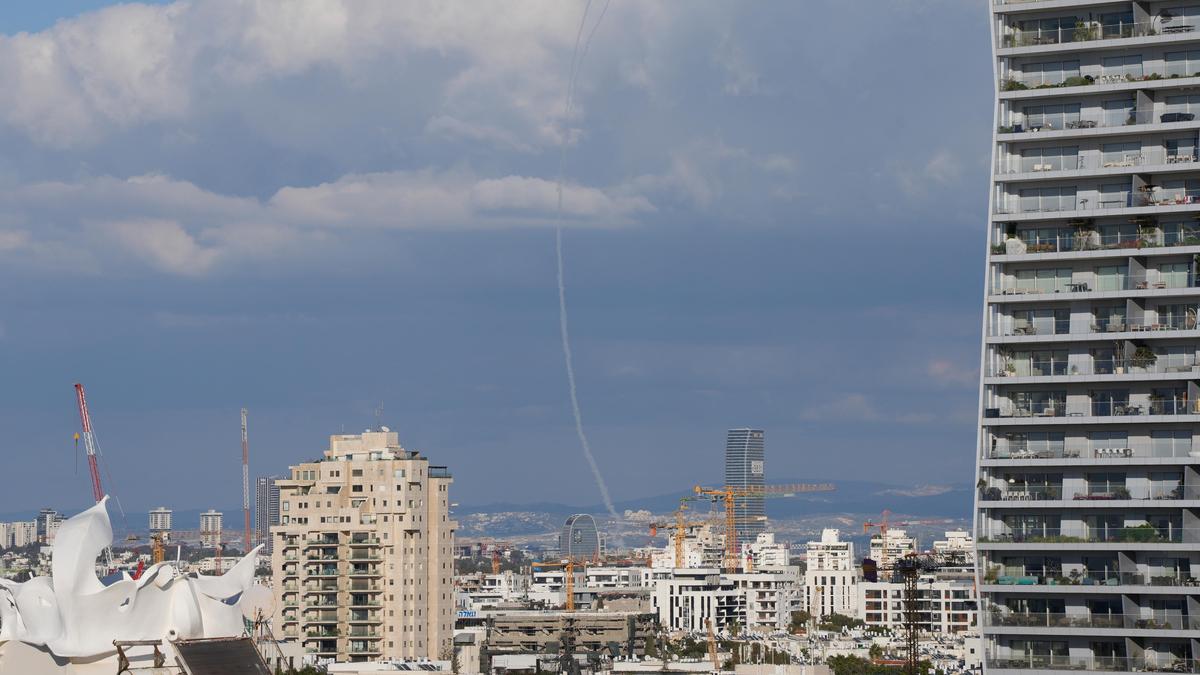
A few hours later, Israel and the U.S. started bombing Iran, targeting the country’s top leadership as well as government and military installations. Israel called it a “pre-emptive strike” and said it “would continue as long as necessary”. Mr. Trump, indicating that regime change was his goal, told Iranians: “The hour of your freedom is at hand”. Iran, which rapidly retaliated by firing ballistic missiles at Israel and at least five American bases in the region, said, “This is a national struggle imposed on us”. This attack, Iran’s Foreign Ministry said, “could mark the beginning of the end for international institutions and norms.” America and Israel seek regime change and a permanent shift in the balance of power in West Asia. For the Islamic Republic, this is a war of survival.