





Skip to content
  • Facebook
  • X
  • Linkedin
  • WhatsApp
  • Associate Journalism
  • About Us
  • Privacy Policy
  • 033-46046046
  • editor@artifex.news
Artifex.News

Artifex.News

Stay Connected. Stay Informed.

  • Breaking News
  • World
  • Nation
  • Sports
  • Business
  • Science
  • Entertainment
  • Lifestyle
  • Toggle search form
  • Pakistani airstrikes target suspected Pakistani Taliban hideouts in Afghanistan: Officials World
  • High Alert Across UP After Gangster-Turned-Politician Mukhtar Ansari Death Nation
  • What is the legal framework for space missions like the Chandrayaan 3 and Aditya L-1? | Explained Science
  • Cricket World Cup 2023 | Top of the table showdown pits clinical India and smooth-sailing New Zealand Sports
  • Passenger vehicle dispatches see muted growth in June as high base effect kicks in Business
  • Not Virat Kohli Or Jasprit Bumrah! Ajit Agarkar Points Out India’s ‘Trump Card’ Ahead Of Cricket World Cup 2023 Sports
  • Adani Green’s Innovative Projects Advancing India’s Zero-Emission Goal: US Envoy Eric Garcetti Nation
  • US Mass Shooter Was “Hearing Voices, Suffering From Paranoia”: Police World

High import duties; resisting pressure to open agricultural sector important to ensure India’s food security: GTRI

Posted on January 1, 2024 By admin


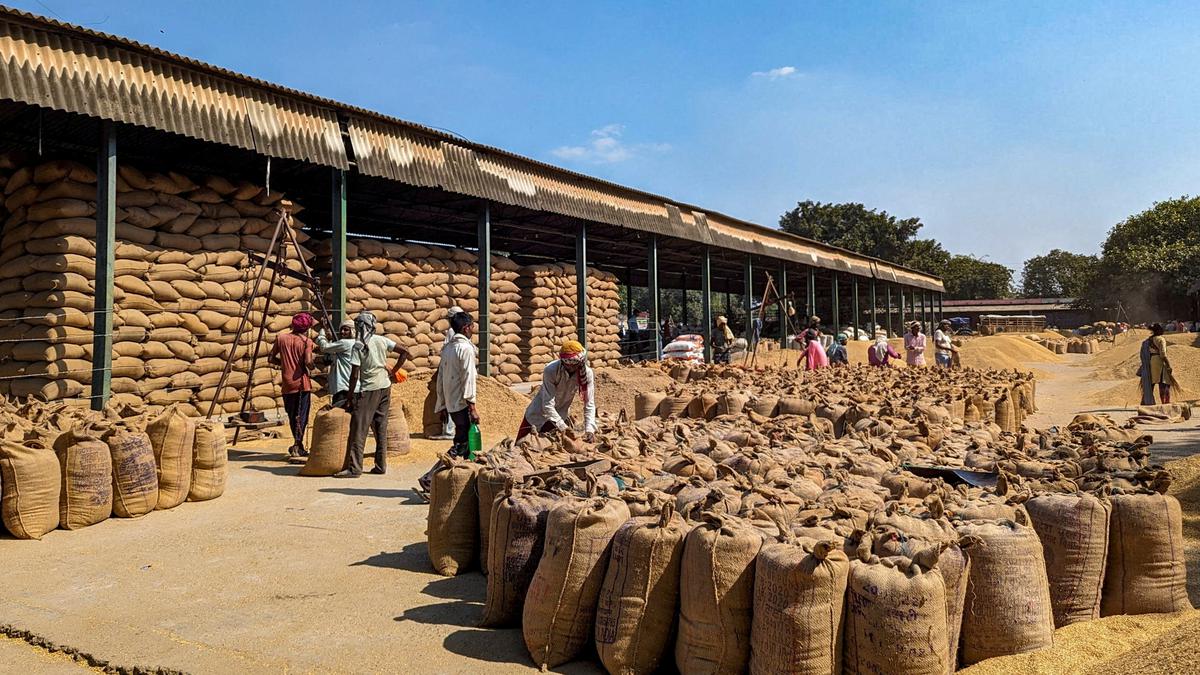
Maintaining high import duties on sensitive agricultural commodities like rice and resisting pressure to open up the domestic sector to low tariffs will be crucial for preserving India’s self-sufficiency and ensuring food security for its population, a report said on January 1.

Economic think tank GTRI (Global Trade Research Initiative) in its report said that India needs to cut its reliance on imported vegetable oils to promote better health outcomes and also reduce the import bill.

This will need educating consumers about the health benefits of using locally produced oils like mustard, groundnut, and rice bran in lieu of imported oils.

India is the world’s largest importer of vegetable oils, with imports estimated to double to $20.8 billion in 2023-24 from $10.8 billion in 2017-18.

It added that the U.S. and E.U. currently support agriculture by using the latest technology to maximise output, high tariffs (or import duties) to discourage imports and massive subsidies to push exports.

Developed and agricultural-exporting countries like Australia always push developing countries like India to cut duties and subsidies on agricultural commodities to push their exports.

India has built a high import tariff wall (30-100% on sensitive items) to check subsided imports. India also does not cut tariffs on sensitive items for even its FTA (free trade agreement) partners.

The report said that this has paid India with self-sufficiency in almost all products.

“India needs to continue with its current approach to not open the domestic agriculture sector to low tariff subsidised imports. Upholding high import tariffs on sensitive items and resisting pressure to open up the domestic agriculture sector to low-tariff subsidised imports will be crucial for preserving India’s hard-earned self-sufficiency and ensuring food security for its burgeoning population,” it said.

According to the UN’s Food and Agriculture Organisation, net cereal imports by developing countries will almost triple over the next 30 years while their net meat imports might even increase by a factor of almost five.

While most countries will be dependent on food imports, India is lucky to be self-sufficient in all agriculture and food items except vegetable oils.

India’s agricultural imports are estimated to touch $33 billion in 2023 which will be just 4.9% of total merchandise imports.

“This has become possible due to focus on policies like the green and white revolution, high import tariffs and active negotiations at the WTO (World Trade Organisation) to protect food security concerns for the 1.4 billion people over developed country pressure to open Indian agriculture to subsidised imports,” GTRI co-founder Ajay Srivastava said.

On the sugar sector, the report said that India is the world’s largest sugar exporter after Brazil, but this year, it will import sugar in vast quantities as the sugar imports are estimated to grow steeply by 385.4%, from $252 million in 2022 to $1,223.4 million in 2023.

Imports have increased in 2023 due to a decline in domestic production caused by weak rains.

India dominates the global sugar scene as the largest producer, consumer, and second-largest exporter. Its sugar industry, ranking second in agricultural-based sectors, employs millions.

“Despite this, the industry faces competitiveness challenges, relying heavily on subsidies, free power, and water, leading many times to overproduction and market volatility. Water scarcity compounds issues, threatening industry sustainability,” Mr. Srivastava said.

To thrive, the Indian sugar sector must aim to boost sugarcane yield from 55 to the global average of 70 tonnes per hectare, free from subsidies.

“Production uncertainties force frequent policy changes to keep local prices in control, but dissuading long-term investments and hindering strategic planning for future businesses,” he added.

Vegetable oil, pulses, and fresh and dry fruits account for 72.1% of agriculture imports of India in 2023. Vegetable oil is the largest import constituent, accounting for 51.9% of total agriculture imports of India.

India imports 4 types of oils: Crude Palm Oil (CPO), Soya Bean Crude Oil, Crude Sunflower Seed Oil, and Refined Bleached Deodorized (RBD) Palmolein.

The report said that imports in 2023 are set to decline by 18.6% to $17.1 billion compared to 2022, primarily due to a fall in import prices, not in quantities.

Further, it said that India’s pulses imports are expected to rise by 44% to surpass $2.7 billion in 2023 as compared to 2022.

The major pulses and import values in 2023 are Masoor (lentil) at $1.13 billion, Arhar/Tuar (pigeon peas) at $766 million, Urad (beans of vigna mungo) at $536 million, Rajma (kidney beans) at $120 million, and Kabuli Chana at $76 million.

India is the world’s largest producer and consumer of pulses. It aims to enhance domestic production and cut imports by introducing high-yielding, disease-resistant pulse varieties.

The key challenges include addressing water scarcity and mitigating market volatility issues.

“Major efforts extend to reclaiming fallow land, promoting intercropping, and focusing on rainfed areas. Also, the market and infrastructure support involve ensuring fair prices through Minimum Support Price (MSP), investing in storage and processing, and establishing direct marketing channels,” he said.

Source link

Business Tags:food security in india, Free trade agreement india, Global trade research institution, GTRI, GTRI Ajay Srivastava, india agricultural commodities, india agricultural sector, India Agriculture, india food security, india FTA partners, India GTRI, india import tariffs, india sugar exports, india vegetable oil imports, UN Food and Agriculture Organisation, world trade organisation

Post navigation

Previous Post: Govt hopeful of ‘bountiful harvest’ amid food inflation headwinds
Next Post: ‘Very sweet’ variety gives fresh hope to Pineapple farmers in Kerala

Related Posts

  • Rupee falls 6 paise to 83.23 against U.S. dollar in early trade Business
  • No major change in employment status or wages in 10 years: Data Business
  • WHO applauds extension of healthcare coverage to ASHA, anganwadi workers and helpers Business
  • Markets trade lower on weak global trends Business
  • Stock markets rise for 3rd session; Sensex gains 190 points Business
  • Sensex Rises 293 Points In Early Trade As Markets Extend Rally For 7th Day Business

More Related Articles

Govt okays ₹3,760 cr for up to 40% viability gap funding for 4,000 MWh battery energy storage system Business
Rupee rises 9 paise to 82.93 against U.S. dollar Business
IT Dept. nudges taxpayers to reconcile mismatches in interest, dividend income Business
Start-ups ask antitrust body to order Google to restore apps Business
India’s crude oil import bill falls, but import dependency hits new high Business
Watch | What’s in it for the MSMEs? | Interim Budget 2024 Business
SiteLock

Archives

  • July 2024
  • June 2024
  • May 2024
  • April 2024
  • March 2024
  • February 2024
  • January 2024
  • December 2023
  • November 2023
  • October 2023
  • September 2023
  • August 2023
  • July 2023
  • June 2023
  • May 2023
  • April 2023
  • March 2023
  • February 2023
  • January 2023
  • December 2022
  • November 2022
  • October 2022
  • September 2022
  • August 2022
  • July 2022
  • June 2022
  • May 2022

Categories

  • Business
  • Nation
  • Science
  • Sports
  • World

Recent Posts

  • West Bengal Forms Seven-Member Panel To Review New Criminal Laws
  • Donald Trump Close Aide Shalabh Kumar To NDTV
  • Top Democrat Adam Schiff calls on U.S. President Joe Biden to exit presidential race
  • Jyothi Yarraji Wants To Learn From Her Mother’s Struggles And Shine At Olympics 2024
  • Prime Accused In INDIA’s Bihar Ally’s Brutal Murder Arrested

Recent Comments

  1. ywdVpqHiNZCtUDcl on UP Teacher Who Asked Students To Slap Muslim Classmate
  2. bRstIalYyjkCUJqm on UP Teacher Who Asked Students To Slap Muslim Classmate
  3. GkJwRWEAbS on UP Teacher Who Asked Students To Slap Muslim Classmate
  4. xreDavBVnbGqQA on UP Teacher Who Asked Students To Slap Muslim Classmate
  5. aANVRzfUdmyb on UP Teacher Who Asked Students To Slap Muslim Classmate
  • The Gino data scandal in behavioural science and research misconduct Science
  • Norwegian Lawmaker Nominates Elon Musk For Nobel Peace Prize For Enabling “Free Speech” World
  • India vs Australia Live Score Ball by Ball, India vs Australia, 2023 Live Cricket Score Of Today's Match on NDTV Sports Sports
  • India vs England Hourly Weather Report Guyana: Washout Threat Looms, Rain Likely To Knock Out… Sports
  • Joe Biden, Donald Trump, NATO Summit: Slips Of Tongue Happen: Allies Back Gaffing Biden World
  • Navalny was close to being freed in a prisoner swap, claims ally World
  • Rakesh Gangwal likely to sell shares in IndiGo Business
  • Asian Games: India Make Semis Despite Loss To Malaysia In Squash, Confirm A Medal Sports

Editor-in-Chief:
Mohammad Ariff,
MSW, MAJMC, BSW, DTL, CTS, CNM, CCR, CAL, RSL, ASOC.
editor@artifex.news

Associate Editors:
1. Zenellis R. Tuba,
zenelis@artifex.news
2. Haris Daniyel
daniyel@artifex.news

Photograher:
Rohan Das
rohan@artifex.news

Artifex.News offers Online Paid Internships to college students from India and Abroad. Interns will get a PRESS CARD and other online offers.
Send your CV (Subjectline: Paid Internship) to internship@artifex.news

Links:
Associate Journalism
About Us
Privacy Policy

News Links:
Breaking News
World
Nation
Sports
Business
Entertainment
Lifestyle

Registered Office:
72/A, Elliot Road, Kolkata - 700016
Tel: 033-22277777, 033-22172217
Email: office@artifex.news

Editorial Office / News Desk:
No. 13, Mezzanine Floor, Esplanade Metro Rail Station,
12 J. L. Nehru Road, Kolkata - 700069.
(Entry from Gate No. 5)
Tel: 033-46011099, 033-46046046
Email: editor@artifex.news

Copyright © 2023 Artifex.News Newsportal designed by Artifex Infotech.