

Skip to content
  • Facebook
  • X
  • Linkedin
  • WhatsApp
  • Associate Journalism
  • About Us
  • Privacy Policy
  • 033-46046046
  • editor@artifex.news
Artifex.News

Artifex.News

Stay Connected. Stay Informed.

  • Breaking News
  • World
  • Nation
  • Sports
  • Business
  • Science
  • Entertainment
  • Lifestyle
  • Toggle search form
  • Police officer fired gun while clearing protesters from Columbia building, prosecutors say
    Police officer fired gun while clearing protesters from Columbia building, prosecutors say World
  • Australia Star Usman Khawaja Hails “Inspirational” Afghanistan Amid ‘Human Rights’ Controversy
    Australia Star Usman Khawaja Hails “Inspirational” Afghanistan Amid ‘Human Rights’ Controversy Sports
  • Access Denied
    Access Denied Nation
  • Gulbadin Naib’s cramp during Afghanistan vs Bangladesh match sparks controversy
    Gulbadin Naib’s cramp during Afghanistan vs Bangladesh match sparks controversy Sports
  • Access Denied World
  • Donald Trump Raises Eyebrows As He Praises Cannibals At New Jersey Poll Rally
    Donald Trump Raises Eyebrows As He Praises Cannibals At New Jersey Poll Rally World
  • Labour laws passed by Parliament in 2020 come into effect
    Labour laws passed by Parliament in 2020 come into effect Business
  • Access Denied World
Sex systems drive faster mitochondrial evolution in many insects

Sex systems drive faster mitochondrial evolution in many insects

Posted on January 1, 2026 By admin


Researchers from the University of Guelph in Canada have reported an astonishing discovery: that the number of chromosome sets in their bodies’ cells seems to be linked to the rate at which the species’ mitochondrial genome evolves.

This is unusual because mitochondrial DNA sits in a separate genome from the chromosomes in the nucleus and its evolution rate is usually linked to factors like mutation rate, metabolism, and population size — rather than the chromosomes.

Evolutionary biologists had not anticipated such a connection, which could have important implications for our understanding of how fast insects’ DNA changes and how we track biodiversity.

The team’s findings were published in Proceedings of the Royal Society B on November 26.

Mitochondrial DNA

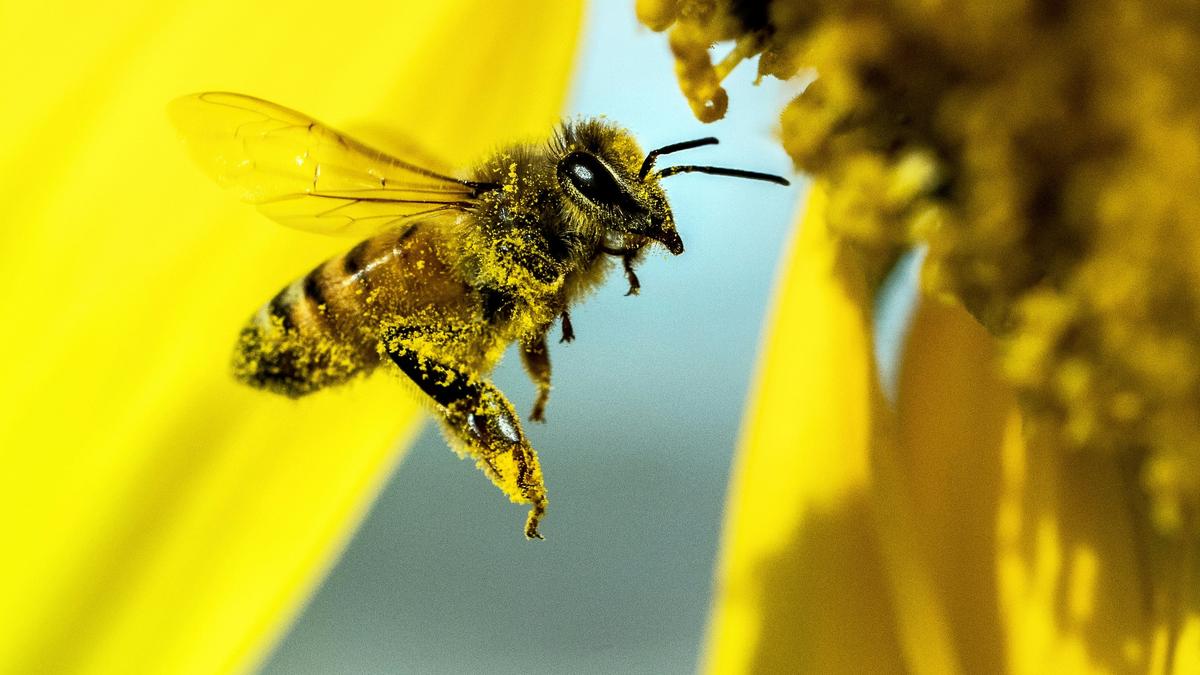
Insects use different ways to produce males and females. Ants, bees, and wasps make females from eggs fertilized by sperm while the unfertilized eggs develop into males. So females have two sets of chromosomes in their genome, one from the egg and the other from the sperm, and are said to be diploid. Males have only one set of chromosomes and are said to be haploid. This type of sex determination is called haplo-diploid (HD).

On the other hand, in the diplo-diploid (DD) system, both males and females transmit one chromosome of each pair to their sperms and eggs. The males and females instead differ by which sex chromosome they have.

Mitochondria are a cell’s powerhouses: they produce most of its adenosine triphosphate (ATP), the compound that serves as the energy source for all cellular functions. Aeons ago, some single-celled ancestor of earthlife engulfed a bacterium that then evolved to become mitochondria. Since then, many of this bacterium’s genes were transferred to the host cell’s nucleus, leaving behind only a miniscule rump. That’s the mitochondrial genome, or mitogenome.

The mitogenome is five-million-times smaller than our nuclear DNA. It encodes only 12 mitochondrial proteins; the remainder are encoded by the nuclear DNA.

Males don’t transmit their mitochondria to their progeny; only females do, via the egg.

How then could male haploidy influence the rate of evolution in a maternally inherited genome?

Scientists are aware of around one million insect species, which they’ve grouped into 29 groups called orders. Four of the better known orders are Coleoptera (beetles), Diptera (flies and mosquitoes), Hemiptera (true bugs), and Hymenoptera (ants, bees, and wasps). These orders are extraordinarily species-rich. Others include Thysanoptera (small slender insects), Psocodea (lice), and Lepidoptera (moths and butterflies).

For the new study, the researchers surveyed 86,000 insect species from 783 families in 26 orders. Of them 131 families were HD and 652 were DD.

The Hymenoptera and Thysanoptera orders were uniformly HD. Coleoptera, Diptera, Hemiptera, and Psocodea included both HD and DD families and tribes. Lepidoptera and the remaining orders were uniformly DD.

The COI gene

To test for such differences, the team turned to one of mitochondria’s key workhorse proteins, cytochrome c oxidase subunit I, or COI.

The corresponding COI gene is located in the mitogenome. The researchers took a closer look at a segment of the gene, which gives cells the recipe for a particular stretch of the COI protein.

For each of the 783 insect families, the team built a “consensus” DNA sequence for this region by combining data from at least 100 species in that family. Then they translated each family’s consensus DNA into a consensus amino acid sequence. They also made a similar consensus for Entognatha, the sister group to insects, to act as a close non-insect comparison group.

They found something striking. Compared to this out-group, insect species with HD sex systems had about 1.7-times more changes in the COI protein than species with the more common DD system. HD species also showed many more small insertions and deletions of amino acids in this region.

Simply speaking, the COI gene seemed to have evolved much faster in HD species than in DD species, as if their mitochondrial DNA had been running on a different, faster evolutionary track.

Monitoring biodiversity

The results show how the way a species produces its males and females can shape the path of mitochondrial evolution, revealing a connection between reproductive biology and diversity.

“Insects quietly keep the planet running, their numbers are under pressure, and our study shows that the way they produce males and females can influence how fast their DNA changes,” Avas Pakrashi, the study’s first author, a postdoctoral fellow at the Centre for Biodiversity Genomics at the University of Guelph at the time of the study, said.

The implications extend to how experts keep track of insect biodiversity.

“If certain insect groups (like HD species) accumulate mutations in their mitochondrial DNA more quickly, their COI barcodes may change at a different pace than others,” Dr. Pakrashi, now with the Zoological Survey of India, added. “So some species might look more genetically distinct than they really are or cause closely related species to blur together, affecting identification accuracy.”

Making sense

In HD species, males carry only one copy of each nuclear gene. Because there is no second copy to mask changes, any new mutation in these genes has an immediate effect on the body.

Since changes in the nuclear genome show their effects right away in HD males, it pushes mitochondrial genes — especially those that interact with nuclear gene products — to evolve more quickly. This is what the new finding implies.

This exigency isn’t as severe in diploid males because diploidy shelters new mutations from as quick an exposure to selection.

This said, the research paper has acknowledged that these patterns are still only correlations — although the team has also speculated on some potential causes.

One idea turns on how selection works in haploid males. Because every nuclear gene in an HD male is ‘visible’ to natural selection, genes that improve the cooperation between nuclear and mitochondrial proteins may spread faster. That in turn could allow more new mitochondrial mutations to take hold.

A second idea is that in HD lineages, the nuclear genes effectively come from a smaller breeding pool, so slightly harmful nuclear changes may sometimes be fixed by chance. Mitochondrial genes would then be pushed to evolve compensating tweaks to keep the cell’s power system running.

D.P. Kasbekar is a retired scientist.

Published – January 01, 2026 05:30 am IST



Source link

Science

Post navigation

Previous Post: Macron wants to ban under-15s from social media from September 2026: reports
Next Post: Additional excise duty on tobacco, health cess on pan masala to be effective February 1

Related Posts

  • Altermagnet conducts with different charge carriers in different directions
    Altermagnet conducts with different charge carriers in different directions Science
  • Wuhan keen to shake off pandemic label five years on
    Wuhan keen to shake off pandemic label five years on Science
  • Major study opens window to the brain when an emotion first appears
    Major study opens window to the brain when an emotion first appears Science
  • Eight years on, NIV Pune still relies on U.S. CDC for Zika test kits
    Eight years on, NIV Pune still relies on U.S. CDC for Zika test kits Science
  • Science quiz | Isomers: same formula, different persona
    Science quiz | Isomers: same formula, different persona Science
  • How can India benefit from neurotechnology? | Explained
    How can India benefit from neurotechnology? | Explained Science

More Related Articles

A wild orangutan used a medicinal plant to treat a wound, scientists say A wild orangutan used a medicinal plant to treat a wound, scientists say Science
Nobel laureates sound alarm as Argentina cuts science funding Nobel laureates sound alarm as Argentina cuts science funding Science
Ohsumi, Japan’s first successful satellite Ohsumi, Japan’s first successful satellite Science
Scientists find bacteria living in microwave ovens Scientists find bacteria living in microwave ovens Science
With Sci-Hub gone, will the ‘One Nation, One Subscription’ scheme step up? With Sci-Hub gone, will the ‘One Nation, One Subscription’ scheme step up? Science
How does two-factor authentication (2FA) work? How does two-factor authentication (2FA) work? Science
SiteLock

Archives

  • January 2026
  • December 2025
  • November 2025
  • October 2025
  • September 2025
  • August 2025
  • July 2025
  • June 2025
  • May 2025
  • April 2025
  • March 2025
  • February 2025
  • January 2025
  • December 2024
  • November 2024
  • October 2024
  • September 2024
  • August 2024
  • July 2024
  • June 2024
  • May 2024
  • April 2024
  • March 2024
  • February 2024
  • January 2024
  • December 2023
  • November 2023
  • October 2023
  • September 2023
  • August 2023
  • July 2023
  • June 2023
  • May 2023
  • April 2023
  • March 2023
  • February 2023
  • January 2023
  • December 2022
  • November 2022
  • October 2022
  • September 2022
  • August 2022
  • July 2022
  • June 2022
  • May 2022

Categories

  • Business
  • Nation
  • Science
  • Sports
  • World

Recent Posts

  • Wanted Maoist killed in encounter with security forces in Bihar
  • Access Denied
  • Access Denied
  • Access Denied
  • Access Denied

Recent Comments

  1. DavidQuink on UP Teacher Who Asked Students To Slap Muslim Classmate
  2. WilburUniow on UP Teacher Who Asked Students To Slap Muslim Classmate
  3. CharlesJag on UP Teacher Who Asked Students To Slap Muslim Classmate
  4. JoshuaNeM on UP Teacher Who Asked Students To Slap Muslim Classmate
  5. Michealtheat on UP Teacher Who Asked Students To Slap Muslim Classmate
  • West Tells Iran To “Stand Down” Israel Attacks Threats As War Fears Mount
    West Tells Iran To “Stand Down” Israel Attacks Threats As War Fears Mount World
  • ‘Some Consistently Seeking New Justifications To Sustain Unrest In Manipur’: Meitei Body
    ‘Some Consistently Seeking New Justifications To Sustain Unrest In Manipur’: Meitei Body Nation
  • Elon Musk vs Rajeev Chandrasekhar On EVMs
    Elon Musk vs Rajeev Chandrasekhar On EVMs Nation
  • Access Denied Sports
  • Tale Of Ganesh Chaturthi Event In Mumbai
    Tale Of Ganesh Chaturthi Event In Mumbai Nation
  • Access Denied Sports
  • Trump’s Citizenship Order’s Big Impact On Expecting Indian Parents
    Trump’s Citizenship Order’s Big Impact On Expecting Indian Parents World
  • Shooting At Mexico City Airport, 2 Policemen Injured: Authorities
    Shooting At Mexico City Airport, 2 Policemen Injured: Authorities World

Editor-in-Chief:
Mohammad Ariff,
MSW, MAJMC, BSW, DTL, CTS, CNM, CCR, CAL, RSL, ASOC.
editor@artifex.news

Associate Editors:
1. Zenellis R. Tuba,
zenelis@artifex.news
2. Haris Daniyel
daniyel@artifex.news

Photograher:
Rohan Das
rohan@artifex.news

Artifex.News offers Online Paid Internships to college students from India and Abroad. Interns will get a PRESS CARD and other online offers.
Send your CV (Subjectline: Paid Internship) to internship@artifex.news

Links:
Associate Journalism
About Us
Privacy Policy

News Links:
Breaking News
World
Nation
Sports
Business
Entertainment
Lifestyle

Registered Office:
72/A, Elliot Road, Kolkata - 700016
Tel: 033-22277777, 033-22172217
Email: office@artifex.news

Editorial Office / News Desk:
No. 13, Mezzanine Floor, Esplanade Metro Rail Station,
12 J. L. Nehru Road, Kolkata - 700069.
(Entry from Gate No. 5)
Tel: 033-46011099, 033-46046046
Email: editor@artifex.news

Copyright © 2023 Artifex.News Newsportal designed by Artifex Infotech.