




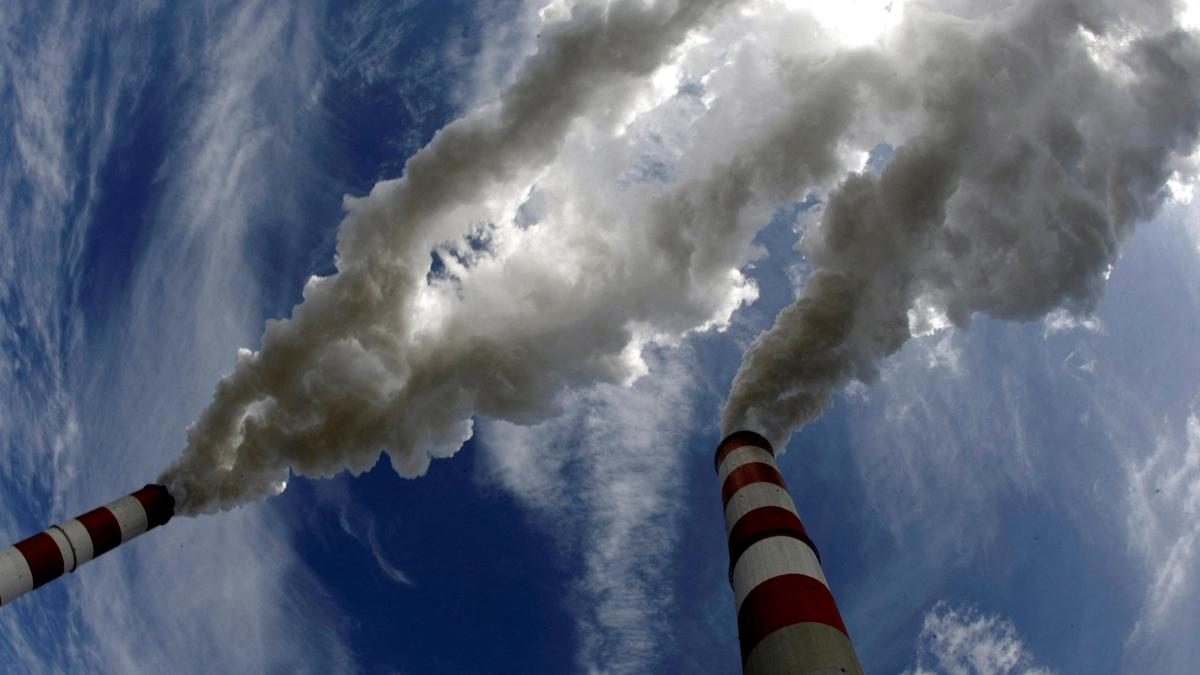
In Chicago’s working-class Pilsen neighborhood, a 60s-era oil-fired power plant rises up from an industrial lot behind Dvorak Park, which in warmer weather is packed with children climbing on its colorful playground and zooming down slides.
The rarely-used eight-unit Fisk power plant owned by Houston-based NRG Energy was scheduled to retire next year. But then came from artificial intelligence.
Prices shot up in the country’s biggest power market – PJM Interconnection – as electricity requests from data centres exceeded existing supplies, sounding the alarm over power shortfalls, and making Fisk and other plants like it suddenly profitable.
“We believe there’s an economic case to keep them around, so we withdrew the retirement notice,” said Matt Pistner, senior vice president of generation at NRG, of Fisk’s eight power-generating units.
The Fisk power plant is among a growing number of so-called “peaker” electric generating units being pressed into duty across the U.S. as the nation’s electrical with growing demand from data centres powering Big Tech’s investments in artificial intelligence.
Peakers, which are meant to run only in short bursts during periods of spiking electricity demand, help stave off blackouts by supplying power on a moment’s notice. But there’s a trade-off: these often decades-old, fossil-fueled facilities emit more pollution when they are running and cost more to produce electricity than continuous power plants.
A Reuters analysis of filings with the country’s biggest power grid shows that about 60% of

oil, gas and coal power plants slated for retirement in PJM postponed or cancelled those plans this year. Most of the plants averting shutdowns are peaker units.
The Fisk peakers were built on the site of a now-defunct coal-fired electricity generating station that operated for over a century. After years of fierce opposition by local residents, the coal plant shut more than a decade ago, but eight peaking units that run on petroleum oil continue to operate on the site.
“When we found out that the coal plant was closing but there was still going to be power produced at the site, it was very disappointing,” said Jerry Mead-Lucero, a longtime advocate for the closure of the Fisk coal station who spent most of his adult life in Pilsen.
Following the coal plant closure, pollution plummeted, but it didn’t vanish. Sulfur dioxide ranged from about 2 to as much as 25 tons per year from the site, according to the Environmental Protection Agency, as the eight-unit peaker plant occasionally lumbered to life to feed the grid.
“That’s not an insignificant amount considering the low chimneys and homes nearby,” said Brian Urbaszewski, Director of Environmental Health Programs for Respiratory Health Association, an Illinois nonprofit that focuses on helping people with respiratory disease.
Because they were built for speed instead of efficiency, peakers often do not have pollution controls like mercury scrubbers, which remove the toxic chemical from the power plants’ emissions, and filters for particulate matter, according to academic and federal government research.
Some also have lower smokestacks, or chimneys, environmental advocates say, meaning pollution can be more concentrated locally.
Keeping peakers running longer may accelerate under U.S. President Donald Trump’s administration, which said it was exploring ways to , including peaker plants and other emergency systems, to quickly meet the massive new electricity demand.
“There are a ton of peaker plants that could operate more,” U.S. Energy Secretary Chris Wright told Reuters in an interview in September, adding that clean air regulations have kept more from running more frequently. “The biggest targets are spare capacity on the grid today.”
While peaker plants contribute about 3% of the country’s power, they have the total capacity to produce 19%, according to a report by the U.S. Government Accountability Office.
Tapping into that spare capacity, however, could mean more harmful emissions being spewed into neighborhoods that are often already overburdened with environmental hazards.
The country’s roughly 1,000 peaker plants are disproportionately located in low-income communities of color, according to academic and federal government research, meaning that extending the plants’ lives could leave vulnerable Americans to bear the brunt of more pollution.
A 2022 study of formerly “redlined” U.S. communities, which were cut off from financial services like mortgages for being predominantly Black or immigrant, found that residents were 53% more likely to have had a peaker plant built nearby since the year 2000 than in non-redlined areas.
“If you were a redlined neighborhood, you were more likely to have a fossil fuel power plant built nearby, and we saw that relationship was even stronger for peaker plants,” said UCLA professor of environmental health sciences Lara Cushing, who led the study.
Most of the country’s peaker plants were built during two periods of growth in energy consumption: in the mid-20th century as electrical appliances became common household items, and at the turn of the millennium as the economy grew and computers gained popularity. Afterwards, as energy-sapping devices and infrastructure became more efficient, U.S. power demand waned and many fossil-fired power plants shut.

Meanwhile, solar and wind farms, which only produce power when the sun is shining and the wind is blowing, began to supply more of the country’s energy.
“We’re kind of making the old system work harder and that’s part of why we’re seeing this increased use of plants operating as peakers,” said Frank Rusco, a director with the Government Accountability Office, which was directed by U.S. Congress, at the urging of environmental justice groups, to study the use of peaker plants and how they intersect with American communities.
The study found that natural gas peaker plants emit 1.6 times more sulfur dioxide for each unit of electricity produced on a median basis compared to non-peaker plants.
Fisk is part of the nation’s largest electrical grid, PJM Interconnection, which stretches across 13 states and covers the world’s biggest concentration of data centres. Demand from AI data centres is threatening to engulf the grid’s power reserves, and it is already driving up prices.
Prices paid to power suppliers in PJM to ensure plants run at times of spiking demand soared by more than 800% this summer, compared to a year earlier. That made owning peaker power plants much more lucrative.
“It is clear today, nationally, that electricity demand is outstripping supply – the market reflects this, and generators are responding,” PJM spokesman Jeff Shields said. “We cannot afford to lose existing generation while we continue to bring on new generation to keep pace with the electricity needs of data centers and other large loads powering the country’s economy.”
About 23 oil, gas and coal power plants in PJM territory were scheduled to retire starting in 2025 or shortly after, according to a Reuters analysis of letters sent to PJM Interconnection by power companies.

Since January, U.S. power companies, the grid operator, and the federal government have delayed or cancelled the retirements of 13 of those power plants, the letters showed. Of those plants that averted closure, 11 were peakers.
Among those delayed were the roughly 55-year-old units at the “Eddystone” plant outside of Philadelphia, owned by Constellation Energy, which were ordered to keep running by the Department of Energy. The Wagner peaker near Baltimore, meanwhile, was kept alive at the request of PJM while the grid operator coordinates on the transmission needed for the removal of the generator.
Many of the retained power plants were built as peakers, while others were initially intended to be around-the-clock power, but later downgraded to run only during emergencies.
Fisk owner NRG Energy says peakers are essential safeguards for the grid that are being called on more often not just for data centres but for the electrification of manufacturing and transportation, and to avert blackouts caused by increasingly severe winter storms and summer heatwaves.
Having the Fisk peakers in the city means that Chicago doesn’t need to import electricity in the case of an emergency when outside power sources go down.
“They really are the last line of defense, and the shock absorber, for the system,” said Matt Pistner of NRG Energy. “When they’re needed, there is no other place to go.”
While NRG has owned power generating sources from nuclear energy to wind and solar, oil-fired peakers add another layer of certainty by ensuring the power fuel source can be stored on site, Pistner said.
“During its run times, the power plant consistently operates within federal and state environmental regulations — and we are proud of its record,” an NRG spokesman told Reuters separately.
Energy experts say there are alternatives to peakers. Investing in more robust transmission lines could transport electricity from parts of the country with oversupplies of power to those with shortfalls.
“If we do that, the system would run more efficiently and you would probably have a reduction in the amount of reliance on peakers,” said the GAO’s Rusco.
Batteries, which are undergoing technological improvements to store power for longer, could also replace many peaker units, according to clean energy advocates.
In the meantime, as AI power demand rises, communities like Pilsen, which have successfully fought to close some pollution sources in recent history, may find peaker plants more difficult to fight.

“It all adds up to significant cost increases for electricity consumers and significant increases in local pollution and will prevent new clean energy generation from connecting to the grid,” said John Quigley, of the University of Pennsylvania’s Kleinman Center for Energy Policy
PJM said it would continue to connect carbon-free renewable power, nuclear and gas-fired energy to the grid regardless of whether peakers stay on longer.
“We need every single megawatt of energy we can get right now,” Shields said. Deactivating existing power plants, he added, “ignores reality.”
Northern Illinois is a budding data centre market, with at least one data centre already operating in Pilsen and multiple other energy-intensive projects planned for nearby areas, including a 20-building campus announced this year by T5 Data Centres.
Mead-Lucero worries that the Fisk peaker units will continue the legacy of environmental hazards plaguing his hometown, which also sees emissions from industrial truck traffic, a metal scrapper and a major highway cutting through the neighborhood. “You add all of these compounding factors, and you end up with a real problem again.”