



Skip to content
  • Facebook
  • X
  • Linkedin
  • WhatsApp
  • Associate Journalism
  • About Us
  • Privacy Policy
  • 033-46046046
  • editor@artifex.news
Artifex.News

Artifex.News

Stay Connected. Stay Informed.

  • Breaking News
  • World
  • Nation
  • Sports
  • Business
  • Science
  • Entertainment
  • Lifestyle
  • Toggle search form
  • Access Denied
    Access Denied Nation
  • UP Minister Affixes “Servant” To His Name On X After Akhilesh Yadav’s Dig
    UP Minister Affixes “Servant” To His Name On X After Akhilesh Yadav’s Dig Nation
  • Voter fraud allegations in Maharashtra: Had no role to play in approving content of bulk SMS messages, says TRAI
    Voter fraud allegations in Maharashtra: Had no role to play in approving content of bulk SMS messages, says TRAI Business
  • Mumbai Police Recover Weapon From Accused’s House
    Mumbai Police Recover Weapon From Accused’s House Nation
  • Lionel Messi-Led Argentina’s Copa America Victory Celebrations Marred By Violence – Watch
    Lionel Messi-Led Argentina’s Copa America Victory Celebrations Marred By Violence – Watch Sports
  • Access Denied Sports
  • Real Estate Regulator RERA Suspends Registration Of 20,000 Property Brokers
    Real Estate Regulator RERA Suspends Registration Of 20,000 Property Brokers Nation
  • At least 100 passengers missing after boat capsizes in northern Nigeria
    At least 100 passengers missing after boat capsizes in northern Nigeria World
Inhalable microplastics, a hidden toxin worsening Indian cities’ air

Inhalable microplastics, a hidden toxin worsening Indian cities’ air

Posted on December 16, 2025 By admin


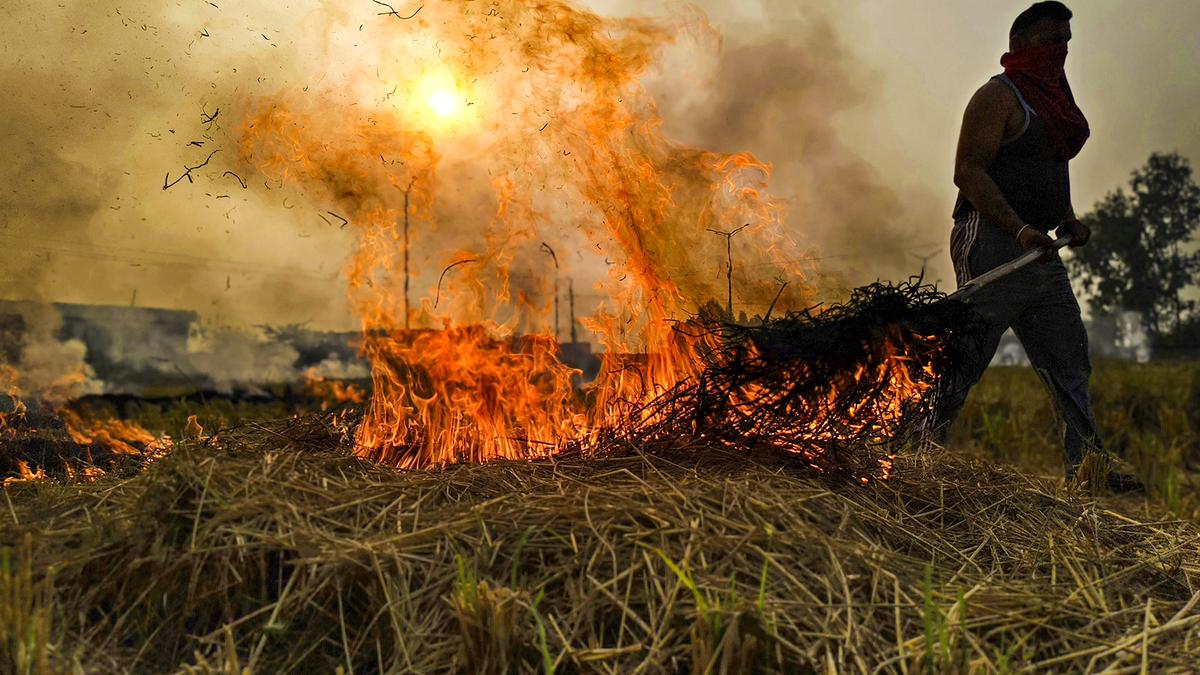
On successive weekends in November, hundreds of Delhi residents gathered at India Gate holding placards saying “I miss breathing” and “right to live, not just survive”. Winter’s onset once again plunged the National Capital Region into a dense smog, with the air quality index refusing to exit the ‘severe’ (301-400) or ‘very poor’ (201-300) levels.

Even now, regulators are scrambling to enforce graded action plans to mitigate the concentration of PM2.5 and PM10 particles in the air.

Into this toxic mix, new research has added a previously overlooked problem called inhalable microplastics. According to scientists, they pose a direct and alarming risk to human health.

Atmospheric pollution has traditionally been associated with the so-called criteria pollutants; aside from the two size-wise groups of particulate matter, these include carbon monoxide, lead, sulphur oxides, nitrogen oxides, and ozone. Of late however they’ve been joined by respirable emerging contaminants — including inhalable microplastics — fuelled in no small part by the production of 400 million metric tonnes of plastics every year. The world also releases 52.1 million tonnes a year of plastic waste into the environment.

A first-of-its-kind comprehensive study published in Environment International in November examined inhalable microplastics in India. These are plastic particles smaller than 10 micrometres (µm). The researchers, led by Indian Institute of Science Education and Research Kolkata professor Gopala Krishna Darbha, monitored ambient concentrations at human breathing height (1.5 m) in five highly populated markets in Delhi, Mumbai, Kolkata, and Chennai.

Thus the team estimated the average concentration of inhalable microplastics in all four cities to be 8.8 µg/m3.

This “means the average city resident is breathing in about 132 micrograms every single day,” Dr. Darbha said. “This is a very high daily dose of pollution. The most critical factor is the size of these particles. They are so tiny that they can bypass our natural defenses and penetrate deep into the lungs. This chronic exposure presents a serious, ongoing risk to public health.”

Researchers, however, said that the greater danger is these plastic particles serving as Trojan horses that smuggle in toxic co-pollutants, including heavy metals like lead and cadmium and hormone-disrupting chemical compounds like diethyl phthalates. The team found atmospheric lead levels to be highest in Kolkata, followed by Delhi.

The team members also found, reportedly for the first time, that the inhalable microplastics plastics can also carry microbes, including harmful fungi like Aspergillus fumigatus, that contain antibiotic-resistance genes, meaning they could spread infections that don’t respond to common antibiotics.

By comparing this information with major toxicology databases, the team found that breathing these contaminated plastic particles was associated with a higher risk of cancer, hormone-related diseases, breast problems, and respiratory illnesses.

Time and place

In all four cities, winter evenings had a mean inhalable microplastic concentration of 32.7 particles/m3 while non-winter evenings averaged 18.8 particles/m3, reflecting a 74% seasonal increase during winter.

There was a significant inter-city variation as well: the data revealed that the residents of Delhi and Kolkata were exposed to high concentrations of inhalable microplastics — 14.18 µg/m3 and 14.23 µg/m3 respectively — whereas Mumbai (2.65 µg/m3) and Chennai (4 µg/m3) fared much better.

“The major factors that are coming here are meteorological conditions,” Dr. Darbha said alluding to Mumbai and Chennai being coastal cities. “Second is urban population density, and third one is waste mismanagement.”

Zeroing in on the particles themselves, the researchers identified 11 kinds of plastics in the air, most of them coming from places the researchers said people usually overlook.

“The particles were primarily less than 100 µm in size (56.2%), followed by 100–500 µm (24.7%) and over 500 µm (19.1%). Fragments were more common than filaments,” the team wrote in its paper.

“Larger filament-shaped airborne microplastics typically … originate from synthetic textiles or toy fillings. Smaller fragments, often secondary airborne microplastics, arise from packaging, tire wear, household release, cosmetics, mini- and micro-industries, construction, [and] were more prevalent due to their small size and weathering, particularly in areas like Sealdah Market and Chandni Chowk.”

Policy imperative

According to Dr. Darbha, the current air quality index may capture “a certain percentage of nanoplastics” but describes the existing evidence as “too preliminary” to correlate AQI values with inhalable microplastics. He did say workers such as traffic police and labourers are especially vulnerable, since “tire-wear particles seem to be more carcinogenic or they may cause severe threat to their lungs. Policy reform is needed to protect such vulnerable groups.”

The study also said the particles persist in the air due to low gravitational settling velocity.

“The government should ban single use plastic and many such polymers,” he said, adding that cotton-based clothing is preferable to synthetics and that “recycled and refurbished polyester or reused fabrics … are capable of releasing these tiny plastics.”

He also said uncontrolled waste disposal, improper waste segregation, and burning emitted poisonous gases and smaller particulate matter, some of which could piggyback on the inhalable microplastic particles into our lungs.

Overall Dr. Darbha said the study provides a new baseline for an emerging environmental crisis: “This is a starting point, and we are definitely looking forward to more results coming up in the country, to have more knowledge-sharing in the … scientific community as well as among the common public to have more awareness.”

Against the backdrop of the accumulating evidence of the persistence and harms of microplastic and nanoplastic pollution, the researchers also expressed hope that the Indian government would take serious measures regarding plastic disposal and worsening air quality.

Neelanjana Rai is a freelance journalist who writes about indigenous community, environment, science and health.

Published – December 16, 2025 09:30 am IST



Source link

Science

Post navigation

Previous Post: Access Denied
Next Post: Access Denied

Related Posts

  • Bogus scientific papers slowing lifesaving medical research
    Bogus scientific papers slowing lifesaving medical research Science
  • Why is there a ‘Door to Hell’ burning for decades in Turkmenistan?
    Why is there a ‘Door to Hell’ burning for decades in Turkmenistan? Science
  • INCOIS, NCPOR to launch a glider to study Antarctic ocean
    INCOIS, NCPOR to launch a glider to study Antarctic ocean Science
  • GSLV-F14 Launch: GSLV-F14 carrying INSAT-3DS to lift off on Feb 17: ISRO
    GSLV-F14 Launch: GSLV-F14 carrying INSAT-3DS to lift off on Feb 17: ISRO Science
  • Possible pathway for Long COVID pathogenesis uncovered
    Possible pathway for Long COVID pathogenesis uncovered Science
  • Sci-Five | The Hindu Science Quiz: On Octopus
    Sci-Five | The Hindu Science Quiz: On Octopus Science

More Related Articles

What are transient lunar phenomena? What are transient lunar phenomena? Science
Astronomers finally detect a rocky planet with an atmosphere Astronomers finally detect a rocky planet with an atmosphere Science
What is coding, and when did it all begin? What is coding, and when did it all begin? Science
Entanglement breakthrough brings quantum computers closer Entanglement breakthrough brings quantum computers closer Science
 Toy-inspired engine creates power from evaporated water   Toy-inspired engine creates power from evaporated water  Science
IISc researchers develop sustainable method to remove heavy metal contaminants from groundwater IISc researchers develop sustainable method to remove heavy metal contaminants from groundwater Science
SiteLock

Archives

  • December 2025
  • November 2025
  • October 2025
  • September 2025
  • August 2025
  • July 2025
  • June 2025
  • May 2025
  • April 2025
  • March 2025
  • February 2025
  • January 2025
  • December 2024
  • November 2024
  • October 2024
  • September 2024
  • August 2024
  • July 2024
  • June 2024
  • May 2024
  • April 2024
  • March 2024
  • February 2024
  • January 2024
  • December 2023
  • November 2023
  • October 2023
  • September 2023
  • August 2023
  • July 2023
  • June 2023
  • May 2023
  • April 2023
  • March 2023
  • February 2023
  • January 2023
  • December 2022
  • November 2022
  • October 2022
  • September 2022
  • August 2022
  • July 2022
  • June 2022
  • May 2022

Categories

  • Business
  • Nation
  • Science
  • Sports
  • World

Recent Posts

  • Why do we have wisdom teeth?
  • Access Denied
  • Access Denied
  • U.S. military says it carried out strikes on three vessels in eastern Pacific
  • Access Denied

Recent Comments

  1. dfb{{98991*97996}}xca on UP Teacher Who Asked Students To Slap Muslim Classmate
  2. "dfbzzzzzzzzbbbccccdddeeexca".replace("z","o") on UP Teacher Who Asked Students To Slap Muslim Classmate
  3. 1}}"}}'}}1%>"%>'%> on UP Teacher Who Asked Students To Slap Muslim Classmate
  4. bfg6520<s1﹥s2ʺs3ʹhjl6520 on UP Teacher Who Asked Students To Slap Muslim Classmate
  5. pHqghUme9356321 on UP Teacher Who Asked Students To Slap Muslim Classmate
  • KTR Takes Dig At Amit Shah Over ‘Dynastic Politics’ Remark
    KTR Takes Dig At Amit Shah Over ‘Dynastic Politics’ Remark Nation
  • Access Denied World
  • ‘Patriarchy Did Not Stop Indira Gandhi From Becoming PM’: Nirmala Sitharaman
    ‘Patriarchy Did Not Stop Indira Gandhi From Becoming PM’: Nirmala Sitharaman Nation
  • Car, Misled By GPS, Falls Into River From Under-Construction Bridge, 3 Dead In UP
    Car, Misled By GPS, Falls Into River From Under-Construction Bridge, 3 Dead In UP Nation
  • On monetary policy and financial markets
    On monetary policy and financial markets Business
  • Access Denied
    Access Denied Nation
  • “BCCI Showing Mayank Yadav Video Of Haris Rauf”: Pakistan Reporter’s Bizarre Comment Gets Criticised
    “BCCI Showing Mayank Yadav Video Of Haris Rauf”: Pakistan Reporter’s Bizarre Comment Gets Criticised Sports
  • India, UK Ministers Discuss Plan To Take Forward Talks On Free Trade Deal
    India, UK Ministers Discuss Plan To Take Forward Talks On Free Trade Deal World

Editor-in-Chief:
Mohammad Ariff,
MSW, MAJMC, BSW, DTL, CTS, CNM, CCR, CAL, RSL, ASOC.
editor@artifex.news

Associate Editors:
1. Zenellis R. Tuba,
zenelis@artifex.news
2. Haris Daniyel
daniyel@artifex.news

Photograher:
Rohan Das
rohan@artifex.news

Artifex.News offers Online Paid Internships to college students from India and Abroad. Interns will get a PRESS CARD and other online offers.
Send your CV (Subjectline: Paid Internship) to internship@artifex.news

Links:
Associate Journalism
About Us
Privacy Policy

News Links:
Breaking News
World
Nation
Sports
Business
Entertainment
Lifestyle

Registered Office:
72/A, Elliot Road, Kolkata - 700016
Tel: 033-22277777, 033-22172217
Email: office@artifex.news

Editorial Office / News Desk:
No. 13, Mezzanine Floor, Esplanade Metro Rail Station,
12 J. L. Nehru Road, Kolkata - 700069.
(Entry from Gate No. 5)
Tel: 033-46011099, 033-46046046
Email: editor@artifex.news

Copyright © 2023 Artifex.News Newsportal designed by Artifex Infotech.