


Skip to content
  • Facebook
  • X
  • Linkedin
  • WhatsApp
  • YouTube
  • Associate Journalism
  • About Us
  • Privacy Policy
  • 033-46046046
  • editor@artifex.news
Artifex.News

Artifex.News

Stay Connected. Stay Informed.

  • Breaking News
  • World
  • Nation
  • Sports
  • Business
  • Science
  • Entertainment
  • Lifestyle
  • Toggle search form
  • Sci-Five | The Hindu Science Quiz: On Cloning
    Sci-Five | The Hindu Science Quiz: On Cloning Science
  • AITA Trust and Anil Khanna back in focus ahead of EGM
    AITA Trust and Anil Khanna back in focus ahead of EGM Sports
  • Shakib Al Hasan, Litton Das Axed As Bangladesh Name 15-Player Squad For Champions Trophy
    Shakib Al Hasan, Litton Das Axed As Bangladesh Name 15-Player Squad For Champions Trophy Sports
  • Romania vs Ukraine Live Streaming Euro 2024 Live Telecast: When And Where To Watch
    Romania vs Ukraine Live Streaming Euro 2024 Live Telecast: When And Where To Watch Sports
  • Access Denied
    Access Denied Nation
  • FPIs withdraw ₹17,000 crore from equities in May on political uncertainty amid general election
    FPIs withdraw ₹17,000 crore from equities in May on political uncertainty amid general election Business
  • The Hindu Morning Digest, December 13, 2024
    The Hindu Morning Digest, December 13, 2024 World
  • US Woman Texts Mother, “Did You Make It Home Alive”, Turns Out She Was Dead
    US Woman Texts Mother, “Did You Make It Home Alive”, Turns Out She Was Dead World
Why human-rating matters as India prepares for Gaganyaan

Why human-rating matters as India prepares for Gaganyaan

Posted on December 12, 2025 By admin


As India moves closer to flying astronauts as part of Gaganyaan, human-rating has emerged as a central but oft-unseen part of the story. Launch vehicles like LVM-3 already fly satellites safely but carrying people demands a lower tolerance for risk and a different way of thinking about failure.

What’s the definition of human-rating?

Human-rating is the rigorous engineering and certification process that makes sure a space system, like a launch vehicle or a crew module, can safely carry humans to space. As a result, human-rated systems have an acceptable level of risk.

According to NASA standards, this is a 0.2% chance for a catastrophic event causing loss of crew during the ascent and descent phases of flight.

As part of the human-rating process, engineers attach redundant critical systems, e.g., triple or quadruple redundant flight computers; robust abort capabilities throughout the time of ascent, like the crew escape system; fault tolerance to single failures; and a reliable environmental control and life support system for the crew cabin.

They also exhaustively test, verify, and document far beyond what’s required for expendable cargo rockets, all to achieve the stated loss-of-crew probability.

Why is human-rating challenging?

The endeavour of escaping the earth’s gravity is much harsher and less forgiving than flying through the atmosphere, like aeroplanes do. In fact, between flying through the atmosphere and entering the vacuum of space, rockets have to accelerate to 28,000kmph in just 8-10 minutes, experience intense vibrations, and withstand high structural loads at the point of maximum dynamic pressure.

A passenger aircraft, on the other hand, can cruise gently for hours through the atmosphere at less than 1,000 kmph with (relatively) large safety margins, can tolerate engine failure without catastrophe, and can glide or divert to an airport during emergencies.

As a result, the most reliable orbital launch vehicles have success rates of around 98-99.5%, whereas commercial airliners have safety records closer to one fatal accident per 10-20 million flights.

Which launch vehicles have been human-rated?

As of today, fully operational human-rated launch vehicles — i.e. those flying crew to earth orbit — are Russia’s Soyuz-2, China’s Long March 2F, and SpaceX’s Falcon 9.

In the U.S., United Launch Alliance’s Atlas V rocket completed its crewed test flight in 2024 using the Boeing Starliner crew capsule, but it awaits certification for routine operational crew rotation missions following post-flight technical reviews. NASA’s Space Launch System is also human-rated but it has only flown one uncrewed mission, Artemis I, and is currently preparing for its first crewed flight.

Which agency provides human-rating certificates?

In the U.S., NASA grants the final human rating certification, thus authorising the vehicle for crewed flight, particularly where NASA astronauts are involved. For commercial missions like SpaceX’s Crew Dragon and Boeing’s Starliner, NASA specifies stringent crew safety requirements.

The U.S. Federal Aviation Administration (FAA) also licenses commercial launch operations to protect public safety on the ground but doesn’t certify crew safety.

The China Manned Space Agency (CMSA) grants human-rating approval for systems like the Long March 2F and Shenzhou spacecraft. In Russia, Roscosmos is the certifying authority for the long-standing Soyuz rocket and spacecraft.

How often do human-rated launch vehicles succeed?

Russia’s Soyuz spacecraft programme has undertaken more than 150 crewed missions since 1967. It has an exceptionally high success rate, about 98%. The programme did suffer two fatal missions early in its history: Soyuz 1 in 1967 and Soyuz 11 in 1971.

However it has been nearly flawless in the current era vis-à-vis delivering crew to orbit. The Soyuz crew escape system successfully saved the lives of cosmonauts in at least three non-fatal launch failures: in 1975, 1983, and 2018. Since the 1971 incident, the crew safety success rate for the Soyuz program has been 100%.

The U.S. Space Shuttle programme completed 135 human space missions from 1981 to 2011 with 133 successes at a rate of 98.5% (133 successful). Its two failures, the Challenger and Columbia disasters in 1986 and 2003 respectively, were the only losses of vehicle and crew. All other flights safely achieved their primary objectives.

The SpaceX Falcon 9 rocket paired with the Crew Dragon spacecraft has achieved a 100% success rate across 20 of its orbital human spaceflights. These NASA Commercial Crew rotations to the International Space Station and private missions, including the Axiom-4 mission that Indian astronaut Subhanshu Shukla piloted.

China’s Shenzhou human spaceflight programme, operated by CMSA and launched aboard the Long March 2F rocket, has completed 16 crewed orbital missions with a record of success since its inaugural crewed mission in 2003. However, its flawless run was compromised by the Shenzhou-20 mission in November, when the spacecraft was damaged by space debris. While the crew returned safely aboard the Shenzhou-21 capsule, the damaged Shenzhou-20 capsule was left docked to the Tiangong space station.

Why aren’t all launch vehicles human-rated?

Human-rating a launch vehicle is essential to ensure the astronauts’ safety but it’s technically challenging and more expensive.

The certification process imposes enormous costs because it requires additional systems, rigorous testing, and extensive documentation. These provisions also increase complexity and rocket mass, potentially reducing payload performance and sometimes introducing new modes of failure.

For a cargo mission, the priority is to maximise the mass of the payload (e.g. satellite or supplies) delivered to the desired orbit at the lowest possible cost per kilogram. Adding the mass and complexity of additional systems required for human-rating for a cargo mission would however drive up the price for customers.

Which vehicle is being human-rated for Gaganyaan?

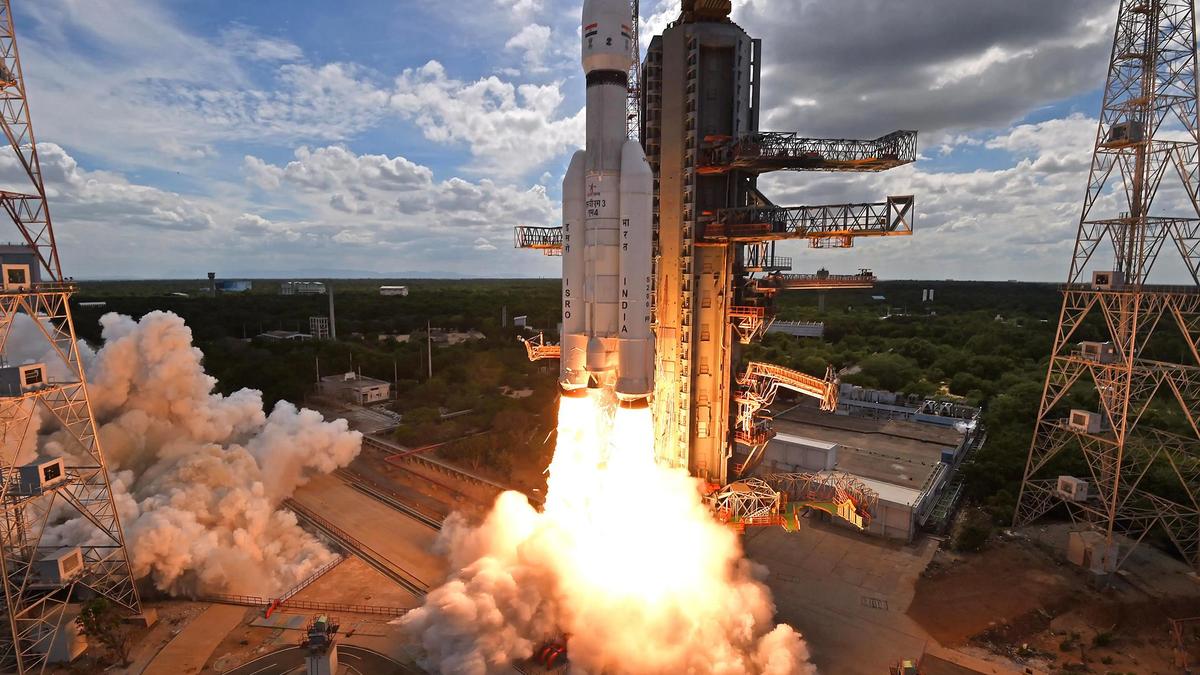
India’s maiden human spaceflight programme will use the LVM-3 rocket. The Indian Space Research Organisation (ISRO) has upgraded it and it’s currently being certified for human-rating. Once it’s thus rated, it will be called the HLVM-3 and will be able to carry Indian astronauts into space.

To this end, ISRO has added extra backup systems, made several systems and subsystems more reliable, strengthened the engines, extensively tested and built a fast crew escape system (which can pull the crew module away in case anything goes wrong during launch).

ISRO selected the LVM-3 for Gaganyaan for multiple reasons. The rocket has already proven its merits in seven consecutive successful orbital flights (including the Chandrayaan-3 mission). It’s also the most reliable rocket in ISRO’s fleet.

The rocket’s fully indigenous propulsion stages — two Vikas liquid engines, the C25 cryogenic engine, and the S200 boosters — are also aligned with India’s strategic goal to achieve self-reliance in human spaceflight, under its Atmanirbhar Bharat initiative.

Unnikrishnan Nair S. is former director of VSSC and founding director of the Human Space Flight Centre (HSFC), Bengaluru. He is an expert in launch vehicle systems and reentry technologies.



Source link

Science

Post navigation

Previous Post: Access Denied
Next Post: Access Denied

Related Posts

  • Consumption of ultra-processed and fast foods leading cause of diabetes in India, reveals new study
    Consumption of ultra-processed and fast foods leading cause of diabetes in India, reveals new study Science
  • 2024 Interim Budget | Space gets nominal hike, likely boost for spaceflight start-ups
    2024 Interim Budget | Space gets nominal hike, likely boost for spaceflight start-ups Science
  • Alcohol is one of the most dangerous drugs, yet its presence is ubiquitous in social settings and celebrations
    Alcohol is one of the most dangerous drugs, yet its presence is ubiquitous in social settings and celebrations Science
  • Loggerhead turtles use geomagnetic field to navigate large distances
    Loggerhead turtles use geomagnetic field to navigate large distances Science
  • Geoengineering isn’t a snappy situation cure, however a expensive gamble
    Geoengineering isn’t a snappy situation cure, however a expensive gamble Science
  • What next for ISRO after Chandrayaan-3 mission?
    What next for ISRO after Chandrayaan-3 mission? Science

More Related Articles

New cat species identified in Bolivia, first in over a century New cat species identified in Bolivia, first in over a century Science
When the honey became green, blue and red! When the honey became green, blue and red! Science
Why are earthquakes frequent in Afghanistan? | Explained Why are earthquakes frequent in Afghanistan? | Explained Science
Why do some sounds hurt?  Why do some sounds hurt?  Science
Vaccine for dengue may be available commercially by mid-2026  Vaccine for dengue may be available commercially by mid-2026  Science
Romanenko and his III space missions Romanenko and his III space missions Science
SiteLock

Archives

  • October 2026
  • September 2026
  • August 2026
  • July 2026
  • June 2026
  • May 2026
  • April 2026
  • March 2026
  • February 2026
  • January 2026
  • December 2025
  • November 2025
  • October 2025
  • September 2025
  • August 2025
  • July 2025
  • June 2025
  • May 2025
  • April 2025
  • March 2025
  • February 2025
  • January 2025
  • December 2024
  • November 2024
  • October 2024
  • September 2024
  • August 2024
  • July 2024
  • June 2024
  • May 2024
  • April 2024
  • March 2024
  • February 2024
  • January 2024
  • December 2023
  • November 2023
  • October 2023
  • September 2023
  • August 2023
  • July 2023
  • June 2023
  • May 2023
  • April 2023
  • March 2023
  • February 2023
  • January 2023
  • December 2022
  • November 2022
  • October 2022
  • September 2022
  • August 2022
  • July 2022
  • June 2022
  • May 2022

Categories

  • Business
  • Nation
  • Science
  • Sports
  • World

Recent Posts

  • Women stage silent demonstration at Kathipara against police action on anti-CEC protesters in Delhi
  • DGCA bans specific power banks on flights
  • Saudi Supreme Court sets aside Sri Lankan migrant worker’s death penalty
  • Nedumbassery accident: CPI(M) stages protest march to police station over ‘indifference’ in handling of case
  • Why CJI Surya Kant said ‘no’ to Rahul Gandhi’s request to meet | Explained

Recent Comments

  1. RobertTes on UP Teacher Who Asked Students To Slap Muslim Classmate
  2. Manuelret on UP Teacher Who Asked Students To Slap Muslim Classmate
  3. RobertTes on UP Teacher Who Asked Students To Slap Muslim Classmate
  4. RobertTes on UP Teacher Who Asked Students To Slap Muslim Classmate
  5. BrentWes on UP Teacher Who Asked Students To Slap Muslim Classmate
  • Access Denied World
  • Ravichandran Ashwin interview: On his book, an ode to Chennai gully cricket, and why 3 Idiots was a turning point
    Ravichandran Ashwin interview: On his book, an ode to Chennai gully cricket, and why 3 Idiots was a turning point Sports
  • Access Denied
    Access Denied Nation
  • New scheme to triple those with access to top journals
    New scheme to triple those with access to top journals Science
  • Jasprit Bumrah Drops Big Mohammed Shami Update On Border-Gavaskar Trophy Selection
    Jasprit Bumrah Drops Big Mohammed Shami Update On Border-Gavaskar Trophy Selection Sports
  • Access Denied
    Access Denied Nation
  • Sri Lanka mass grave excavation in Chemmani to resume under diplomatic presence
    Sri Lanka mass grave excavation in Chemmani to resume under diplomatic presence World
  • Dinesh Karthik bows out after an illustrious and multifaceted career
    Dinesh Karthik bows out after an illustrious and multifaceted career Sports

Editor-in-Chief:
Mohammad Ariff,
MSW, MAJMC, BSW, DTL, CTS, CNM, CCR, CAL, RSL, ASOC.
editor@artifex.news

Associate Editors:
1. Zenellis R. Tuba,
zenelis@artifex.news
2. Haris Daniyel
daniyel@artifex.news

Photograher:
Rohan Das
rohan@artifex.news

Associate Journalists
1. Subrata Paul - AN/2020/01
2. Quamruz Zaman - AN/2021/22
3. Ahmed Sha - AN/2021/035
4. Ajay Kumar Shaw - AN/2021/39
5. Tahqiqul Hoda - AN/2021/21

Artifex.News offers Online Paid Internships to college students from India and Abroad. Interns will get a PRESS CARD and other online offers.
Send your CV (Subjectline: Paid Internship) to internship@artifex.news

Links:
Associate Journalism
About Us
Privacy Policy

News Links:
Breaking News
World
Nation
Sports
Business
Entertainment
Lifestyle

Registered Office:
72/A, Elliot Road, Kolkata - 700016
Tel: 033-22277777, 033-22172217
Email: office@artifex.news

Editorial Office / News Desk:
No. 13, Mezzanine Floor, Esplanade Metro Rail Station,
12 J. L. Nehru Road, Kolkata - 700069.
(Entry from Gate No. 5)
Tel: 033-46011099, 033-46046046
Email: editor@artifex.news

Copyright © 2023 Artifex.News Newsportal designed by Artifex Infotech.