



Skip to content
  • Facebook
  • X
  • Linkedin
  • WhatsApp
  • YouTube
  • Associate Journalism
  • About Us
  • Privacy Policy
  • 033-46046046
  • editor@artifex.news
Artifex.News

Artifex.News

Stay Connected. Stay Informed.

  • Breaking News
  • World
  • Nation
  • Sports
  • Business
  • Science
  • Entertainment
  • Lifestyle
  • Toggle search form
  • UP Firm Dedicates 2 Peanut Butter Flavours To US Ex-President Jimmy Carter
    UP Firm Dedicates 2 Peanut Butter Flavours To US Ex-President Jimmy Carter World
  • PVV Infra subsidiaries bag two solar power orders worth ₹799 crore
    PVV Infra subsidiaries bag two solar power orders worth ₹799 crore Business
  • Access Denied World
  • U.S. Military says it struck a vessel in Caribbean, killing three
    U.S. Military says it struck a vessel in Caribbean, killing three World
  • Global textile industry concerned about continuing weak demand
    Global textile industry concerned about continuing weak demand Business
  • South Korea’s Yoon Recalled For Questioning As Detention Deadline Looms
    South Korea’s Yoon Recalled For Questioning As Detention Deadline Looms World
  • Access Denied
    Access Denied Nation
  • Access Denied
    Access Denied Nation
How do cyclones form? How are they measured? | Explained

How do cyclones form? How are they measured? | Explained

Posted on October 29, 2025 By admin


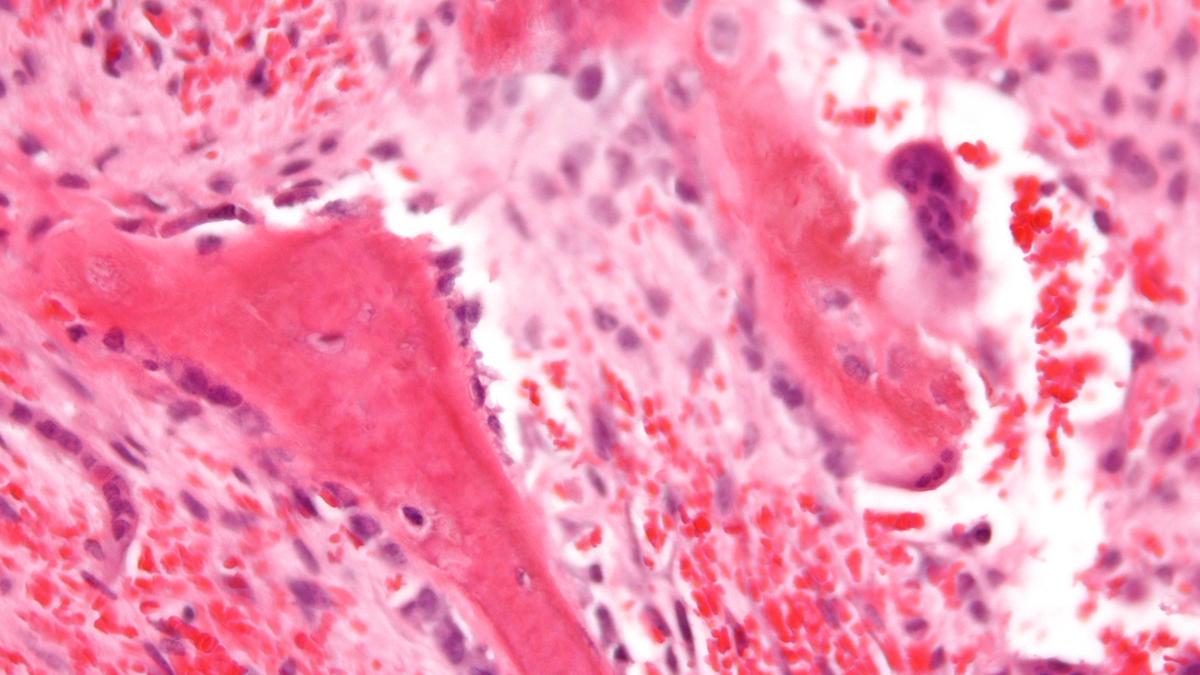
Cyclone Mocha and Tropical Disturbance 10, which would later become Fabien, on both sides of the equatorial Indian Ocean on May 13, 2023.
| Photo Credit: NOAA

The story so far: If you think of a cyclone as a machine, it would be an incredibly powerful entity — an engine that draws heat from the earth’s tropical waters to drive destructive winds, heavy and widespread rainfall, and storm surges. Similar storms are known variously as hurricanes in the Atlantic and eastern Pacific Oceans and typhoons in the western Pacific Ocean. Understanding how they form, intensify, and are measured is crucial both for scientific forecasting and for preparing vulnerable communities for their effects.

How do cyclones form?

A tropical cyclone begins as an area of low pressure, often associated with clusters of thunderstorms. For such a disturbance to develop into a cyclone, several atmospheric and oceanic conditions must come together. The most important is warm sea surface temperature, generally above 26.5° C and up to a depth of at least 50 m. When moist air near such a water surface rises, it releases its latent heat, cools, and condenses to form clouds. The released heat warms the surrounding air, causing it to rise even further and drawing in more moist air from below, setting up a self-reinforcing cycle of convection.

A second important condition is that the atmosphere must be unstable, i.e. rising air must continue to rise rather than being forced back down, and there must be a sufficient Coriolis force to induce rotation. Because the Coriolis effect is weakest at the equator, cyclones rarely form within about five degrees of latitude from it. At the same time, the vertical wind shear, which is the difference in wind speed and direction between the lower and the upper levels of the atmosphere, must be low. High wind shear can disrupt a cyclone’s organised circulation and keep it from building in strength.

As the cyclone develops, a well-defined centre called the eye may form. This is a calm, clear region surrounded by a ring of towering thunderstorms that produce the most intense winds and heaviest rainfall, called the eyewall. Air spirals in towards the low-pressure centre at the surface and rises rapidly near the eyewall, while at higher altitudes it flows outwards, completing the circulation.

How are cyclones classified?

Since the storm draws energy from the ocean through evaporation, it can intensify as long as it remains over warm water.

Cyclones are primarily classified by their maximum sustained wind speed and central pressure. Different ocean basins use slightly different classification schemes but the principle is the same. In the North Atlantic and eastern Pacific Oceans, the Saffir-Simpson Hurricane Wind Scale categorises storms from Category 1 (119-153 km/hr winds) to Category 5 (>252 km/hr). In the North Indian Ocean, the India Meteorological Department classification ranges from a ‘depression’ (31-49 km/hr) to ‘super cyclonic storm’ (>222 km/hr).

For measurements, meteorologists use ground-based observations, aircraft reconnaissance, satellite data, and ocean buoys. Satellites play a crucial role in monitoring cyclones over remote ocean areas: infrared images help estimate the temperature of cloud tops, indicating storm intensity, while visible and microwave sensors reveal structure, rainfall distribution, and eye formation.

In the North Atlantic, specialised aircraft called hurricane hunters fly directly into cyclones to measure wind speeds, pressure, humidity, and temperature. Instruments called dropsondes are released into the storm, transmitting data as they fall. In the Indian Ocean, satellites and automated buoys provide most of the data. Buoys track sea surface temperature, wave height, and air pressure.

How well are cyclones forecast?

Forecasting the path and intensity of cyclones remains a complex challenge, however. Sophisticated numerical weather models simulate atmospheric and oceanic conditions, but even small errors in initial data can lead to large uncertainties. Advances in computing power, remote sensing, and data assimilation have improved forecasts significantly over the last few decades. Today, most meteorological agencies can predict a cyclone’s track three to five days in advance with reasonable accuracy.

Cyclones are also measured by their consequences. Accumulated rainfall, storm surge height, and area affected by gale-force winds are essential to assess potential damage. After landfall, impact-based assessments, combining physical measurements with social and economic data, can help determine the disaster’s severity and guide relief efforts.

Published – October 29, 2025 01:58 pm IST


Source link

Science

Post navigation

Previous Post: Access Denied
Next Post: Access Denied

Related Posts

  • Scientists find ‘hidden’ hormone keeping mice mothers’ bones healthy
    Scientists find ‘hidden’ hormone keeping mice mothers’ bones healthy Science
  • Science This Week | Scientists discovers ‘bubble of galaxies’, bird-like dinosaur found in China and more
    Science This Week | Scientists discovers ‘bubble of galaxies’, bird-like dinosaur found in China and more Science
  • Philippines chosen to host climate ‘loss and damage’ fund board
    Philippines chosen to host climate ‘loss and damage’ fund board Science
  • Scientists are grasping at straws while trying to protect infant corals from hungry fish
    Scientists are grasping at straws while trying to protect infant corals from hungry fish Science
  • Tuvalu: Barely above water
    Tuvalu: Barely above water Science
  • How quantum algorithms solve problems that classical computers can’t
    How quantum algorithms solve problems that classical computers can’t Science

More Related Articles

The saga of the Piltdown man, archaeology’s biggest fraud! The saga of the Piltdown man, archaeology’s biggest fraud! Science
NASA invites ISRO to join Moon Base programme NASA invites ISRO to join Moon Base programme Science
AI may not steal many jobs after all, it may just make workers more efficient AI may not steal many jobs after all, it may just make workers more efficient Science
First robot leg with ‘artificial muscles’ jumps nimbly: study First robot leg with ‘artificial muscles’ jumps nimbly: study Science
Veteran nuclear scientist Rajagopala Chidambaram dies at 88 Veteran nuclear scientist Rajagopala Chidambaram dies at 88 Science
Tamil Nadu: Why is Chennai’s microplastic problem bigger than it looks? | Explained Tamil Nadu: Why is Chennai’s microplastic problem bigger than it looks? | Explained Science
SiteLock

Archives

  • October 2026
  • September 2026
  • August 2026
  • July 2026
  • June 2026
  • May 2026
  • April 2026
  • March 2026
  • February 2026
  • January 2026
  • December 2025
  • November 2025
  • October 2025
  • September 2025
  • August 2025
  • July 2025
  • June 2025
  • May 2025
  • April 2025
  • March 2025
  • February 2025
  • January 2025
  • December 2024
  • November 2024
  • October 2024
  • September 2024
  • August 2024
  • July 2024
  • June 2024
  • May 2024
  • April 2024
  • March 2024
  • February 2024
  • January 2024
  • December 2023
  • November 2023
  • October 2023
  • September 2023
  • August 2023
  • July 2023
  • June 2023
  • May 2023
  • April 2023
  • March 2023
  • February 2023
  • January 2023
  • December 2022
  • November 2022
  • October 2022
  • September 2022
  • August 2022
  • July 2022
  • June 2022
  • May 2022

Categories

  • Business
  • Nation
  • Science
  • Sports
  • World

Recent Posts

  • Sean ’Diddy’ Combs moved to a new prison after reports of a luxury lifestyle behind bars
  • Water level in Mullaperiyar dam stands at 116.55 feet
  • Deforestation in Brazil’s Amazon falls to all-time low
  • Rahul Gandhi has ‘anarchist’ mindset: Nitin Nabin
  • U.S. lifts curbs on Mexican airlines after aviation dispute

Recent Comments

  1. RobertGat on UP Teacher Who Asked Students To Slap Muslim Classmate
  2. RobertGat on UP Teacher Who Asked Students To Slap Muslim Classmate
  3. RobertGat on UP Teacher Who Asked Students To Slap Muslim Classmate
  4. RobertGat on UP Teacher Who Asked Students To Slap Muslim Classmate
  5. Davidbrurf on UP Teacher Who Asked Students To Slap Muslim Classmate
  • Far-Right Leads First Round Of France Election, Show Exit Polls
    Far-Right Leads First Round Of France Election, Show Exit Polls World
  • 25-Year-Old Australia Star Nathan McSweeney, Tipped To Open Against India, Gives Honest Opinion
    25-Year-Old Australia Star Nathan McSweeney, Tipped To Open Against India, Gives Honest Opinion Sports
  • Notre Dame bells ring out in Paris for first time since 2019 fire
    Notre Dame bells ring out in Paris for first time since 2019 fire World
  • Matthew Hayden’s Daughter Enjoys ‘Iconic’ Hyderabadi Biryani With SRH Fans, Video Viral
    Matthew Hayden’s Daughter Enjoys ‘Iconic’ Hyderabadi Biryani With SRH Fans, Video Viral Sports
  • Access Denied Sports
  • Access Denied Sports
  • ‘India may gain more from Chinese FDI than import reliance in tapping China plus one strategy’
    ‘India may gain more from Chinese FDI than import reliance in tapping China plus one strategy’ Business
  • IPL 2026: Pant not feeling the price tag pressure in IPL, says LSG coach Langer
    IPL 2026: Pant not feeling the price tag pressure in IPL, says LSG coach Langer Sports

Editor-in-Chief:
Mohammad Ariff,
MSW, MAJMC, BSW, DTL, CTS, CNM, CCR, CAL, RSL, ASOC.
editor@artifex.news

Associate Editors:
1. Zenellis R. Tuba,
zenelis@artifex.news
2. Haris Daniyel
daniyel@artifex.news

Photograher:
Rohan Das
rohan@artifex.news

Associate Journalists
1. Subrata Paul - AN/2020/01
2. Quamruz Zaman - AN/2021/22
3. Ahmed Sha - AN/2021/035
4. Ajay Kumar Shaw - AN/2021/39
5. Tahqiqul Hoda - AN/2021/21

Artifex.News offers Online Paid Internships to college students from India and Abroad. Interns will get a PRESS CARD and other online offers.
Send your CV (Subjectline: Paid Internship) to internship@artifex.news

Links:
Associate Journalism
About Us
Privacy Policy

News Links:
Breaking News
World
Nation
Sports
Business
Entertainment
Lifestyle

Registered Office:
72/A, Elliot Road, Kolkata - 700016
Tel: 033-22277777, 033-22172217
Email: office@artifex.news

Editorial Office / News Desk:
No. 13, Mezzanine Floor, Esplanade Metro Rail Station,
12 J. L. Nehru Road, Kolkata - 700069.
(Entry from Gate No. 5)
Tel: 033-46011099, 033-46046046
Email: editor@artifex.news

Copyright © 2023 Artifex.News Newsportal designed by Artifex Infotech.