




Imagine taking a new deck of cards, perfectly ordered by suit and number. You shuffle it once. The order is disturbed but you could probably figure it out again. Now, imagine shuffling it a hundred times. The cards are now in a completely random, chaotic state. This process is a lot like what happens to information in complex quantum systems.
A quantum system is made of many small particles, like electrons or photons, that interact with each other according to a specific set of rules. As they interact, they become entangled, a special quantum connection where the fate of one particle is instantly linked to the fate of another, no matter how far apart they are.
Double-edged sword
In a system with many particles, this web of entanglement quickly becomes incredibly complex. Any piece of information you start with — say, the state of a single particle — becomes spread out and scrambled across the entire system. After just a short time, the system becomes what scientists call ergodic, or chaotic. This creates a big problem for physicists who want to study these systems. If you try to measure a property of the system, the result is usually just noise. The original information is so thoroughly mixed up that you can no longer see the details of the underlying process. It’s like trying to understand the rules of a card game by looking at a deck that has been shuffled a thousand times. All you can tell is that it’s a mess.
This scrambling effect makes it nearly impossible to learn about the fundamental rules that govern a quantum system’s behavior. The very things that make quantum systems so powerful and interesting — their complexity and entanglement — also make them incredibly difficult to understand. Thus, the central challenge for scientists is to find a way to look past the chaos, to somehow “unscramble” the information and get a glimpse of the rules that are running the show. This has been a major goal in quantum physics: it’s the key to both understanding the universe at its most fundamental level and building powerful quantum computers.
To solve this, a team of researchers from Google Quantum AI and their collaborators have been exploring a new technique. The basic idea is to let the quantum information spread out and scramble, then give the system a precise ‘kick’, and finally run the whole process backward. The information then travels back toward where it started. Because of the kick it received in the middle, the returning information is slightly different from how it started. By comparing this ‘echo’ to the original, scientists can learn a surprising amount about the journey the information took and the rules that guided it.
This comparison is a special type of measurement called an out-of-time-order correlator (OTOC). The researchers believed that by creating even more complex echoes, i.e. by running the time-reversal process multiple times, they could reveal hidden quantum connections that no other method could reveal.
Building a quantum ‘time machine’
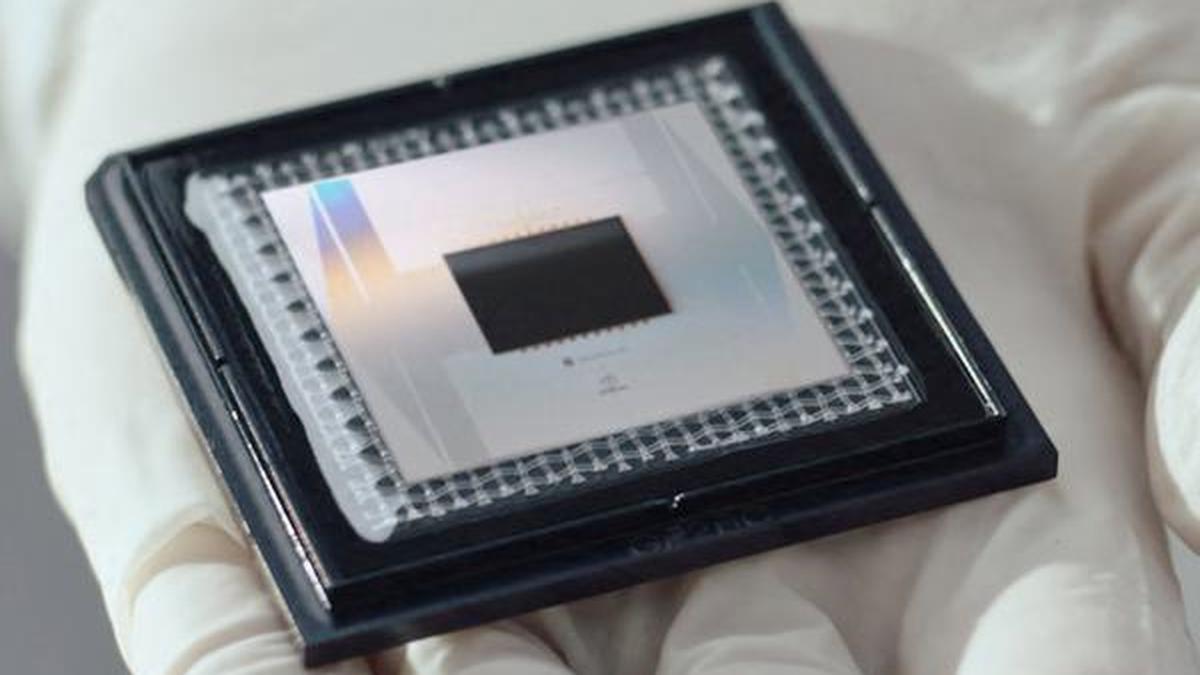
To test their idea, the scientists used Google’s Willow, a powerful superconducting quantum processor. This device allowed them to precisely control the interactions of many quantum bits, or qubits, which are the basic building blocks of a quantum computer. Their main experiment was to build a highly chaotic quantum system and use the echo trick to study it. The specific measurement they used is called a second-order OTOC, which involved letting the information make two full “round trips” in time: forward, backward, forward, and backward again.
The most important part of their method was a test to prove what they were seeing was a true quantum phenomenon called interference.
In the quantum world, particles behave like waves. Sometimes these waves can add up to create a bigger wave (constructive interference), and sometimes they can cancel each other out (destructive interference). To see if this was happening, midway through the experiment, the researchers inserted random operations that effectively jiggled the phase of each quantum wave. If the final result they were measuring was just a simple sum of probabilities, like adding up numbers, these random jiggles would cancel out and have no effect. But if the result depended on waves adding up in a specific, coordinated way, then jiggling them would completely mess up the final pattern.
This test was designed to prove that the OTOC signal was being built from quantum interference.
Seeing a hidden signal
According to the team’s results, published in Nature on October 22, the experiment was a success. First, the researchers confirmed that their echo trick worked as expected. They found that the OTOC signal remained strong and full of information about the system’s specific rules long after standard measurements had faded into meaningless noise. It was clear the OTOC was successfully “un-scrambling” the information from the chaos.
The bigger discovery, however, came from the interference test. When the team jiggled the quantum waves midway through the process, the final measurement of the second-order OTOC changed dramatically. This was conclusive proof that the signal was the result of constructive interference. The many different paths the quantum information took during its journey were not just being added up randomly: they were combining in a precise, quantum way to create a much stronger signal.
It was like discovering that many different ripples in a pond are all meeting at one exact spot at the same time to create a single, surprisingly large wave.
This large wave was a hidden layer of quantum reality — a signature of how the system’s basic building blocks were interacting over long distances in time and space. The researchers had not only managed to see this hidden signal but had shown that it was the main thing they were measuring, a direct observation of a complex, many-body quantum effect that is impossible to see without their special time-reversal technique.
Quantum advantage
The result has significant consequences for the future of quantum computing. The first is that it draws a clearer line between what regular computers can do and what quantum computers can do. The same quantum interference that makes the OTOC such a powerful measurement also makes it incredibly difficult for a classical computer to calculate.
For a regular computer, trying to simulate this process would be a computational disaster. It will have to keep track of trillions of waves that are adding and canceling out, where even a small error in any one of them can ruin the entire calculation. The researchers estimated that for them to classically simulate their largest experiment on 65 qubits would take one of the world’s fastest supercomputers more than three years. Their quantum processor got the answer in just a few hours.
The study also has practical applications. The team showed how their test could be used for a process called Hamiltonian learning. Since the OTOC signal is like a unique fingerprint of a quantum system’s rulebook (i.e. its Hamiltonian), it can be used to figure out what those rules are. By measuring the OTOC from a real physical system and comparing it to a simulation running on their quantum computer, the scientists could adjust the rules in their simulation until the fingerprints matched perfectly.
The team was thus able to ‘learn’ a hidden detail about the system’s fundamental properties. This could allow researchers to discover the properties of new materials or understand complex chemical reactions in a way that hasn’t been possible before.
Published – October 22, 2025 10:21 pm IST