





Skip to content
  • Facebook
  • X
  • Linkedin
  • WhatsApp
  • YouTube
  • Associate Journalism
  • About Us
  • Privacy Policy
  • 033-46046046
  • editor@artifex.news
Artifex.News

Artifex.News

Stay Connected. Stay Informed.

  • Breaking News
  • World
  • Nation
  • Sports
  • Business
  • Science
  • Entertainment
  • Lifestyle
  • Toggle search form
  • World Bank Neutral Expert says ‘competent’ to judge Indus Water Treaty dispute
    World Bank Neutral Expert says ‘competent’ to judge Indus Water Treaty dispute World
  • UN condemns ‘dangerous escalation’ in Ukraine war
    UN condemns ‘dangerous escalation’ in Ukraine war World
  • Supreme Court Adjourns Ramdev’s Plea For Clubbing Of Cases To July
    Supreme Court Adjourns Ramdev’s Plea For Clubbing Of Cases To July Nation
  • Odisha government to provide assistance to Durga Puja committees up to ₹ 1.10 lakh each
    Odisha government to provide assistance to Durga Puja committees up to ₹ 1.10 lakh each Nation
  • India’s position in global gold reserves | Explained
    India’s position in global gold reserves | Explained Business
  • Fight Between Arshdeep Singh And Khaleel Ahmed For India Tests vs Bangladesh
    Fight Between Arshdeep Singh And Khaleel Ahmed For India Tests vs Bangladesh Sports
  • Access Denied
    Access Denied Nation
  • Stock markets rebound in early trade after two days of decline
    Stock markets rebound in early trade after two days of decline Business
How dead birds, old maps are helping scientists track biodiversity loss

How dead birds, old maps are helping scientists track biodiversity loss

Posted on September 3, 2025 By admin


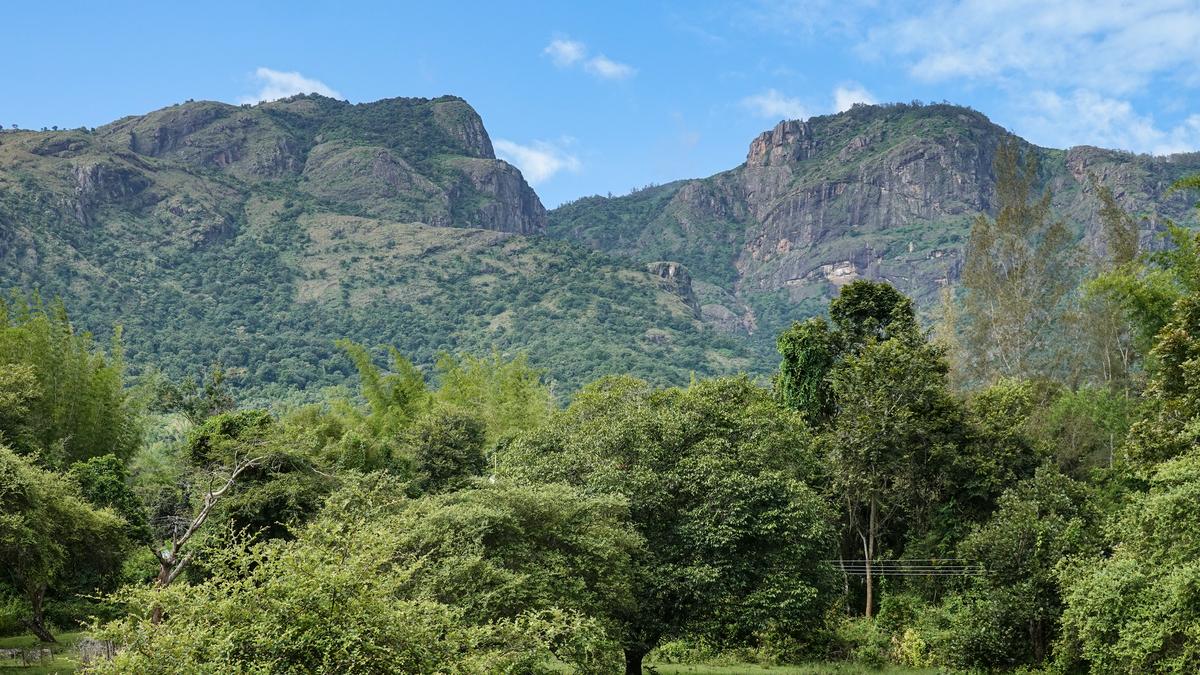
The Nilgiri mountains in the Western Ghats are a biodiversity hotspot, home to a diverse array of birds, mammals, plants, and other life forms. Called the ‘blue mountains’ because of the blooming of Strobilanthus flowers, the Nilgiris are home to many species that are endemic and of conservation concern, including the Nilgiri pipit, the Nilgiri sholakili, and the Nilgiri laughingthrush.

In a study recently published in Global Change Biology, Vijay Ramesh and a team of scientists from institutes in India, the UK, and the US explored how changes in land use in the last 170 years affected the diversity of birds in the Nilgiri mountain range. The team compiled data from two sources: museums and field-based surveys.

‘Lack of recognition’

First, they digitised geographical information from birds collected by British ornithologists in the late 1800s and which are preserved in natural history museums. Then they revisited and surveyed 42 of the same sites where historical surveys took place. The team also digitised a historical land-use map and compared it with current satellite images.

In this way, the team found that the relative abundance of almost 90% of grassland birds in the Nilgiris has dropped. The Nilgiri pipit and the Malabar lark — both of which are restricted to grassland habitats — in particular had suffered the steepest decline.

Likewise, the team analysed GIS-based land-cover change to show that the extent of grasslands had decreased by 80%: from 993 sq. km in 1848 to just 201 sq. km in 2018.

However, to their surprise, the scientists also found that the abundance of about 53% of forest birds has been relatively stable in the last century. This is because much of the grassland habitats had been replaced over time by wooded forests — in the form of either exotic plantations or woody invasive species — in response to increasing temperature. This switch allowed forest-dependent species a new, alternative habitat, keeping their abundances stable, the team argued.

“Perhaps the biggest threat is the lack of recognition of grasslands as an important part of the landscape. People in the landscape understand this; however, the wider efforts are always targeted at conserving forests and planting trees,” V.V. Robin, an author of the paper and associate professor at IISER Tirupati, said.

An important repository

Beyond the findings themselves, the study’s methods are notable. They highlight the sort of innovation researchers can resort to in order to elicit new ecological and conservation wisdom. While field-based studies remain invaluable to understand the natural history of a habitat or species, data collected decades ago provides historical context to current biodiversity baselines. Historical data allows researchers to make comparisons across a longer time period, which isn’t possible with field studies.

Natural history museums are a particularly important repository of such historical data. While many such museums around the world have a reputation for wowing visitors, the latter often engage with only a small fraction of specimens. The vast majority are in fact stored in large, climate-controlled facilities that are maintained by a team of curators, biologists, and facility managers. These are animals that naturalists had collected over centuries from around the world.

“Museums are vital for biodiversity research, especially in India, a global hotspot of species diversity,” Pritha Dey, a moth biologist and head of the research collections facility at the National Centre for Biological Sciences, Bengaluru, said. “They preserve historical records of species distributions, help in taxonomic identification, and provide baseline data crucial for conservation, climate impact studies, and tracking biodiversity loss over time.”

Scientists have used records from museums to describe many new species, understand the migration of birds, document changes in animals’ body sizes in response to climatic changes, and to elucidate the collapse of entire communities of birds. In the new study as well, the researchers examined specimens of birds collected in the early and late 1800s, which were preserved along with data about their location, the date on which the specimen was collected, and by whom.

With the number of specimens of each species from historical and modern periods, the scientists used a new Bayesian statistical method called field abundance—museum abundance (FAMA). This method allowed the researchers to estimate the relative abundance of each species in each time period, ultimately revealing a drastic decline in the abundance of grassland birds across the Nilgiris.

Access to archives

These and other scientists have also used different archival materials such as journals, old papers, and maps to complete unfinished stories of biodiversity collapse. In the study from Nilgiris, for example, the researchers used the first land-cover map of the Nilgiris, made by Captain John Ouchterlony, a British Officer stationed in Madras. This map was stored as multiple tiles at the British Library and the Tamil Nadu State archives. Using GIS and editing software, the team photographed the map, spent hours labelling the manner of land use at each pixel, and finally digitised it. Then they compared the information in the map with recent satellite images to assess changes and loss of habitat.

This said, accessing samples and archival resources in museums remains a complicated task.

According to Dey, “Key challenges include lack of digitisation, limited funding, outdated infrastructure, and bureaucratic hurdles in accessing collections.”

Most of the better natural history museums are in Western countries and accessing them is further limited by high travel costs and visa norms.

“​​The museum community has a problematic view of ownership of specimens,” Sushma Reddy, an associate professor and curator of birds at the Bell Museum of Natural History at the University of Minnesota, said. “For example, there are many specimens legally collected from India and other countries over the past century that are housed in these collections. What is the responsibility of these museums to repatriate information or allow access?

“[That is] something we are still struggling with as a museum community.”

Sutirtha Lahiri is a doctoral student in conservation science at the University of Minnesota.

Published – September 03, 2025 05:30 am IST


Source link

Science

Post navigation

Previous Post: McMillan appointed White Ferns’ batting, fielding coach ahead of World Cup
Next Post: Access Denied

Related Posts

  • How scientists are using menstrual blood to treat osteoarthritis
    How scientists are using menstrual blood to treat osteoarthritis Science
  • The challenge of writing about the science Nobel Prizes
    The challenge of writing about the science Nobel Prizes Science
  • Breakthrough Prizes 2024 winners include innovative cancer treatment
    Breakthrough Prizes 2024 winners include innovative cancer treatment Science
  • Chest X-ray interpretation using AI can detect more TB cases
    Chest X-ray interpretation using AI can detect more TB cases Science
  • NASA astronaut Sunita Williams retires
    NASA astronaut Sunita Williams retires Science
  • ISRO lines up 7 launches, including uncrewed Gaganyaan mission by March 2026
    ISRO lines up 7 launches, including uncrewed Gaganyaan mission by March 2026 Science

More Related Articles

Scientists find bacteria living in microwave ovens Scientists find bacteria living in microwave ovens Science
Helping children aim for the stars | National Science Day Helping children aim for the stars | National Science Day Science
Twisted magnetic field observed around Milky Way’s central black hole Twisted magnetic field observed around Milky Way’s central black hole Science
HIV breakthrough: new pre-exposure prophylaxis called lenacapavir found 100% effective in trial HIV breakthrough: new pre-exposure prophylaxis called lenacapavir found 100% effective in trial Science
What is the latest science telling us about climate change? What is the latest science telling us about climate change? Science
Daily Quiz: International Day of Human Space Flight Daily Quiz: International Day of Human Space Flight Science
SiteLock

Archives

  • October 2026
  • September 2026
  • August 2026
  • July 2026
  • June 2026
  • May 2026
  • April 2026
  • March 2026
  • February 2026
  • January 2026
  • December 2025
  • November 2025
  • October 2025
  • September 2025
  • August 2025
  • July 2025
  • June 2025
  • May 2025
  • April 2025
  • March 2025
  • February 2025
  • January 2025
  • December 2024
  • November 2024
  • October 2024
  • September 2024
  • August 2024
  • July 2024
  • June 2024
  • May 2024
  • April 2024
  • March 2024
  • February 2024
  • January 2024
  • December 2023
  • November 2023
  • October 2023
  • September 2023
  • August 2023
  • July 2023
  • June 2023
  • May 2023
  • April 2023
  • March 2023
  • February 2023
  • January 2023
  • December 2022
  • November 2022
  • October 2022
  • September 2022
  • August 2022
  • July 2022
  • June 2022
  • May 2022

Categories

  • Business
  • Nation
  • Science
  • Sports
  • World

Recent Posts

  • Women stage silent demonstration at Kathipara against police action on anti-CEC protesters in Delhi
  • DGCA bans specific power banks on flights
  • Saudi Supreme Court sets aside Sri Lankan migrant worker’s death penalty
  • Nedumbassery accident: CPI(M) stages protest march to police station over ‘indifference’ in handling of case
  • Why CJI Surya Kant said ‘no’ to Rahul Gandhi’s request to meet | Explained

Recent Comments

  1. RobertTes on UP Teacher Who Asked Students To Slap Muslim Classmate
  2. Manuelret on UP Teacher Who Asked Students To Slap Muslim Classmate
  3. RobertTes on UP Teacher Who Asked Students To Slap Muslim Classmate
  4. RobertTes on UP Teacher Who Asked Students To Slap Muslim Classmate
  5. BrentWes on UP Teacher Who Asked Students To Slap Muslim Classmate
  • Access Denied
    Access Denied Nation
  • How can a quantum computer prove that it is superior?
    How can a quantum computer prove that it is superior? Science
  • Access Denied
    Access Denied Nation
  • Durand Cup: A full strength Mohun Bagan SG overwhelms Indian Air Force 6-0
    Durand Cup: A full strength Mohun Bagan SG overwhelms Indian Air Force 6-0 Sports
  • M.A. Chidambaram and his stadium for cricket
    M.A. Chidambaram and his stadium for cricket Sports
  • Access Denied Sports
  • Israeli emergency service announces third death in West Bank shooting attack
    Israeli emergency service announces third death in West Bank shooting attack World
  • Access Denied Business

Editor-in-Chief:
Mohammad Ariff,
MSW, MAJMC, BSW, DTL, CTS, CNM, CCR, CAL, RSL, ASOC.
editor@artifex.news

Associate Editors:
1. Zenellis R. Tuba,
zenelis@artifex.news
2. Haris Daniyel
daniyel@artifex.news

Photograher:
Rohan Das
rohan@artifex.news

Associate Journalists
1. Subrata Paul - AN/2020/01
2. Quamruz Zaman - AN/2021/22
3. Ahmed Sha - AN/2021/035
4. Ajay Kumar Shaw - AN/2021/39
5. Tahqiqul Hoda - AN/2021/21

Artifex.News offers Online Paid Internships to college students from India and Abroad. Interns will get a PRESS CARD and other online offers.
Send your CV (Subjectline: Paid Internship) to internship@artifex.news

Links:
Associate Journalism
About Us
Privacy Policy

News Links:
Breaking News
World
Nation
Sports
Business
Entertainment
Lifestyle

Registered Office:
72/A, Elliot Road, Kolkata - 700016
Tel: 033-22277777, 033-22172217
Email: office@artifex.news

Editorial Office / News Desk:
No. 13, Mezzanine Floor, Esplanade Metro Rail Station,
12 J. L. Nehru Road, Kolkata - 700069.
(Entry from Gate No. 5)
Tel: 033-46011099, 033-46046046
Email: editor@artifex.news

Copyright © 2023 Artifex.News Newsportal designed by Artifex Infotech.