


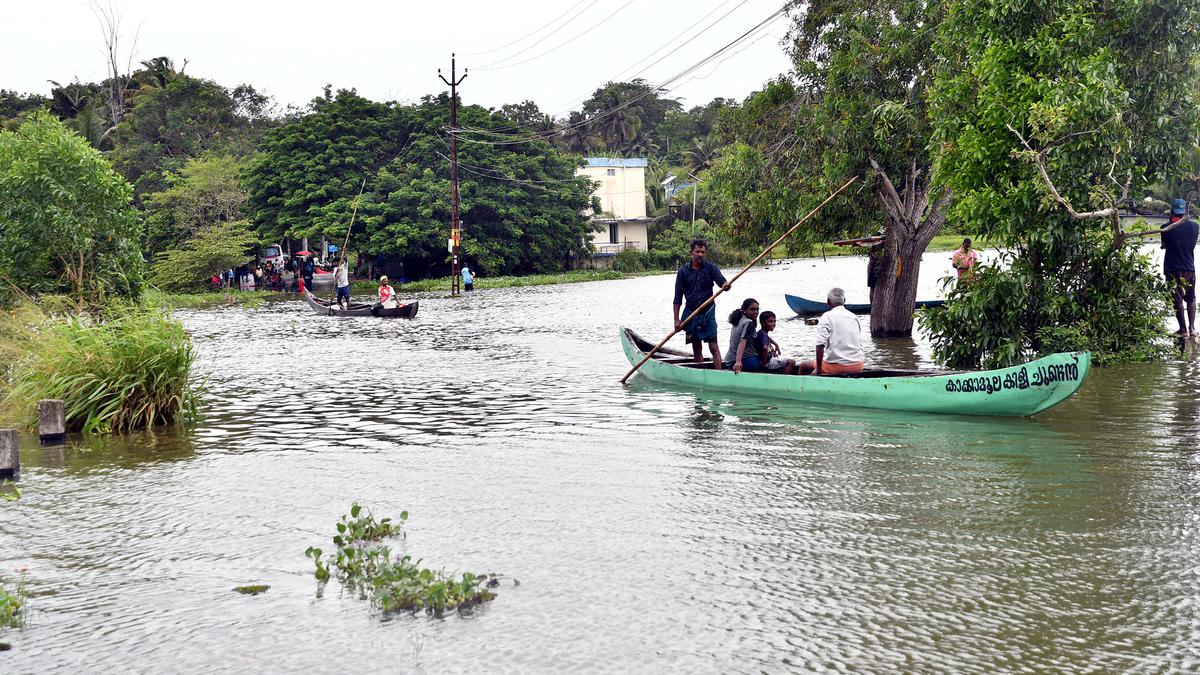
Earlier this year, as the summer monsoons struck the country, Bengaluru, Gurugram, and Mumbai were quickly under several feet of stagnating water. Similar scenes played out in settled areas in many parts of the country, with officials evacuating several thousand people in anticipation of floods.
India’s urban areas have been flooding more and more often. These urban floods lead to life and livelihood loss, and can push governments into economic crises. In July this year, a State Bank of India report estimated the economic loss due to the 2023 North India floods and Cyclone Biparjoy in Gujarat together to be Rs 10,000-15,000 crore.
Now, a new study, published in Nature journal on October 4, and led by the World Bank, has found that these risks have been exacerbated by the rapid and continuous expansion of cities into areas at high risk of flooding. According to its authors, since 1985, human settlements in flood-prone areas have more than doubled in the last four decades.
Urban settlement experts said the findings reiterate the risk of unsustainable urbanisation in India while highlighting the urgent need to account for flood-related risks in how urban expansion is planned and executed.
Exposure to flood risk
The study used satellite data to determine global flood patterns and compared it against high-resolution global maps of expanding urban settlements. The researchers found that worldwide, East Asia had the highest rate of settlement expansion in flood-prone areas versus those that are flood-safe. Sub-Saharan Africa and North America on the other hand had the least expansion into flood-prone areas.
The study also found that middle-income countries have more urban settlement in flood-prone zones than that in low- and high-income countries. In the World Bank’s estimate, India is a low-middle-income country (or LMIC).
On the upside, India isn’t among the 20 countries whose settlements are most exposed to flood hazards. Its neighbours Bangladesh, Bhutan, China, and Myanmar are. But the study found India to be the third highest contributor to global settlements, after China and the U.S., and also third – after China and Vietnam – among countries with new settlements expanding into flood-prone areas (all in 1985-2015).
Gautam Bhan, a researcher who studies urban settlements at the Indian Institute of Human Settlements (IIHS), Bengaluru, interpreted this to mean India stands at significant risk of flood-related problems that could worsen considerably in the coming years if the country wasn’t careful.
However, Raj Bhagat Palanichamy, a geoanalyst at WRI India, said the data in the study – from a database called EM-DAT – may not have the “granularity required for studying flood-prone areas in our urban areas and peri urban areas.”
That is, since the database is a large record of mass disasters and not a “flood-plain record”, Mr. Palanichamy said “the data are still not comprehensive enough to assign ranks to countries based on their settlements’ exposure to floods.”
Urbanisation and flooding
In 2022, ecohydrologist Jagdish Krishnaswamy and remote sensing specialist Kiran M.C. from the IIHS wrote in The Hindu that climate change is worsening monsoons in India by increasing the rate of evaporation from oceans, increasing moisture content in the atmosphere, and creating more cyclonic storms in the water bodies surrounding India. The end result is that floods are frequent.
At the heart of flood-related hazards is “where we build or expand our cities,” Mr. Palanichamy had written in 2022.
He had estimated that the Bengaluru floods in 2022 cost the city Rs 225 crore. Between 1901 and 2022, the city’s population is estimated to have grown from 1.6 lakh to more than a crore. To accommodate these people, the city expanded. However, new localities overlooked the city’s “topography”, Mr. Palanichamy had added.
This led to urbanisation of flood-prone areas as well as the creation of new risks, Dr. Bhan said.
For example, as construction began in the “valleys and ridges” of Bengaluru – inherently low-lying areas and flood-prone – the increasing concrete cover reduced the amount of rainfall that could percolate the soil, the duo explained. The new structures also impeded the flow of water into canals, increasing the probability and intensity of floods.
Move the slider to see the change
Disproportionate risk by class
Mr. Palanichamy and Dr. Bhan both said that expanding urbanisation in flood-prone areas is a story of both the elite and the poor. Dr. Bhan provided the Yamuna floodplains as an example, with its three kinds of settlements: “informal settlements, government structures, and unauthorised colonies.”
They also added that the risks were disproportionately higher for those living in informal structures. According to Dr. Bhan, “The geography of environmental risk is also the geography of informal low-income housing.”
He added that if one had to build informal housing in the city, they would need to “occupy land that is vacant and slightly less desirable, so that they are not immediately driven off.” So informal settlements often lie in “low-lying, flood-prone areas”.
Not locality-level issues
According to Dr. Bhan, an important reason why urbanisation has expanded into flood-prone areas specifically, and in “ecologically unsustainable areas” generally, is that “we don’t have the governance processes to say, ‘Look, this kind of development is environmentally unsustainable.’”
He added that when environmental regulations are applied to new constructions, they are often applied only to big infrastructure projects and not to medium- and small-scale modifications of localities.
This contradicts the observation that certain localities are more flood-prone than others, and that flooding and flood-risk are locality-level issues.
In the 2022 Bengaluru floods, for example, R.M.Z. EcoSpace in the Outer Ring Road and the Rainbow Drive in Sarjapur Road 5 km away were equally affected. And both, according to Mr. Palanichamy, are plagued by heavy construction activity.
Dr. Bhan added that people commonly violate existing government regulations. He invoked the examples of a rise in eco-tourism resorts on forest land and the construction of large public structures, including government buildings and even religious structures, on rivers’ floodplains.
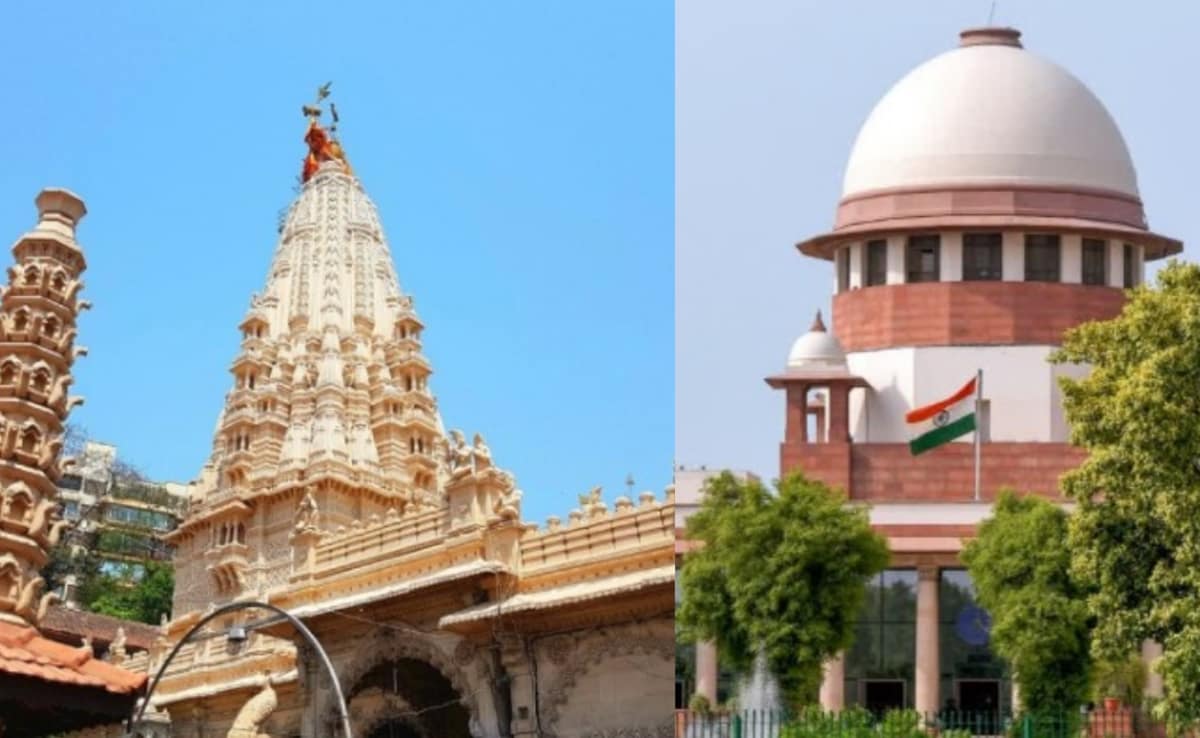
Earlier this year, The Hindu reported on the construction of the Akshardham Temple on the Sabarmati riverfront, as a result significantly narrowing the river and increasing the risk of floods in neighbouring areas.
Protect low-income housing
As cities and their populations continue to expand, Mr. Palanichamy and Dr. Bhan cautioned that we can no longer avoid expanding into flood-prone areas. “Market forces tend to push expansion into flood-prone areas,” said Mr. Palanichamy. “But recognising what these areas are and that we are actually expanding into them is the first step towards sustainable urban planning that addresses the resulting risks.”
Some forms of adaptation are necessary, said Dr. Bhan, and they need to differentiate between low-income residents and unauthorised structures erected for the elite.
“Every city needs to do a proper scientific mapping of the flood prone areas,” Mr. Palanichamy said. He also suggested that better storm-water management plans have to be put in place – including more “storm-water drains that collect and divert rainwater” being installed in the flood-prone areas of cities.
But Dr. Bhan said storm-water drains are only one solution; urban governments also need to make housing in such areas more resilient to floods as well as upgrade and protect low-income housing. He gave the example of riverside settlements that use stilt houses – like those used by the Mishing and the Miyah communities along the banks of the Brahmaputra.
Sayantan Datta (they/them) are a queer-trans freelance science writer, communicator and journalist. They are currently a faculty member at Krea University and tweet at @queersprings.