


Skip to content
  • Facebook
  • X
  • Linkedin
  • WhatsApp
  • Associate Journalism
  • About Us
  • Privacy Policy
  • 033-46046046
  • editor@artifex.news
Artifex.News

Artifex.News

Stay Connected. Stay Informed.

  • Breaking News
  • World
  • Nation
  • Sports
  • Business
  • Science
  • Entertainment
  • Lifestyle
  • Toggle search form
  • On Hawk-Eye Founder’s ‘Uneducated Opinion’ Jibe, Michael Vaughan’s “Very Simple” Response
    On Hawk-Eye Founder’s ‘Uneducated Opinion’ Jibe, Michael Vaughan’s “Very Simple” Response Sports
  • 85 Indians Discharged From Russian Military Ahead Of BRICS Summit
    85 Indians Discharged From Russian Military Ahead Of BRICS Summit Nation
  • MI And RCB Pick Parunika Sisodia And Nuzhat Parween As Injury Replacements
    MI And RCB Pick Parunika Sisodia And Nuzhat Parween As Injury Replacements Sports
  • Pakistan’s Foreign Office dismisses U.S. ‘directions’ on probing alleged election rigging
    Pakistan’s Foreign Office dismisses U.S. ‘directions’ on probing alleged election rigging World
  • Tamil Nadu Police In Supreme Court
    Tamil Nadu Police In Supreme Court Nation
  • Executions in Iran are up 30%, a new United Nations report says
    Executions in Iran are up 30%, a new United Nations report says World
  • ‘Do you see BJP protest when a Hindu is killed by a Hindu?‘
    ‘Do you see BJP protest when a Hindu is killed by a Hindu?‘ Nation
  • Citizenship Amendment Act – Does CAA Put Any Restrictions On Muslim Migrants? What Government Said
    Citizenship Amendment Act – Does CAA Put Any Restrictions On Muslim Migrants? What Government Said Nation
NASA plans to build a nuclear reactor on the moon

NASA plans to build a nuclear reactor on the moon

Posted on August 18, 2025 By admin


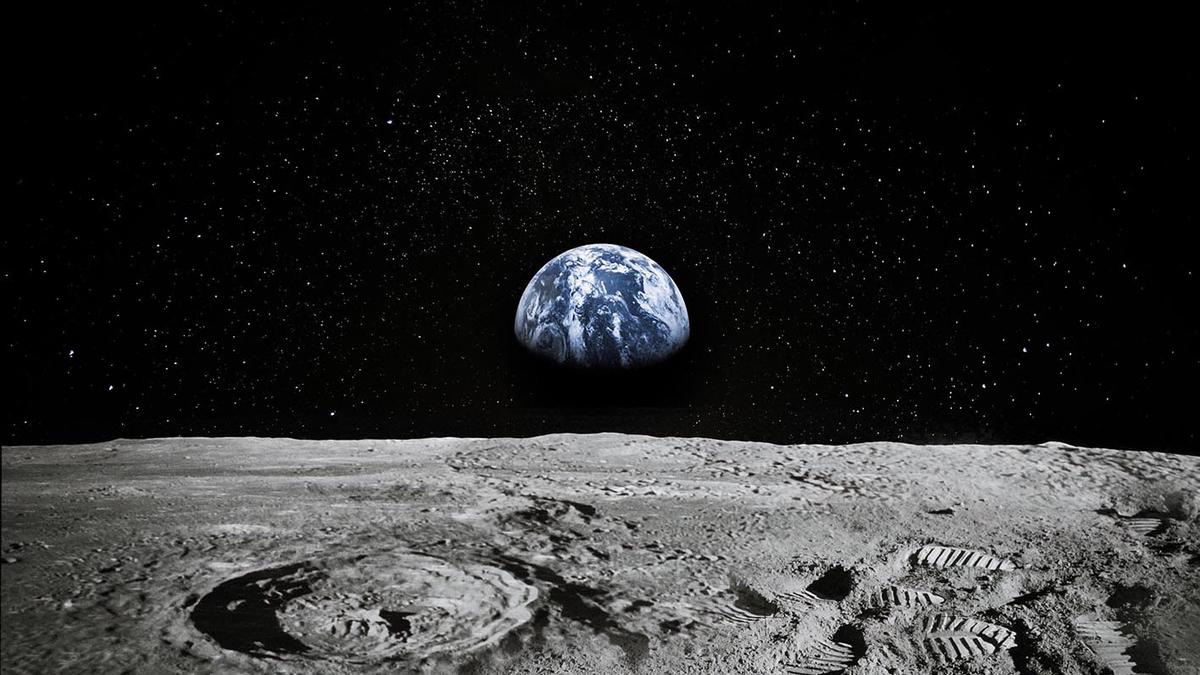
The first space race was about flags and footprints. Now, decades later, landing on the Moon is old news. The new race is to build there, and doing so hinges on power.

In April 2025, China reportedly unveiled plans to build a nuclear power plant on the Moon by 2035. This plant would support its planned international lunar research station. The United States countered in August, when acting NASA Administrator Sean Duffy reportedly suggested a U.S. reactor would be operational on the Moon by 2030.

While it might feel like a sudden sprint, this isn’t exactly breaking news. NASA and the Department of Energy have spent years quietly developing small nuclear power systems to power lunar bases, mining operations and long-term habitats.

As a space lawyer focused on long-term human advancement into space, I see this not as an arms race but as a strategic infrastructure race. And in this case, infrastructure is influence.

A lunar nuclear reactor may sound dramatic, but its neither illegal nor unprecedented. If deployed responsibly, it could allow countries to peacefully explore the Moon, fuel their economic growth and test out technologies for deeper space missions. But building a reactor also raises critical questions about access and power.

Existing legal framework

Nuclear power in space isn’t a new idea. Since the 1960s, the U.S. and the Soviet Union have relied on radioisotope generators that use small amounts of radioactive elements – a type of nuclear fuel – to power satellites, Mars rovers and the Voyager probes.

The United Nations’ 1992 Principles Relevant to the Use of Nuclear Power Sources in Outer Space, a nonbinding resolution, recognizes that nuclear energy may be essential for missions where solar power is insufficient. This resolution sets guidelines for safety, transparency and international consultation.

Nothing in international law prohibits the peaceful use of nuclear power on the Moon. But what matters is how countries deploy it. And the first country to succeed could shape the norms for expectations, behaviors and legal interpretations related to lunar presence and influence.

Why being first matters

The 1967 Outer Space Treaty, ratified by all major spacefaring nations including the U.S., China and Russia, governs space activity. Its Article IX requires that states act with “due regard to the corresponding interests of all other States Parties.”

That statement means if one country places a nuclear reactor on the Moon, others must navigate around it, legally and physically. In effect, it draws a line on the lunar map. If the reactor anchors a larger, long-term facility, it could quietly shape what countries do and how their moves are interpreted legally, on the Moon and beyond.

Other articles in the Outer Space Treaty set similar boundaries on behavior, even as they encourage cooperation. They affirm that all countries have the right to freely explore and access the Moon and other celestial bodies, but they explicitly prohibit territorial claims or assertions of sovereignty.

At the same time, the treaty acknowledges that countries may establish installations such as bases — and with that, gain the power to limit access. While visits by other countries are encouraged as a transparency measure, they must be preceded by prior consultations. Effectively, this grants operators a degree of control over who can enter and when.

Building infrastructure is not staking a territorial claim. No one can own the Moon, but one country setting up a reactor could shape where and how others operate – functionally, if not legally.

Infrastructure as influence

Building a nuclear reactor establishes a country’s presence in a given area. This idea is especially important for resource-rich areas such as the lunar south pole, where ice found in perpetually shadowed craters could fuel rockets and sustain lunar bases.

These sought-after regions are scientifically vital and geopolitically sensitive, as multiple countries want to build bases or conduct research there. Building infrastructure in these areas would cement a country’s ability to access the resources there and potentially exclude others from doing the same.

Critics may worry about radiation risks. Even if designed for peaceful use and contained properly, reactors introduce new environmental and operational hazards, particularly in a dangerous setting such as space. But the U.N. guidelines do outline rigorous safety protocols, and following them could potentially mitigate these concerns.

The Moon has little atmosphere and experiences 14-day stretches of darkness. In some shadowed craters, where ice is likely to be found, sunlight never reaches the surface at all. These issues make solar energy unreliable, if not impossible, in some of the most critical regions.

A small lunar reactor could operate continuously for a decade or more, powering habitats, rovers, 3D printers and life-support systems. Nuclear power could be the linchpin for long-term human activity. And it’s not just about the Moon – developing this capability is essential for missions to Mars, where solar power is even more constrained.

Call for governance, not alarm

The United States has an opportunity to lead not just in technology but in governance. If it commits to sharing its plans publicly, following Article IX of the Outer Space Treaty and reaffirming a commitment to peaceful use and international participation, it will encourage other countries to do the same.

The future of the Moon won’t be determined by who plants the most flags. It will be determined by who builds what, and how. Nuclear power may be essential for that future. Building transparently and in line with international guidelines would allow countries to more safely realize that future.

A reactor on the Moon isn’t a territorial claim or a declaration of war. But it is infrastructure. And infrastructure will be how countries display power – of all kinds – in the next era of space exploration.

Michelle L.D. Hanlon is professor of air and space law, University of Mississippi. This article is republished from The Conversation.

Published – August 18, 2025 11:06 am IST


Source link

Science

Post navigation

Previous Post: India’s purchase of Russian crude funding war in Ukraine, has to stop: U.S. trade adviser Navarro
Next Post: Qantas Airways fined $59mn for illegal pandemic layoffs

Related Posts

  • Can Kerala’s policy to limit antibiotics misuse lead to reduced AMR?
    Can Kerala’s policy to limit antibiotics misuse lead to reduced AMR? Science
  • Rising up to the challenge
    Rising up to the challenge Science
  • Sci-Five | The Hindu Science Quiz: On Amoeba
    Sci-Five | The Hindu Science Quiz: On Amoeba Science
  • Sci-Five | The Hindu Science Quiz: On elements found after 1900
    Sci-Five | The Hindu Science Quiz: On elements found after 1900 Science
  • China plans to cut CO2 emission by about 130 mln metric tons in key areas in 2024, 2025
    China plans to cut CO2 emission by about 130 mln metric tons in key areas in 2024, 2025 Science
  • Ohsumi, Japan’s first successful satellite
    Ohsumi, Japan’s first successful satellite Science

More Related Articles

Science for all newsletter Are ants in groups smarter than humans in groups? Science for all newsletter Are ants in groups smarter than humans in groups? Science
Centre amends surrogacy rules, allows couples with medical conditions to use donor gametes Centre amends surrogacy rules, allows couples with medical conditions to use donor gametes Science
Scientists test Fukushima fish after nuclear plant water release Scientists test Fukushima fish after nuclear plant water release Science
Does Uranus’s moon Ariel also have an underground ocean? Does Uranus’s moon Ariel also have an underground ocean? Science
‘10,000 genome’ project completed, says government ‘10,000 genome’ project completed, says government Science
CDFD research finds how fungal pathogen which kills 2.5 million people every year evades host immune cells CDFD research finds how fungal pathogen which kills 2.5 million people every year evades host immune cells Science
SiteLock

Archives

  • August 2025
  • July 2025
  • June 2025
  • May 2025
  • March 2025
  • February 2025
  • January 2025
  • December 2024
  • November 2024
  • October 2024
  • September 2024
  • August 2024
  • July 2024
  • June 2024
  • May 2024
  • April 2024
  • March 2024
  • February 2024
  • January 2024
  • December 2023
  • November 2023
  • October 2023
  • September 2023
  • August 2023
  • July 2023
  • June 2023
  • May 2023
  • April 2023
  • March 2023
  • February 2023
  • January 2023
  • December 2022
  • November 2022
  • October 2022
  • September 2022
  • August 2022
  • July 2022
  • June 2022
  • May 2022

Categories

  • Business
  • Nation
  • Science
  • Sports
  • World

Recent Posts

  • Calorie, a year-long exhibit at the Science Gallery Bengaluru, questions our relationship with food
  • Access Denied
  • Watch: ‘President Zelenskyy, you look fabulous in that suit’
  • Access Denied
  • Access Denied

Recent Comments

  1. dfb{{98991*97996}}xca on UP Teacher Who Asked Students To Slap Muslim Classmate
  2. "dfbzzzzzzzzbbbccccdddeeexca".replace("z","o") on UP Teacher Who Asked Students To Slap Muslim Classmate
  3. 1}}"}}'}}1%>"%>'%> on UP Teacher Who Asked Students To Slap Muslim Classmate
  4. bfg6520<s1﹥s2ʺs3ʹhjl6520 on UP Teacher Who Asked Students To Slap Muslim Classmate
  5. pHqghUme9356321 on UP Teacher Who Asked Students To Slap Muslim Classmate
  • Trump, Still Facing 2020 Capitol Riots Cases, Returns In 2024
    Trump, Still Facing 2020 Capitol Riots Cases, Returns In 2024 Nation
  • Access Denied World
  • IPL CSK vs KKR | Two losses is not a slide, says CSK bowling consultant Eric Simons
    IPL CSK vs KKR | Two losses is not a slide, says CSK bowling consultant Eric Simons Sports
  • What is perpetual motion? – The Hindu
    What is perpetual motion? – The Hindu Science
  • SpiceJet’s Singh vies with Sky One in bidding for Go First
    SpiceJet’s Singh vies with Sky One in bidding for Go First Business
  • United Nations chief calls global situation ‘unsustainable’ as annual meeting of leaders opens
    United Nations chief calls global situation ‘unsustainable’ as annual meeting of leaders opens World
  • Priyanka Gandhi’s Delhi ‘Gas Chamber’ Post
    Priyanka Gandhi’s Delhi ‘Gas Chamber’ Post Nation
  • Babar Azam Makes History, Becomes Only Third Player Ever To Achieve Elusive Feat
    Babar Azam Makes History, Becomes Only Third Player Ever To Achieve Elusive Feat Sports

Editor-in-Chief:
Mohammad Ariff,
MSW, MAJMC, BSW, DTL, CTS, CNM, CCR, CAL, RSL, ASOC.
editor@artifex.news

Associate Editors:
1. Zenellis R. Tuba,
zenelis@artifex.news
2. Haris Daniyel
daniyel@artifex.news

Photograher:
Rohan Das
rohan@artifex.news

Artifex.News offers Online Paid Internships to college students from India and Abroad. Interns will get a PRESS CARD and other online offers.
Send your CV (Subjectline: Paid Internship) to internship@artifex.news

Links:
Associate Journalism
About Us
Privacy Policy

News Links:
Breaking News
World
Nation
Sports
Business
Entertainment
Lifestyle

Registered Office:
72/A, Elliot Road, Kolkata - 700016
Tel: 033-22277777, 033-22172217
Email: office@artifex.news

Editorial Office / News Desk:
No. 13, Mezzanine Floor, Esplanade Metro Rail Station,
12 J. L. Nehru Road, Kolkata - 700069.
(Entry from Gate No. 5)
Tel: 033-46011099, 033-46046046
Email: editor@artifex.news

Copyright © 2023 Artifex.News Newsportal designed by Artifex Infotech.