


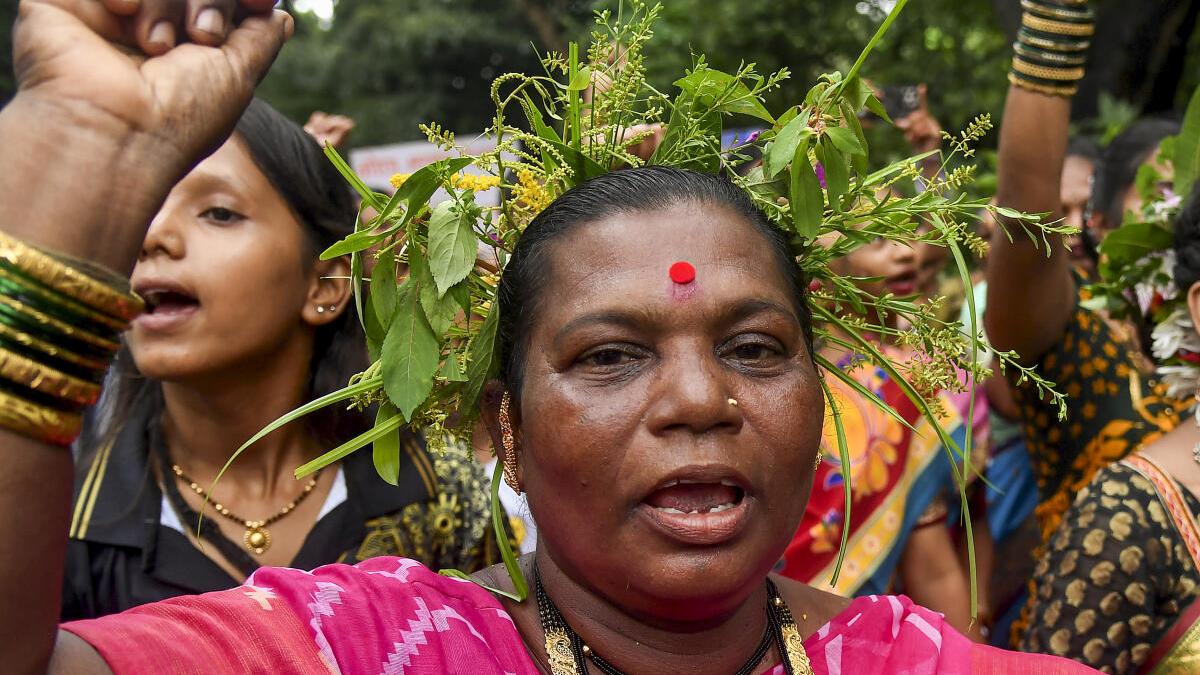
More than 470 million Indigenous Peoples live across the world, distributed across 90 countries and splintered into unique communities with their own culture and traditional knowledge. Although they make up less than 6% of the world’s population, indigenous individuals account for at least 15% of the poorest individuals in the world. As new, often disruptive technologies take over, and native lands are encroached upon, concerns arise over both how this would impact traditional knowledge ecosystems, and how they may be pressed into service for the benefit, rather than the exploitation, of Indigenous Peoples.
Touching on these concerns, Indigenous Peoples and AI: Defending Rights, Shaping Futures was the theme at the centre of this year’s observance of International Day of the World’s Indigenous Peoples, celebrated each year on August 9. This day was selected for the observance to commemorate the first meeting of the UN Working Group on Indigenous Populations held in Geneva in 1982.
“Indigenous Peoples are guardians of ancient knowledge, defenders of cultural heritage, stewards of biodiversity, and essential to our shared future,” UN Secretary-General António Guterres said in a statement issued ahead of the observance. An online discussion too was organised by the United Nations Department of Economic and Social Affairs (UNDESA) on August 8, delving into how Indigenous people’s rights can be ensured in the age of AI and how to include them in AI development and governance frameworks to further inclusive and non-exploitative use.
We dive into some of the many concerns associated with Artificial Intelligence and Indigenous Peoples, highlighting what experts have recently shared about these issues.
Concerns about Indigenous people and AI
In 2024, the UN General Assembly adopted a resolution (A/RES/78/265 ) which stressed that human rights and fundamental freedoms should be respected, protected and promoted throughout the life cycle of artificial intelligence systems. Several concerns have emerged about AI and how it may, directly or indirectly, contribute to the attrition of the rights of Indigenous Peoples.
The note on the UNDESA website pertaining to this year’s World Indigenous Peoples day highlights that while AI could promote ‘cultural revitalization, youth empowerment, and adaptation to climate change’, it runs the risk of reinforcing bias towards and exclusion or misrepresentation of Indigenous Peoples, among other challenges.
One major theme is the potential for exploitation of native knowledge and language. Danielle Boyer, a Anishinaabe robotics inventor working for the revitalization of Indigenous languages, urged that AI should be used with great care, and that if it was not used carefully then it should not be used at all, so as to prevent the systemic disappearance of indigenous languages.
Ms. Boyer is the founder of the equitable tech education charity The STEAM Connection and inventor of Skobots, a robotic aide to learning indigenous languages such as the endangered Anishinaabemowin, and she took part in UNDESA’s August 8 commemoration event as a panelist. She highlighted that AI was being used to exploit native knowledge and language, pointing to non-native authors using AI to create books about native culture. The way to fight back, she said, was by Indigenous Peoples developing their own technologies. She stressed that the skobots used internally developed AI,. functioning not as translators or Large Language Models (LLMs), but by breaking down words and using the voices of Indigenous persons.
“Technology sparks fear in our community for good reason,” she said, suggesting that being able to have self-determination in technology would help allay these concerns and ensure progress by Indigenous Peoples on this front.
Another panelist at the event was Pyrou Chung, the founder of Knowledge for Development (K4D) and Director at the East-West Management Institute, who works with indigenous people in South- east Asia for the preservation of rights in the face of climate change. While Ms. Chung acknowledged the potential of AI to support justice, she also highlighted the presence of agendas driven by larger powers, and the presence of colonial and westernised approaches in AI. Calling much of the AI being developed a distraction, Ms. Chung said there was a lack of real-world interaction and context in its creation.
Another key concern is that native land may be encroached upon for building the massive data centres that are integral to AI systems. Sites around AI data centres can see environmental degradation and negative impacts on the local ecosystems on which the Indigenous people depend. Further, AI data centres consume massive amounts of electricity, contributing to the depletion of finite natural resources and adding to the pressure caused by climate change, according to the UN.
It is to harness the power of indigenous knowledge for AI without exploitation or environmental impacts that the research programme Abundant Intelligences was created. It “conceptualizes, designs, develops, and deploys Artificial Intelligence based on Indigenous Knowledge systems” and aims to take an approach “grounded in Indigenous epistemologies” to create technology that integrates into “existing lifeways.” An international team , co-directed by Prof. Lewis at the Indigenous Futures Research Centre at Concordia University, Montreal, and Prof. Hemi Whaanga at Massey University in New Zealand, is a part of the programme, which comprises 13 universities and 8 community-based organisations across the United States, Canada, and New Zealand. The programme kicked off in March 1, 2023 and will run till February 29, 2029.
A real world example of this kind of collaboration was a pilot AI model created by PolArctic in an Inuit community in Nunavut, Canada combining Indigenous Knowledge and scientific data, to help deal with inshore fishing challenges resulting from climate change. The project, which was conducted at Sanikiluaq, was funded by the Nunavut Fishery Association, Qikiqtaaluk Corporation and the World Wildlife Fund. The project identified areas likely to be abundant in scallops, clams and kelp, using research interviews, maps, and material from the Nunavut Coastal Resource Inventory (NCRI).
As seen in this project, AI projects often see the collection of vast pools of data to train models. This leads to a second concern: the gathering of data or the extraction of resources without consent. Such consent must be free and informed, in line with the UN Declaration on the Rights of the Indigenous Peoples.
Fernando Marani, Programme Director of Justice, Inclusion, and Equality at New York University’s Center on International Cooperation, spoke about the history of not respecting ownership of Indigenous people, and stressed that it was important to protect data related to indigenous culture and knowledge, ensuring that access is shared only to those who need it. Ms. Boyer too, highlighted that working on creating ethical AI frameworks, being able to have the right to refuse to share data, and informed consent were other necessary factors. In the world of the tech, the mantra is to “move fast and break things,” but here the ‘things’ being broken are people and communities, she pointed out.
At the other end of the spectrum, the exclusion of data from Indigenous peoples and a lack of representation of their views can also create challenges in the creation of equitable AI models. The need to ensure that indigenous people are included in the data used in AI was a point raised during Friday’s discussion by Anne Torill Nordsletta, Director of the Health Analytics Department at the Norwegian Centre for E-health Research. She highlighted that AI was now being used for healthcare and public decision-making, and that without including data about indigenous peoples, there was the risk of building systems which reinforced inequalities. Ms. Nordsletta, who also lectures part-time at the Sami University, stressed that indigenous self-determination must be built into AI governance.
At the base of the challenges associated with AI is the very fundamental one of who gets to access these tools and how. Mr. Marani highlighted the need to close the existing digital gap for indigenous people and ensure equal access to the digital realm. The barriers to access of new tech, particularly in rural areas, has also been recognised through the World Summit of the Information Society process. With access comes awareness as well. Moi Guiquita, an Indigenous Waorani based in the Amazon in Ecuador, uses technology to promote Indigenous land rights, environmental conservation and human rights, creating content which has reached millions through the internet, both through social media platforms and collaborations with international organisations such as Amazon Frontlines, the Pulitzer Centre and the UN’s Food and Agriculture Organisation.
Ensuring the presence of Indigenous Peoples in AI governance frameworks might enable the formulation of policies which are responsive to the needs and concerns of various communities. A need for such meaningful inclusion of Indigenous Peoples in the development, governance and application stages was part of the recommendations of the UN Permanent Forum on Indigenous Issues in its 24th session held in April-May 2025.
Hernán Vales, Chief of the Indigenous Peoples and Minorities Section at UN Human Rights, said, “Data sovereignty and governance are critical challenges that must be addressed in order to mitigate risks,” He was speaking on the occasion of a side event focused on AI at the 18th session of the Expert Mechanism on the Rights of Indigenous Peoples (EMRIP) on August 7, 2025.
Mr. Marani emphasised that indigenous people should be part of AI oversight and governance, and mooted the creation of Indigenous People-led ethics boards. He also stressed that traditional inequalities should not reflect in AI, for which owning one’s data and creating one’s own solutions was a good way forward. An example of this: Shani Gwin is the founder of Pipikwan Pêhtâkwan which developed an indigenous powered AI called “wâsikan kisewâtisiwin”, or AI With Heart. It seeks to correct unconscious bias or racism directed to Indigenous Peoples in written materials. Ms Gwin is a sixth-generation Métis Canadian and descendant of the Michel First Nation, who also participated in the 18th session of the EMRIP.
And at times, AI may not be the solution at all. Ms. Chung questioned the premise that AI could solve all issues, highlighting that traditional knowledge or technologies could be used by environmental defenders to combat climate change. She noted that her organisation focused on capacity-building for indigenous women leaders, thus enabling them to gather and use their data in a way that was contextual to their lived realities.
Other initiatives and projects
In addition to this year’s thematic focus, several other initiatives pertaining to Indigenous knowledge, its preservation and promotion continue to be undertaken by the United Nations and its organs.
The UN Development Programme (UNDP) gave out ten 2025 Equator Prizes to community-based, Indigenous-led organizations which created sustainable solutions for development issues. The theme for the prize this year was “Nature for Climate Action,” with a prize of $10,000 and the opportunity to join global events like the UN General Assembly and the UN Climate Change Conference (COP30) in Brazil. Winners include Bibifathima Swa Sahaya from India, which works to support farmers through initiatives like seed banks, multi-cropping, and processing which harness solar power, and the Mitra BUMMA and Ranu Welum foundations from Indonesia, which promote rainforest conservation in different ways. Groups from Argentina, Brazil, Ecuador, Peru, Papua New Guinea, Kenya and Tanzania also won the prize for their work combining indigenous knowledge and sustainable development.
Besides this, the UN has sought to promote the conservation of indigenous languages, designating the decade from 2022 to 2032 as the Decade of Indigenous Languages. The Equator initiative, a global network promoted by UNDP, seeks to recognise the wisdom and knowledge of Indigenous Peoples and local communities around the world.
Along with the International Day of World’s Indigenous Peoples, several nations also have their own observances, in keeping with local customs. The United States, for example, observes Indigenous Peoples Day on the second Monday of October. The festival, which honours the native populations of the Americas, including American Indians, Native Alaskans and Native Hawaiians, arose as a response to Columbus Day, which felicitates Christopher Columbus— the man who discovered America and thereby led to its colonisation.