






The sheer diversity of Hinduism and its inherent contradictions may appear baffling to an outsider. It doesn’t tick any of the boxes that would define a religion if we apply the Western definition of religion to Hinduism.
There is no single holy book, no single god, no concept of blasphemy or a centralised church or ulema to decide what is an essential practice of the religion and what is not. Hinduism is a kaleidoscope of colourful traditions, rituals, and deities, each one unique and vibrant. It is baffling to see a religion can remain coherent with so many practices and beliefs coexisting and intertwining. It is a collection of vibrant colours and intricate symbols, with temples adorned with intricate carvings and statues of various deities. The diversity is palpable, with devotees from different regions and backgrounds coming together to worship.
How can a religion exist in such organised chaos? Hinduism is the third-largest religion in the world, but it is highly local to the Indian subcontinent with a few honourable but not-so-significant exceptions. It is not a proselytising religion and couldn’t care less about adding more followers to its fold. With its countless gods, books and folk tradition, it is a miracle that this proudly pagan religion that worships nature and finds gods in everything and everywhere, yet is agnostic and atheistic, has survived and flourished for so long.
How Hinduism Survived It All
One needs to only spread the world map to see what a spectacular achievement it has been for a leaderless, churchless belief system to do so. There were many religions that were contemporary to Hinduism a few thousand years ago, from Egypt, to Rome, to Greece to Africa and to the landmass that is now known as America or Australia. But when Christianity and later Islam spread from the Middle East, these two competing faiths converted, wiped off or replaced most of the native faiths in all the continents. Hinduism alone survived, despite or perhaps because of its diversity and pagan glory.
This was no accident. The rishis, the seers that this country produced from time to time and its spectacular storytellers and holy men, ensured that there were events and festivals that encouraged cohesion despite all diversities. For example, the daily puja in temples requires coconut from coastal India and saffron from Kashmir, sandal from Karnataka and so on, bringing diverse geographies together. The four Mathas that Adi Shankara established are in the four corners of India, and the Jyotirlingas or Shaktipeethas are spread across the length and breadth of the country. The path of Rama’s journey from Ayodhya to Lanka is littered with countless pilgrim spots, holy bathing ghats and temples associated with Ramayana. Through pilgrim routes, rituals and storytelling, every village of India was interconnected in a complex web, and this was what gave Hinduism its inherent resilience and strength to survive despite losing political power for over eight hundred years.
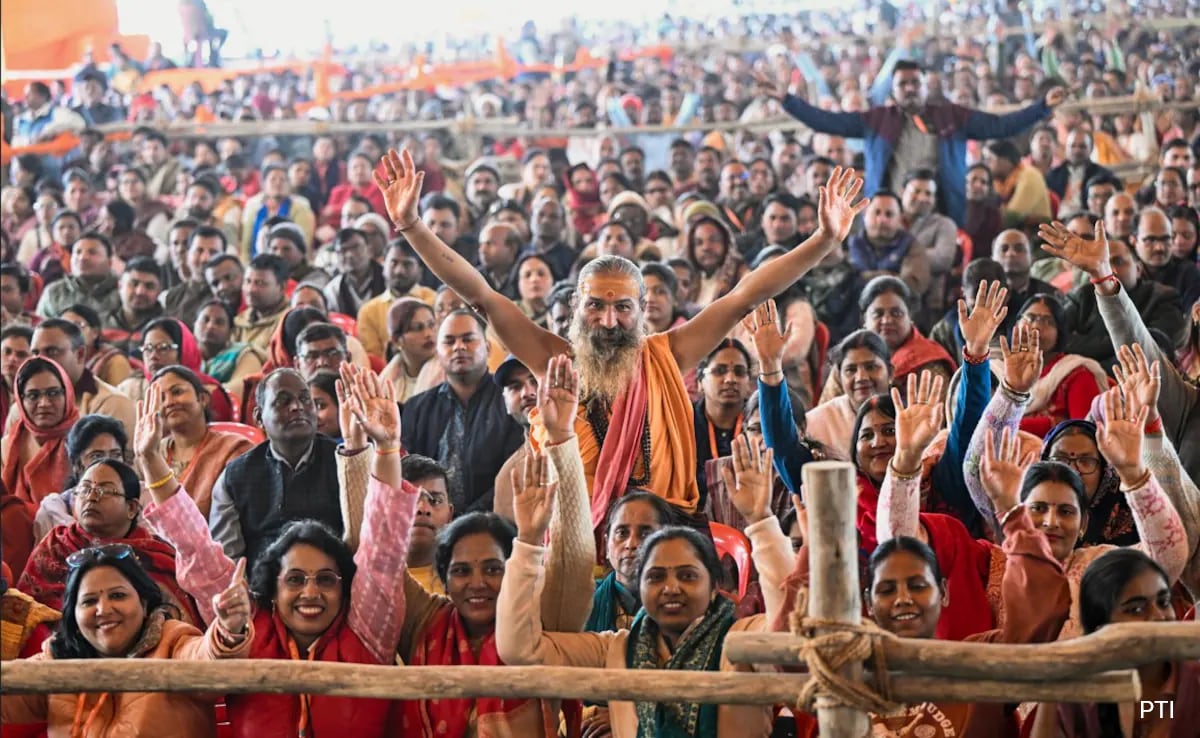
There aren’t many cultures that have survived such setbacks and invasions and lived to tell the tale. In the midst of this religious plethora, an event stands out for its energy, spirit, and sheer scale: the Kumbh Mela. This grand gathering, which happens once every twelve years, is believed to be the largest peaceful congregation of pilgrims on earth. It’s a spectacle that transcends age, caste, gender and various schools of thought in Hinduism.
Historical Accounts Of Kumbh
Though references to the importance of Theerthas can be found in Rig Veda and Puranas, and Chinese travellers like Huan Tsang have given eyewitness accounts of the Kumbh Mela, it was during the medieval era, a time when Hinduism was facing its greatest challenge, that Kumbha Melas conducted in the four holy cities of India attained political significance. Like anything in India, the tradition is attributed to supernatural events that happened in some distant Yuga, but one can see a clear design in the celebrations that show design and planning with an aim to unite and give direction and vigour to the faith.
The Kumbh Mela, held in the cities of Haridwar, Prayag, Trimbak-Nashik and Ujjain, is a testament to the intricate thread that ties every Hindu together. Each city boasts a sacred river: the Ganga in Haridwar, the confluence of Ganga, Yamuna, and the invisible Saraswati in Prayag, the Godavari in Trimbak-Nashik, and the Shipra in Ujjain. These rivers are believed to turn into ‘amrit’, that is, the divine nectar of immortality, during the Kumbh Mela. Devotees come from far and wide, travelling over treacherous terrains and braving all manner of hardships, to take a holy dip in these sacred waters. They believe that by doing so, they are cleansed of all their sins and they earn a direct passage to moksha, that is, liberation from the cycle of birth and death. It is a means to Prayaschita, or atonement, for past mistakes.
The Story Behind The Festival
There is a great deal of confusion about the frequency and significance of the Kumbh. There are many legends surrounding the festival, but all have one thing in common: the ‘amrit‘ (nectar of immortality) fell at the four locations where the Kumbh Mela is celebrated today. According to the myth, the Devas (gods) and Asuras (demons) churned the cosmic ocean to extract this nectar. Many precious and some dangerous things emerged from the ocean before the nectar was eventually retrieved in a ‘kumbh’ (pot). Depending on the version of the story, either Dhanvantari, the god of medicine, Mohini, the female avatar of Vishnu, Garuda, Vishnu’s mount, or Indra, the king of the Devas, spilled the Amrit Kumbh in their efforts to save it from falling into the hands of the Asuras. The most famous version of the story recounts a 12-day battle between the Devas and Asuras over the Kumbh. Garuda carried the Amrita in his beak for 12 days, but had to rest in between, as it was tiring. The places he chose to rest were the four Teerthas (note that these spots were sacred even before the Kumbh began), where the Asuras could not enter. When Garuda took off again, he spilled some Amrit at each of these spots. These four locations are now the sites of the Kumbh Mela.
Since one Deva day is equivalent to one human year, and since the Devas and Asuras fought for 12 Deva days (which corresponds to 12 human years), the Kumbh Mela is celebrated once every 12 years, the venues rotating between these four holy sites. Jupiter (Brihaspati), the Guru of the Devas, guided Garuda, who aligned himself according to the positions of Jupiter, the Sun, and the Moon. Therefore, the timing of the Kumbh Mela is linked to the planetary positions of these three celestial bodies. Jupiter takes 12 human years to complete one revolution around the Sun.
Why Prayag Raj Gathring Is The Most Important
After the Prayagraj Kumbh Mela, the Kumbh Melas in Nashik, Ujjain, and Haridwar will follow. Between these, there is the Ardh (half) Kumbh Mela in Haridwar and Prayag Raj, held once every six years. Among all the Melas, Prayag Raj is considered the most important. It is believed that a month-long stay in Prayag Raj, undertaking the ritual of Kalpa Vasa during the Mela (or even in the month of Magha during ordinary years), grants the householder the same benefit as a mendicant undertaking Tapasya for an entire Kalpa. In Hindu thought, one Kalpa is a vast period equivalent to one Brahma Varsha, that is, the year of Brahma, which spans 4.32 billion years. Therefore, the Prayag Raj Mela attracts the largest number of pilgrims, making it the world’s biggest religious congregation.
Amidst the bustling crowds and vibrant colours of the Kumbh Melas, one group stands out as the leader of this great spiritual gathering: the akharas. These spiritual warriors attract many solitary sadhus (monks) who do not belong to any specific group. Among those who do, thirteen active akharas hold the utmost significance at this sacred event.
Of these thirteen, seven are Shaiva akharas: Mahanirvani, Atal, Niranjani, Anand, Juna, Avahan, and Agni. Each follows its own unique set of rituals and beliefs, while also coming together to honour their shared deity, Lord Shiva. The remaining three belong to the Vaishnava tradition: Nirvani, Digambar, and Nirmohi. They, too, have their own distinct practices but join with their Shaiva counterparts to celebrate the divine presence of Lord Vishnu.
While each akhara has its individual identity, they share a common belief—that Adi Shankara founded them and that their duty is to protect and preserve the teachings of dharma. These akharas are Dharma Yodhas, or ‘faith warriors’.
But it’s not just Shaivas and Vaishnavas who make up the akharas. There are also three Sikh akharas: Bara Panchayati Udasins, Chota Panchayati Udasins, and Nirmal. These followers of Guru Nanak bring their own unique energy and traditions to this holy gathering.
What Made The British Uneasy
Naturally, such a vast congregation made the British uneasy during their rule.
The British, with their Western sensibilities and lack of understanding of Eastern spirituality, saw the Kumbh Mela as a potential hotbed of insurrection. The sheer number of pilgrims arriving from all corners of the subcontinent made them nervous.
During the rebellion of 1857, Colonel Neill specifically targeted the Kumbh Mela site and bombarded the region where the Prayagwals resided. The Prayagwals retaliated by destroying the British mission press and churches in Allahabad. Once the British regained control, they persecuted the Prayagwals with arrests and executions. Even those who could not be convicted were subjected to persecution by colonial officials. Large portions of Kumbh Mela land near the Ganga-Yamuna confluence were seized and incorporated into the government cantonment. Throughout the freedom struggle, the Kumbh Mela continued to serve as a symbol of spiritual unity and resistance against British rule. Pilgrims from every corner of the country, regardless of caste, creed, or social standing, flocked to the sacred gathering, undeterred by imperialist threats and sanctions. The idea for Banaras Hindu University germinated on the Prayag Raj Kumbh Mela grounds in 1906. Regular Kumbh Melas have always acted as a catalyst for Hindu renaissance and resilience.
To the modern eye, the sight of naked sadhus and the throngs of devout pilgrims might seem chaotic and archaic, but beneath the surface, a profound spiritual camaraderie prevails. The sadhus, with their ash-smeared bodies and matted locks, represent detachment from material pleasures and an ascetic devotion to Lord Shiva. Their nakedness is a statement of their rejection of societal norms and materialism. Their dreadlocks symbolise their commitment to a life free from vanity and worldly concerns. Their ash-smeared bodies serve as a stark reminder of the impermanence of life and the ultimate destination of all living beings—to dust we return.
The grandest show on Earth, this magnificent spiritual gathering, is a fusion of consumerism, political influence, and unshakable faith. It stands as the ultimate rejection of the homogenising force of modern Western culture. It is India’s declaration that, despite witnessing the rise and fall of countless empires that have tried to dictate its destiny, it has always prevailed through loyalty to its origins.
(Anand Neelakantan is an Indian novelist, columnist, screenwriter, and public speaker.)
Disclaimer: These are the personal opinions of the author